In West Asia Pause, Questions for India, Especially About Its Place at the Table
The recent pause in the Iran-Israel conflict has temporarily reduced tensions in West Asia, but it has also exposed critical questions about India’s strategic influence in the region. Despite deep economic, energy, and diaspora linkages with West Asia, India found itself largely absent from key diplomatic negotiations, raising concerns about whether proximity and partnerships are translating into meaningful geopolitical leverage.
Why Does the West Asia Crisis Matter for India?
West Asia Is Vital to India’s Core Interests
- The region remains a major source of India’s crude oil and natural gas imports.
- Millions of Indians live and work in Gulf countries, contributing significant remittances.
- Regional instability directly affects India’s energy security and economic stability.
- Disruptions in maritime routes can adversely impact India’s trade and supply chains.
The Strait of Hormuz Remains a Strategic Chokepoint
- A significant share of India’s energy imports passes through the Strait of Hormuz.
- Any escalation in regional conflict can threaten global oil supplies and raise prices.
- Increased energy costs can worsen inflation and current account pressures.
- Maritime insecurity can disrupt commercial shipping and trade flows.
Key Questions Raised for India
Limited Influence Despite Strong Relationships
- India maintains friendly relations with Iran, Israel, Saudi Arabia, and the United States.
- However, these relationships did not translate into a visible role during the crisis.
- India remained largely outside the diplomatic processes shaping regional outcomes.
- The episode highlights the gap between connectivity and strategic influence.
Strategic Autonomy Requires Greater Capability
- Strategic autonomy is meaningful only when supported by diplomatic and economic power.
- Maintaining multiple partnerships alone does not guarantee geopolitical relevance.
- Influence depends on the ability to shape outcomes during moments of crisis.
- Nations must convert relationships into actionable strategic leverage.
Overdependence on External Powers
- Expectations that major powers will automatically protect India’s interests may be misplaced.
- Great powers primarily act according to their own strategic calculations.
- India must strengthen independent capabilities to safeguard national interests.
- Excessive reliance on external actors can reduce strategic flexibility.
Challenges Emerging from Regional Instability
Security and Economic Risks
- Continued instability can endanger Indian citizens residing in the Gulf region.
- Higher oil prices can adversely affect growth and fiscal stability.
- Trade routes linking India with Europe and West Asia may face disruptions.
- Regional conflicts can create long-term uncertainty for investors and businesses.
Rise of Fragile States
- Persistent instability in neighbouring regions can create security spillovers.
- Fragile states may become hubs for extremism, trafficking, and organized crime.
- Such developments can indirectly affect India’s security environment.
- Regional disorder complicates India’s diplomatic and economic engagements.
Way Forward
Strengthening India’s Regional Role
- India should deepen engagement with all major stakeholders in West Asia.
- Diplomatic initiatives must move beyond economic cooperation to strategic influence.
- Greater investments in maritime security and regional connectivity are essential.
- India should actively participate in emerging regional security architectures.
Building Strategic Capabilities
- Energy diversification can reduce vulnerabilities arising from regional crises.
- Stronger economic and military capabilities will enhance India’s diplomatic weight.
- India must develop crisis-management mechanisms for diaspora protection.
- Strategic partnerships should be leveraged to expand India’s regional influence.
The West Asia crisis demonstrates that proximity, economic ties, and goodwill alone do not guarantee geopolitical relevance. While India enjoys strong relations across the region, influence ultimately depends on the capacity to shape outcomes during critical moments. As global power politics become increasingly complex, India must convert its economic presence and strategic partnerships into tangible diplomatic leverage to secure a meaningful seat at the table.
Prelims Boosters
Tetanus
About:
- Tetanus (Lockjaw) is a serious bacterial disease affecting the nervous system.
- It is caused by the toxin of Clostridium tetani.
- It enters the body through contaminated wounds and is not spread person-to-person.
Key Points
- Bacteria are commonly found in soil, dust, and animal manure.
- High-risk groups: newborns, pregnant women, and unvaccinated individuals.
- Toxin causes muscle stiffness and painful spasms.
Symptoms
- Lockjaw (inability to open the mouth properly) – hallmark symptom.
- Difficulty swallowing; Muscle stiffness and spasms; Fever, sweating, headache.
- Changes in heart rate and blood pressure; Severe cases may cause breathing difficulties and death.
Treatment
- No specific cure exists. Treatment focuses on symptom management and preventing complications. Recovery does not provide lifelong immunity.
Prevention
- Completely preventable through vaccination. Protection generally lasts about 10 years.
- Childhood schedule includes 5 doses followed by booster doses.
- Tdap vaccine is recommended during pregnancy.
Arbitrage Funds
About:
- Arbitrage Funds are equity-oriented hybrid mutual funds that earn returns from temporary price differences in markets.
- They use the strategy of buying and selling the same asset simultaneously to capture price spreads with low risk.
Key Points
- Exploit price differences between:
- Spot and futures markets.
- Different stock exchanges.
- Fund managers execute multiple trades to earn small but frequent profits.
- If arbitrage opportunities are unavailable, funds invest in short-term debt and money market instruments.
- As per SEBI, at least 65% of assets must be invested in equities and equity-related instruments.
Benefits
- Low-risk, hedged investment strategy; Equity taxation benefits; High liquidity; Diversified portfolio.
Limitations
- Returns depend on market volatility and availability of arbitrage opportunities.
- Not ideal for long-term wealth creation.
- Generally offers moderate returns compared to pure equity funds.
Armenia
About:
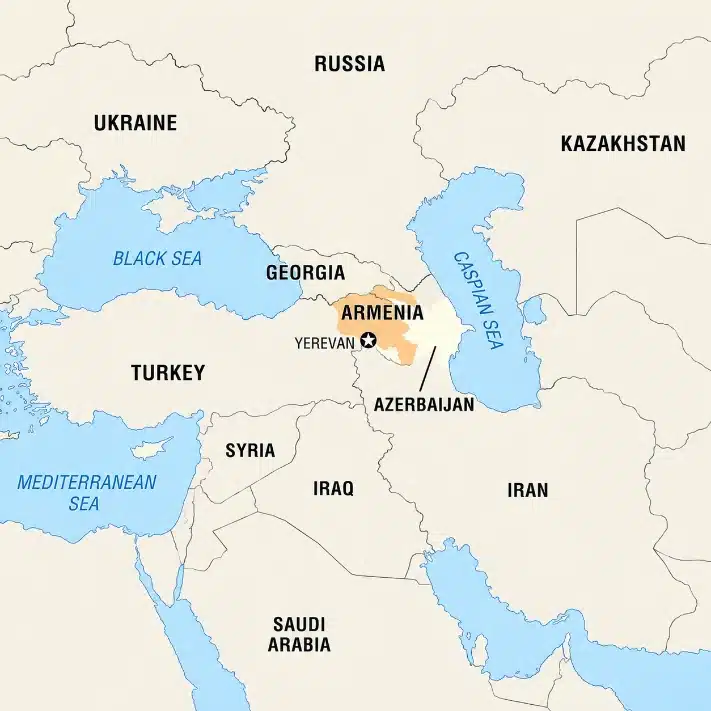
- Armenia is a landlocked country located in the South Caucasus region.
- Capital: Yerevan
Key Points
- Bordered by: Georgia (North), Azerbaijan (East), Iran (Southeast), Turkey (West)
- Climate: Highland continental (hot summers, cold winters).
- Dominated by the Lesser Caucasus Mountains.
- Soil is rich in nitrogen, potash, and phosphates due to volcanic origins.
Physical Features
- Highest Peak: Mount Aragats (4,090 m) – extinct volcano.
- Major Rivers: Aras, Hrazdan, Arpa, Vorotan.
- Largest Lake: Lake Sevan.
Natural Resources
- Gold, Copper, Molybdenum, Zinc and Bauxite
Atal Innovation Mission (AIM)
About:
- Atal Innovation Mission (AIM) is the Government of India’s flagship initiative to promote innovation and entrepreneurship.
- It was launched in 2016 under NITI Aayog.
Objectives
- Promote a culture of innovation and entrepreneurship. Encourage creativity and problem-solving.
- Foster collaboration among academia, industry, startups, and government.
- Strengthen India’s innovation ecosystem.
Key Initiatives
Atal Tinkering Laboratories (ATL)
- Established in schools to promote innovation among students.
- Focuses on STEM education (Science, Technology, Engineering, Mathematics).
- Provides access to emerging technologies and innovation tools.
Atal Incubation Centres (AIC)
- Supports startups and entrepreneurs.
- Provides mentorship, infrastructure, networking, and funding support.
- Promotes scalable and sustainable business ventures.
Atal Research and Innovation for Small Enterprises (ARISE)
- Supports innovation-driven solutions by startups and MSMEs.
- Encourages research and technology development.
- Government ministries act as potential first customers.
Recent Development
- AIM, NITI Aayog, and La Fondation Dassault Systèmes launched the India–France ATL Bridge.
- It aims to strengthen innovation cooperation between India and France through collaboration among students and innovators.
Memory Chips
About:
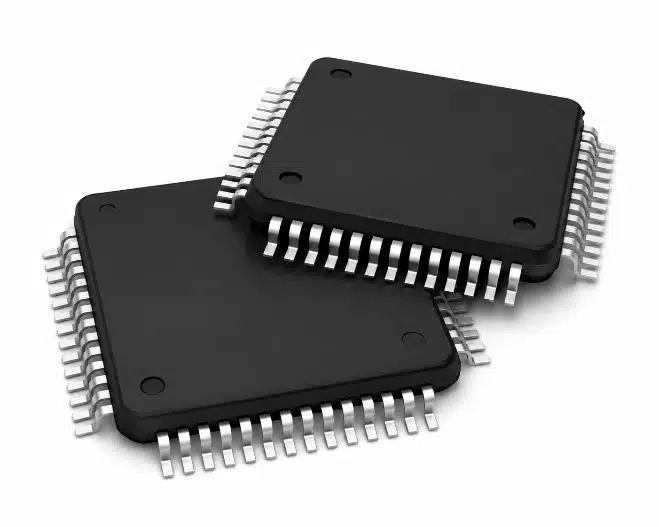
- Memory chips are integrated circuits that store and provide data to electronic devices.
- Unlike processors, they primarily store and retrieve information rather than perform computations.
Types of Memory Chips
DRAM (Dynamic Random Access Memory)
- Volatile memory; data is lost when power is off.
- Requires continuous refreshing of stored data.
- Used as the main memory in computers and servers.
NAND Flash Memory
- Non-volatile memory; retains data without power.
- Used in SSDs, pen drives, memory cards, and smartphones.
HBM (High Bandwidth Memory)
- Advanced memory technology with vertically stacked memory layers.
- Provides ultra-fast data transfer for AI and data centers.
LPDDR (Low-Power DDR)
- Energy-efficient memory used in smartphones and laptops.
- Optimized for low power consumption and high performance.
Key Points
- Major chipmakers are shifting production towards AI-related memory chips, reducing supply for consumer electronics.
- Global shortages are causing rising prices of memory products.
- LPDDR4 supply is expected to decline significantly, affecting budget smartphones.
- Demand for memory chips is expected to exceed supply for the next 3–5 years.
Applications
- AI & Data Centers: HBM memory.
- Smartphones & Laptops: LPDDR memory.
- Computers & Servers: DRAM.
- SSDs, Pen Drives, Memory Cards: NAND Flash.