Practice the Daily UPSC PIB Quiz by Educrat IAS Academy to strengthen your understanding of important government schemes, policies, initiatives, and key updates from PIB. Stay informed, revise effectively, and improve your exam readiness.

Practice the Daily UPSC PIB Quiz by Educrat IAS Academy to strengthen your understanding of important government schemes, policies, initiatives, and key updates from PIB. Stay informed, revise effectively, and improve your exam readiness.
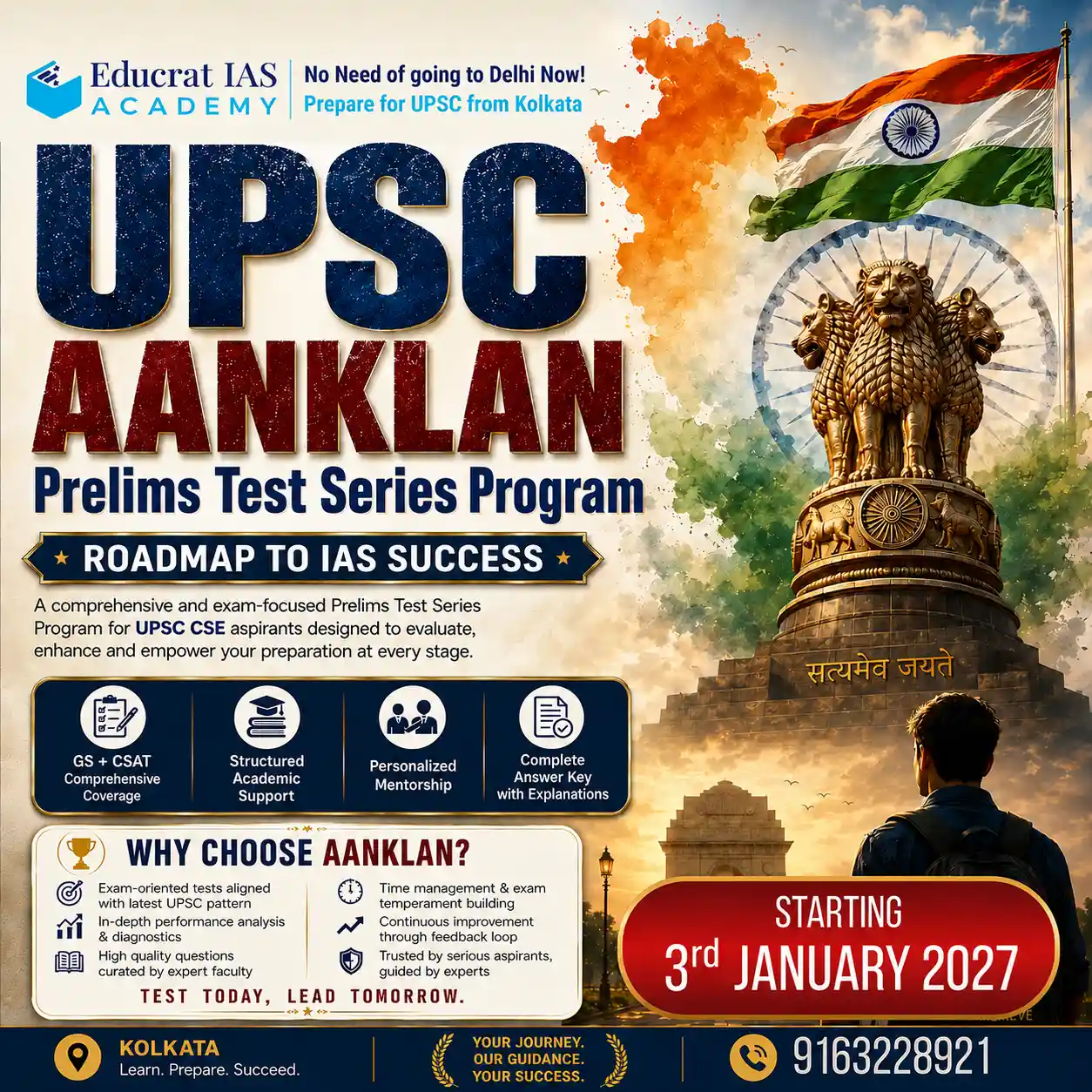



Trustindex verifies that the original source of the review is Google. GreatTrustindex verifies that the original source of the review is Google. It has been 4 months I am with EDUCRAT IAS Institute for my upsc preparation. Here is my experience in brief. While searching for "offline mock test programme" for prelims , I ended up finding educrat in google ,came their office for further query and they helped me to understand what is required in my current stage of preparation. So i took enrollment in prelims test series. Now talking about mock test, the structured approach provides exactly the kind of rigorous process which is much needed. Regular weekly or bi-weekly test,On time entry in hall, admit card etc mirrored actual upsc exam like environment including time constraints, keep us on our toes and build stamina for final day. Now talking about library facility, it is well organized and conductive to learning. No diaturbance, discipline is maintained. The overall atmosphere is very professional yet encouraging and motivating, reducing commercial feel which many coaching have. Apart from this, the classes I have attended so far is very helpful. Teachers are experienced, very hard working and guide us how to align our preparation with pyq and avoid uncessaary jargons. Mentors are very supportive and cooperative. I highly recommend EDUCRAT IAS for students who are serious about their preparation and are looking for a place that provides exact guidance, rigorous testing , quality teaching and personalized mentors. And lastly I must say, I have come to the right place.Trustindex verifies that the original source of the review is Google. You see a dream of becoming a Bureaucrat…! Educrat is the place where your dream becomes reality…from staring your journey here, till the end your name is in the list. At every step of your preparation you will find the whole institute holding the stairs for you. You take a step, they are here to push you further two more. Educrat IAS, the best craftsmanship a institute can provide, It’s a blessing to be a studying under their guidance.Trustindex verifies that the original source of the review is Google. Educrat has been a humble yet passionate abode for preparing for the coveted Civil Services examination. With distinguished yet empathetic faculty, the learning experience has been serious yet fun. Great choice for anyone wishing to seriously prepare for this examination.. :)Trustindex verifies that the original source of the review is Google. My friend introduced me to Educrat for interview preparation. I appeared for upsc 2025 interview and had no coaching experience before. Had few amazing long detailed mock interview sessions with them which made me feel confident for the actual interview. I scored180 in the real interview. Thanks so much Educrat for the help.Trustindex verifies that the original source of the review is Google. Reliable coaching I had ever seen.Google rating score: 4.9 of 5, based on 565 reviews
WhatsApp us