The UPSC Central Armed Police Forces (Assistant Commandants) Examination offers graduates the opportunity to serve as officers in India’s central armed police forces. Preparing for it requires a balanced approach to the objective General Ability and Intelligence paper, the descriptive General Studies, Essay and Comprehension paper, and the physical and interview stages.
At Educrat IAS Academy, aspirants receive structured guidance, regular practice and a focused learning environment for the different stages of the CAPF AC examination. With support across the written papers and personality test preparation, students can build the knowledge, writing skills and confidence needed to pursue their goals.
| Feature | Details |
| Conducting body | Union Public Service Commission |
| Post | Assistant Commandant |
| Forces | BSF, CRPF, CISF, ITBP and SSB |
| Written examination | Paper I and Paper II |
| Total written marks | 450 |
| Paper I (Objective) | General Ability and Intelligence : 250 marks |
| Paper II (Descriptive) | General Studies, Essay and Comprehension : 200 marks |
| Selection stages | Written examination, physical tests, medical examination and interview/personality test |
| Criteria | Details |
| Nationality | Candidates must be citizens of India. |
| Educational qualification | A bachelor’s degree from a recognised university or institution. |
| Final-year candidates | May apply subject to the qualification deadline and conditions in the relevant notification. |
| Gender | Male and female candidates are eligible; physical standards apply. |
| Age limit | Generally 20 to 25 years, with the cut-off date and relaxations specified in the notification. |
| Age relaxation | Applicable to eligible categories as prescribed by UPSC. |
| Paper | Subject | Type | Marks | Duration |
| Paper I | General Ability and Intelligence | Objective (OMR) Negative Marking: 0.33 per Question | 250 | 2 hours |
| Paper II | General Studies, Essay and Comprehension | Descriptive | 200 | 3 hours |
| Total | 450 | 5 hours |
Paper I includes negative marking for incorrect answers. Paper II assesses written expression, comprehension and the ability to organise ideas. Candidates should check the notification for the applicable marking rules and language instructions.
Paper-I: General Ability and Intelligence – 250 Marks
The questions in this paper will be of Objective (Multiple Answers) Type in which the questions will be set in English as well as Hindi.
Paper-II: General Studies, Essay and Comprehension – 200 Marks
In this paper candidates will be allowed the option of writing the Essay Component in English or Hindi, but the medium of Precis Writing, Comprehension Components and other communications/language skills will be English only.
NOTE-I : Candidates should ensure that in Paper-II they write the answers only in the medium allowed by the Commission for the different Components as mentioned above. No credit will be given for answers written in a medium other than the one allowed in the Paper. Candidates will be required to indicate the medium of Essay Component in the Attendance Lists and on the Answer Book. No credit will be given for the Essay Component if the candidate indicates a medium on the Attendance List and on the Answer Book other than the one in which he/she has written the Essay.
NOTE-II: There will be minimum qualifying marks separately in each Paper as may be fixed by the Commission in their discretion. Paper-I will be evaluated first and evaluation of Paper-II will be done only of those candidates whoobtain the minimum qualifying marks in Paper-I.
Candidates who are declared qualified in the written examination will be summoned for Physical Standards
Tests/Physical Efficiency Tests. Those candidates who meet the prescribed Physical Standards as specified in Appendix-V, will be put through the Physical Efficiency Tests.
Candidates who are declared qualified in the Physical Standards Tests (PST) /Physical Efficiency Tests (PET), will be called for Interview/Personality Test to be conducted by the Commission. Candidates who are declared unqualified in the Physical Efficiency Test will not be called for Interview/Personality Tests. The Interview/Personality Test will carry 150 Marks.
Medical Standards Tests, to check the standards specified in Appendix-V, will be conducted only in respect of candidates who have appeared in the Interview/ Personality Test.
The Medical Standards Tests will be conducted under the supervision of a Nodal Authority to be appointed by the Ministry of Home Affairs.
The merit list will be drawn on the basis of marks obtained by the candidates in the Written Examination and Interview/Personality Test.
(vi) Further, any candidate who after Medical Standard Test (MST) is found not to satisfy the requirements as per prescribed standards will not be appointed.
The provisions relating to the rounding off of marks, wherever applicable, and the principles for resolving cases of tie in scores shall be as prescribed below:
(A) Rounding Off Marks
(B) Tie Breaking Principle
| Paper | Key Topics |
| Paper I: General Ability and Intelligence | General mental ability, reasoning, general science, current events, Indian polity and economy, history, geography, and data interpretation |
| Paper II: General Studies, Essay and Comprehension | Essay writing, précis, comprehension, communication skills, and relevant social, political, economic and security-related themes |
The objective type questions with multiple choices in this paper will broadly cover the following areas:
The questions will be designed to test the logical reasoning, quantitative aptitude including numerical ability, and data interpretation.
The questions will be set to test general awareness, scientific temper, comprehension and appreciation of scientific phenomena of everyday observation including new areas of importance like Information Technology, Biotechnology, Environmental Science.
The questions will test the candidates’ awareness of current events of national and international importance in the broad areas of culture, music, arts, literature, sports, governance, societal and developmental issues, industry, business, globalisation, and interplay among nations.
The questions shall aim to test candidates’ knowledge of the Country’s political system and the Constitution of India, social systems and public administration, economic development in India, regional and international security issues and human rights including its indicators.
The questions will broadly cover the subject in its social, economic and political aspects. This shall also include the areas of growth of nationalism and freedom movement.
The questions shall cover the physical, social and economic aspects of geography pertaining to India and the World.
Part-A – Essay questions which are to be answered in long narrative form either in Hindi or English totaling 80 Marks. The indicative topics are modern Indian history especially of the freedom struggle, geography, polity and economy, knowledge of security and human rights issues, and analytical ability.
Part-B – Comprehension, précis writing, other communications/language skills – to be attempted in English only (Marks 120) – The topics are Comprehension passages, précis writing, developing counter arguments, simple grammar and other aspects of language testing.
Regular timed writing practice can help candidates improve structure, relevance and clarity.
Personalised guidance supports aspirants across every preparation stage.
Structured classes cover both papers through systematic preparation.
Writing practice sharpens essay, précis and comprehension skills.
Doubt sessions and small batches encourage academic progress.
Mock tests improve speed, accuracy and candidate confidence.
Current affairs lessons linked with issues across CAPF syllabus.
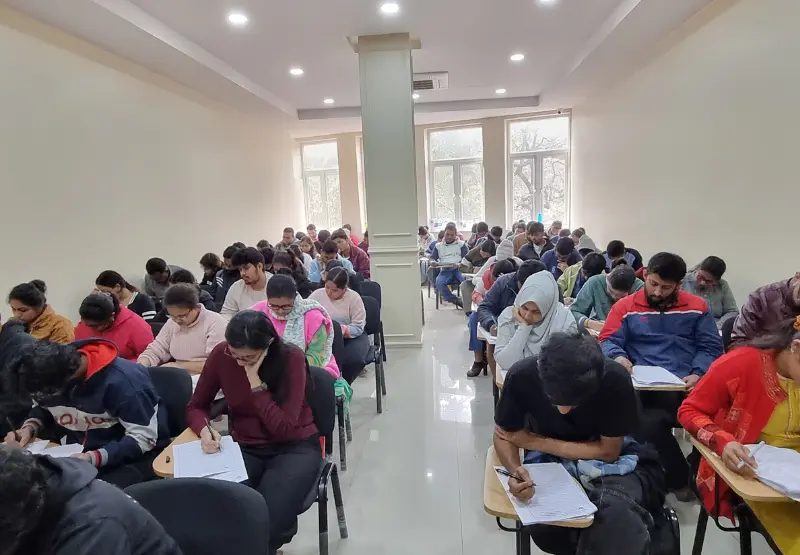
Educrat IAS Academy’s CAPF AC Foundation Course is designed to help aspirants prepare for both written papers. The programme covers General Ability and Intelligence, General Studies, current affairs, essay writing, précis and comprehension. Candidates can practise objective questions and descriptive answers through a structured study plan.
Regular revision, guided practice and mock tests help candidates assess their progress and focus on topics that need more attention. Aspirants are also encouraged to plan physical fitness preparation alongside written exam study.
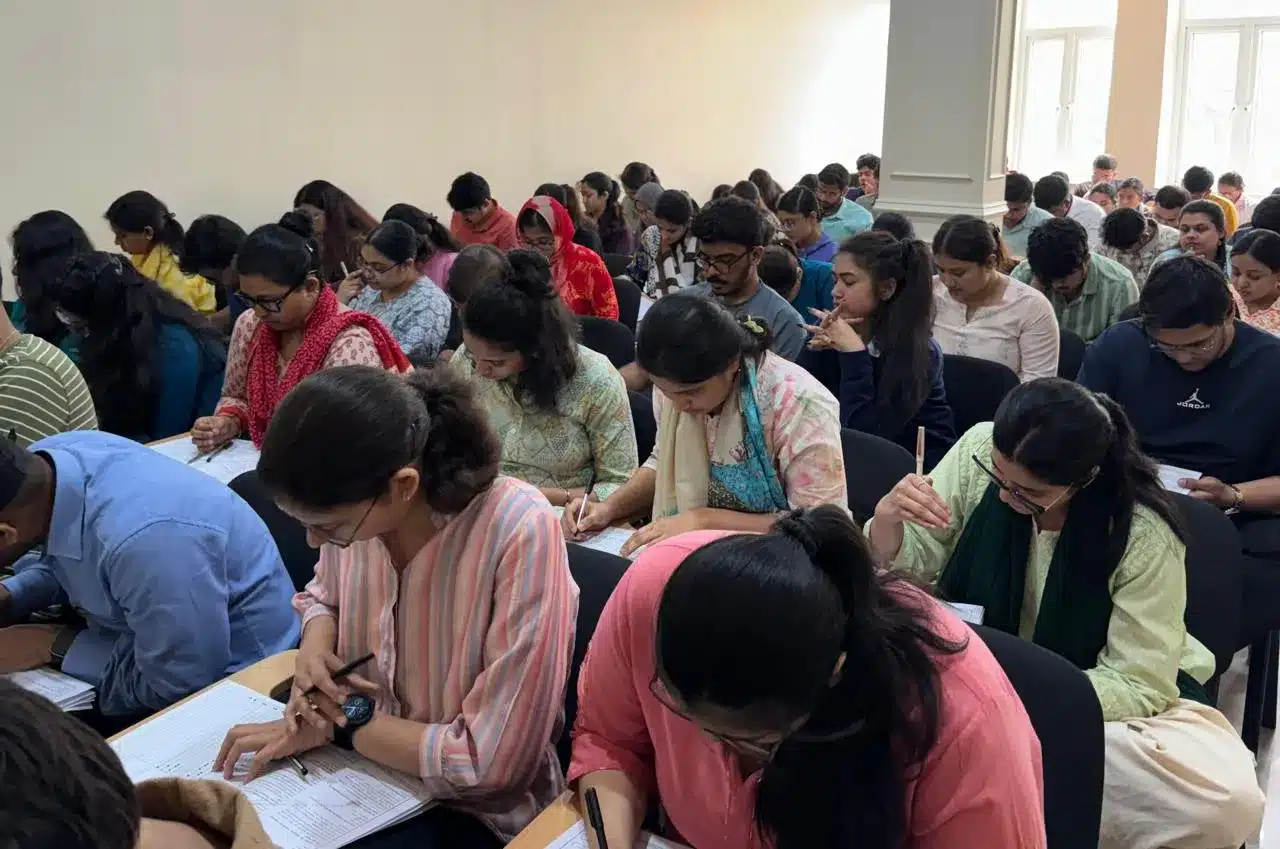
Preparing for CAPF AC means working across different demands: general studies, objective problem-solving, descriptive writing, physical fitness and interview readiness. A clear plan and regular review can help aspirants manage these stages consistently.
Educrat IAS Academy offers structured guidance, exam-focused practice and mentorship to help students strengthen concepts, practise written expression and track areas that need further work.

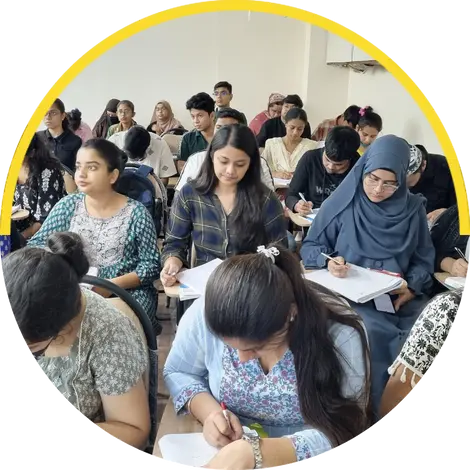
Small-batch learning gives mentors more opportunities to understand each aspirant’s progress and challenges. Students can ask questions, receive focused feedback and work steadily on areas that need improvement.
CAPF AC preparation calls for consistency across written study, physical fitness and communication skills. Build strong fundamentals, practise regularly and review your progress at every stage.
Build your preparation with a clear plan. Contact Educrat IAS Academy to learn more.

Trustindex verifies that the original source of the review is Google. GreatTrustindex verifies that the original source of the review is Google. It has been 4 months I am with EDUCRAT IAS Institute for my upsc preparation. Here is my experience in brief. While searching for "offline mock test programme" for prelims , I ended up finding educrat in google ,came their office for further query and they helped me to understand what is required in my current stage of preparation. So i took enrollment in prelims test series. Now talking about mock test, the structured approach provides exactly the kind of rigorous process which is much needed. Regular weekly or bi-weekly test,On time entry in hall, admit card etc mirrored actual upsc exam like environment including time constraints, keep us on our toes and build stamina for final day. Now talking about library facility, it is well organized and conductive to learning. No diaturbance, discipline is maintained. The overall atmosphere is very professional yet encouraging and motivating, reducing commercial feel which many coaching have. Apart from this, the classes I have attended so far is very helpful. Teachers are experienced, very hard working and guide us how to align our preparation with pyq and avoid uncessaary jargons. Mentors are very supportive and cooperative. I highly recommend EDUCRAT IAS for students who are serious about their preparation and are looking for a place that provides exact guidance, rigorous testing , quality teaching and personalized mentors. And lastly I must say, I have come to the right place.Trustindex verifies that the original source of the review is Google. You see a dream of becoming a Bureaucrat…! Educrat is the place where your dream becomes reality…from staring your journey here, till the end your name is in the list. At every step of your preparation you will find the whole institute holding the stairs for you. You take a step, they are here to push you further two more. Educrat IAS, the best craftsmanship a institute can provide, It’s a blessing to be a studying under their guidance.Trustindex verifies that the original source of the review is Google. Educrat has been a humble yet passionate abode for preparing for the coveted Civil Services examination. With distinguished yet empathetic faculty, the learning experience has been serious yet fun. Great choice for anyone wishing to seriously prepare for this examination.. :)Trustindex verifies that the original source of the review is Google. My friend introduced me to Educrat for interview preparation. I appeared for upsc 2025 interview and had no coaching experience before. Had few amazing long detailed mock interview sessions with them which made me feel confident for the actual interview. I scored180 in the real interview. Thanks so much Educrat for the help.Trustindex verifies that the original source of the review is Google. Reliable coaching I had ever seen.Google rating score: 4.9 of 5, based on 565 reviews
WhatsApp us