Nari Shakti: India’s Defining Reform for the Next Decade
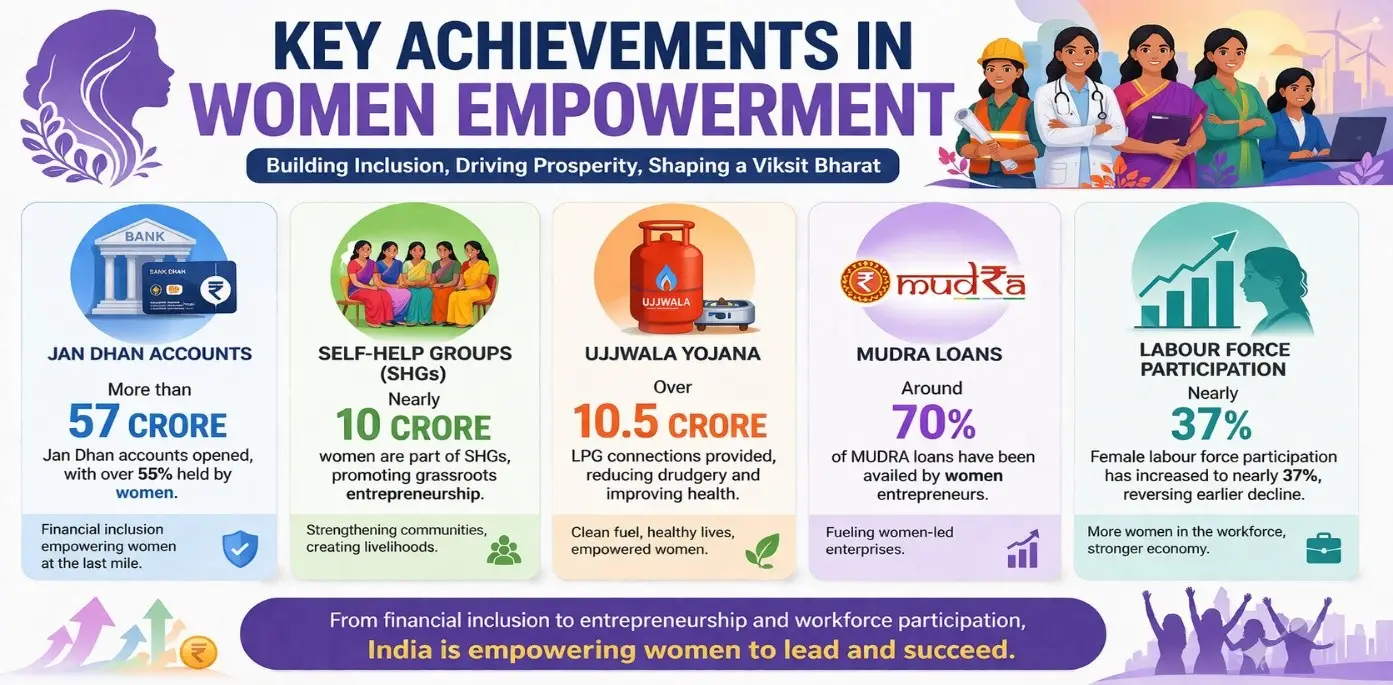
Over the last decade, India has witnessed a structural shift in women’s empowerment. The change has been policy-driven, not organic, focusing on access, inclusion, and participation. Women’s empowerment is now seen as a driver of economic growth and development. The next phase requires moving from access to leadership and institutional empowerment.
Healthcare and Social Sector Interventions
- Schemes like Ayushman Bharat have improved access to healthcare for women.
- Pradhan Mantri Matritva Abhiyan supports maternal health and safe pregnancy.
- Beti Bachao Beti Padhao has contributed to improving gender attitudes and awareness.
- These interventions have enhanced health, dignity, and social inclusion of women.
From Access to Structural Transformation
- Women’s empowerment is no longer limited to welfare but extends to economic participation.
- Financial inclusion, entrepreneurship, and access to credit have improved significantly.
- Programmes are creating local economic resilience through women-led initiatives.
- This reflects a shift from beneficiary approach to active participation in development.
Challenges: The Last Mile Problem
- Awareness gaps and uneven enrolment still persist across regions and communities.
- Last-mile delivery challenges limit access for women in remote and marginalised areas.
- Many women remain excluded due to lack of access, not lack of opportunity.
- Monitoring outcomes rather than inputs is essential for effective policy implementation.
Need for Policy Penetration
- The next stage requires moving from policy creation to policy penetration.
- Focus should be on outcomes, real impact, and behavioural change.
- Data-driven governance and convergence across departments are critical.
- Technology can support delivery but cannot replace on-ground institutional support.
Nari Shakti Vandan Adhiniyam: A Transformational Step
- The law provides reservation for women in legislatures, enhancing political participation.
- It has potential to create multiplier effects across sectors through leadership roles.
- Greater representation can lead to better policy responsiveness and inclusivity.
- It marks a shift from empowerment through access to empowerment through authority.
Global Context and Emerging Opportunities
- The world is entering a phase driven by knowledge, innovation, and technology.
- India already has one of the highest proportions of women in STEM education globally.
- This provides an opportunity to expand women’s role in science, enterprise, and governance.
- Leveraging this demographic advantage can accelerate India’s growth trajectory.
Key Structural Gaps
- Representation does not automatically translate into capability and effective leadership.
- Institutional support systems for women leaders remain inadequate.
- Social norms and structural barriers continue to limit women’s participation.
- Policy design often does not fully reflect lived experiences of women.
Way Forward
- Strengthen institutional support for women in leadership, governance, and administration.
- Focus on converting representation into capability through training and mentorship.
- Simplify schemes and improve last-mile delivery through better monitoring systems.
- Incorporate women’s lived experiences into policy design and implementation.
- Promote women’s participation in STEM, entrepreneurship, and decision-making roles.
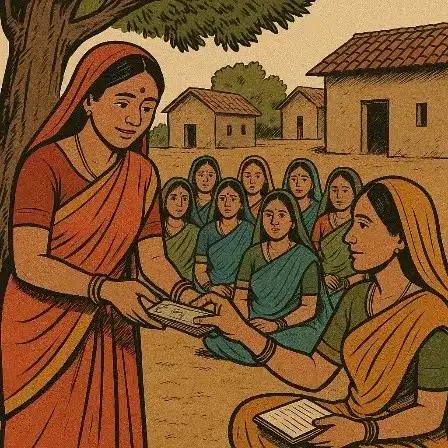
India has made significant progress in expanding access and opportunities for women. The next phase requires ensuring leadership, representation, and institutional empowerment. Women’s participation is central to achieving economic growth and social stability. Nari Shakti will be a defining factor in India’s journey towards becoming a developed nation.
Have Elections in India Become Plutocratic?
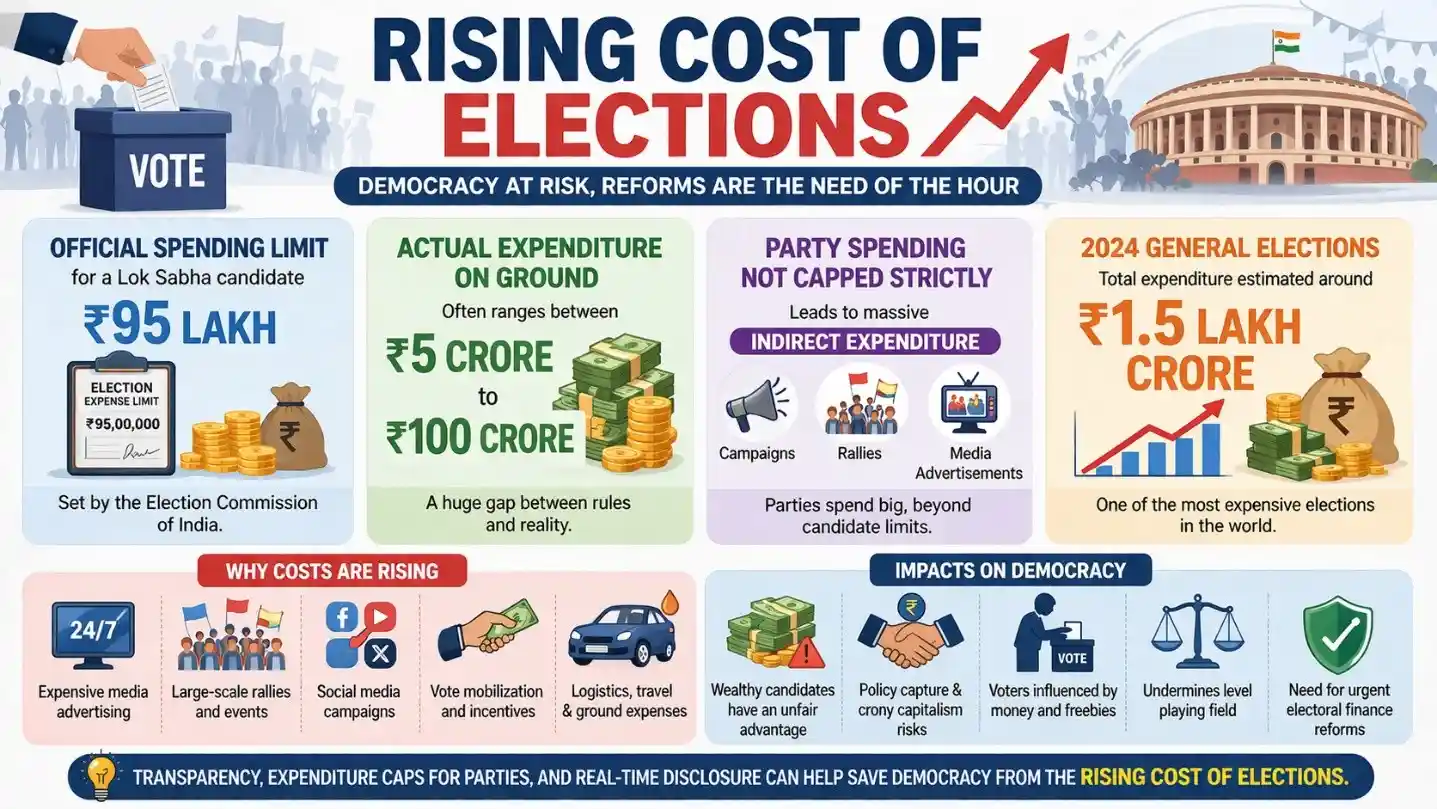
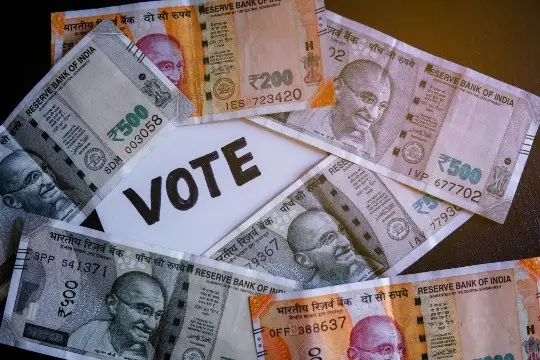
Indian elections are increasingly marked by rising expenditure and role of money power. This raises concerns about a shift towards plutocracy (rule by the wealthy). The core issue is whether financial resources influence electoral outcomes disproportionately. It also questions whether democracy ensures a level playing field for all candidates.
Why Elections Are Becoming Expensive
- Campaigns now rely heavily on media, digital outreach, and large-scale mobilisation.
- Increased competition and voter outreach require significant financial resources.
- Political parties invest heavily in advertisements, logistics, and voter engagement.
- Lack of strict enforcement enables unaccounted cash spending during elections.
Impact on Democracy
- High costs create barriers for small parties and independent candidates.
- Elections become less competitive, favouring resource-rich candidates and parties.
- This undermines the principle of political equality under Article 14 (Equality before Law).
- It also affects free and fair elections under Article 324 (powers of Election Commission).
Is Money the Deciding Factor?
- Money alone does not guarantee victory, but it provides a significant advantage.
- Candidates with greater financial backing can ensure better visibility and outreach.
- Smaller candidates often struggle to compete effectively in high-cost elections.
- Thus, money becomes an enabling factor rather than the sole determinant.
Limitations of Current Regulations
- Spending limits apply only to individual candidates, not political parties.
- There is weak monitoring of actual expenditure, especially during campaign peak.
- Large portions of spending occur through unofficial or unaccounted channels.
- This leads to an uneven playing field and reduced transparency.
Debate on Spending Caps
- Imposing stricter limits may reduce costs but could increase black money usage.
- Some argue for greater transparency rather than strict caps.
- Others suggest state funding or regulated funding models to ensure fairness.
- The challenge lies in balancing accountability with practical feasibility.
Electoral Bonds Issue
- The Supreme Court struck down Electoral Bonds Scheme (2024) citing lack of transparency.
- The scheme allowed anonymous political donations, raising concerns about opacity.
- It limited citizens’ right to know under Article 19(1)(a) (Freedom of Speech and Expression).
- However, concerns about funding transparency and accountability still persist.
Can a Level Playing Field Be Achieved?
- Shorter campaign periods may reduce overall expenditure.
- Regulating party spending and ensuring transparency is essential.
- Public funding of elections could support smaller candidates.
- However, structural inequalities make a perfectly level field difficult to achieve.
Role of Institutions and Society
- The Election Commission plays a key role under Article 324 in regulating elections.
- Civil society and media must ensure accountability and transparency in funding.
- Voter awareness is essential to reduce influence of money in voting behaviour.
- Judicial interventions help strengthen democratic norms and fairness.
Way Forward
- Strengthen transparency through mandatory disclosure of political funding sources.
- Bring political parties under stricter regulatory and auditing frameworks.
- Explore state funding of elections to reduce dependence on private money.
- Improve monitoring mechanisms to curb black money in elections.
- Promote voter awareness to prioritise issues over inducements.
Rising electoral expenditure raises valid concerns about plutocratic tendencies in India. While money is not the sole determinant, it significantly influences electoral dynamics. Ensuring transparency, accountability, and fairness is essential for democratic integrity. Strengthening institutions and reforms will be key to preserving free and fair elections.
PRELIMS BOOSTERS
Exercise Cyclone – IV (2026)
Context:
- Indian Army contingent has departed to Egypt for Exercise Cyclone – IV
About
- Exercise Cyclone is a joint Special Forces military exercise between India and Egypt
- The 2026 edition is the fourth edition (Cyclone–IV)
- It is conducted annually, alternately in India and Egypt
Participants
- Indian contingent includes 25 personnel from Special Forces units
- Conducted jointly with Egyptian Special Forces
Objective
- To enhance joint mission planning capabilities
- To improve interoperability between both forces
- To exchange best practices in special operations
Key Features
- Training conducted in realistic operational environment
- Focus on desert and semi-desert warfare conditions
- Covers: Special tactics and operations; Combat drills and coordination & Joint operational procedures
- Promotes professional exchange and coordination
Significance
- Strengthens India–Egypt defence cooperation
- Enhances capability of Special Forces in desert warfare
- Builds mutual trust and military coordination
National Quantum Mission (NQM)
Context:
- India demonstrated a 1,000 km quantum communication network under the mission
About
- National Quantum Mission (NQM) is a flagship initiative in quantum technology
- Launched by the Department of Science and Technology
- Duration: 2023–24 to 2030–31
- Total outlay: ₹6003 crore
- It is one of the nine initiatives under PMSTIAC

Objective
|
Implementation Strategy
|
Key Focus Areas
- Quantum Computing: Led by Indian Institute of Science (IISc), Bengaluru
- Quantum Communication: Led by IIT Madras with C-DOT, New Delhi
- Quantum Sensing & Metrology: Led by IIT Bombay
- Quantum Materials & Devices: Led by IIT Delhi
Significance
- Strengthens secure communication systems
- Reduces dependence on foreign advanced technologies
- Boosts India’s position in next-generation technologies
- Important for cybersecurity and defence applications
Food Safety and Standards Authority of India (FSSAI)
Context:
- FSSAI conducted around 4 lakh inspections in 2025–26
About
- FSSAI is a statutory body established under the Food Safety and Standards Act, 2006
- Works under the Ministry of Health and Family Welfare
Mandate
- To ensure safe and wholesome food for human consumption
- To regulate: Manufacture, Storage, Distribution, Sale and import of food
Functions
- Standards formulation: Sets safety standards for food products
- Food safety management: Issues guidelines for safe food practices
- Licensing and registration: Regulates food business operators
- Inspection and monitoring: Conducts audits and surveillance
- Consumer awareness: Promotes food hygiene and nutrition knowledge
- Accreditation: Recognises food testing laboratories
Significance
- Ensures public health and food safety
- Prevents adulteration and unsafe food practices
- Strengthens regulatory framework for food industry
Direct-to-Device (D2D) Technology
Context:
- Department of Telecommunications explored D2D satellite communication
About
- Direct-to-Device (D2D) is a satellite communication technology
- It allows mobile phones to connect directly with satellites
- Works without special devices or ground towers
- Satellites act like cell towers in space
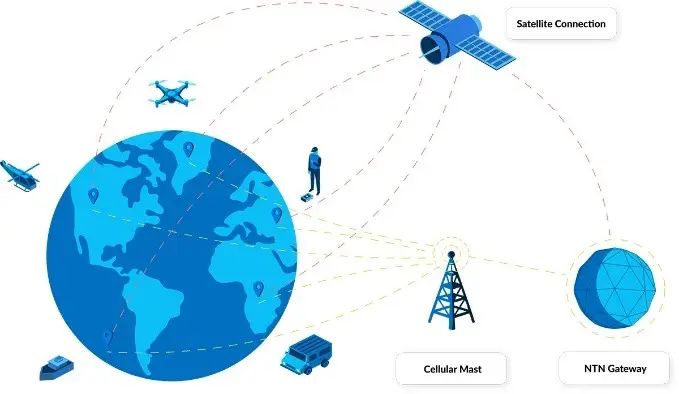
How it Works
- Uses Low Earth Orbit (LEO) satellites for connectivity
- Operates on existing 4G/5G frequency bands
- Phones automatically switch to satellite when out of network range
- Satellite relays signal to ground stations and telecom networks
Key Features
- Works with normal smartphones (no special hardware needed)
- Uses LEO satellites for low latency communication
- No need for physical telecom infrastructure in remote areas
- Supports emergency messaging and basic communication
- Being integrated into global telecom standards (3GPP)
Significance
- Provides connectivity in remote, rural, and disaster-prone areas
- Useful during natural disasters when networks fail
- Helps achieve universal network coverage
- Important for defence, emergency services, and communication security
Elephanta Island (Gharapuri)
Context:
- ASI discovered a 1,500-year-old stepped reservoir, showing advanced water management
About
- Elephanta Island is a UNESCO World Heritage Site in Mumbai Harbour
- Locally known as Gharapuri (City of Caves)
- Famous for rock-cut cave temples dedicated to Lord Shiva
Naming and History
- Named Elephanta by Portuguese after a stone elephant statue
- Original name: Gharapuri
- Associated dynasties: Kalachuris (6th century CE) – main builders; Konkan Mauryas; Chalukyas and Rashtrakutas
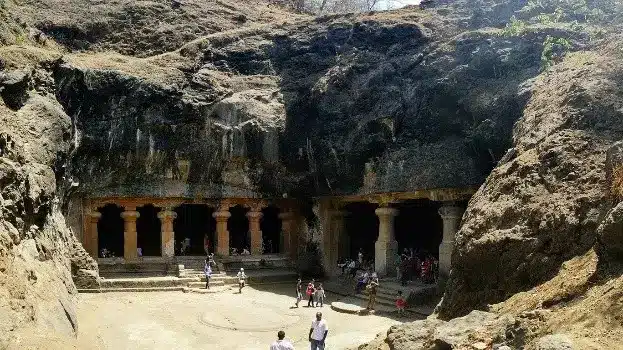
Key Features
- Main Cave (Cave 1): Large rock-cut temple with pillars and shrines
- Trimurti (Sadashiva): 20-foot sculpture of Shiva (creator, preserver, destroyer)
- Other sculptures: Gangadhara (descent of Ganga) & Ardhanarishvara (half Shiva, half Parvati)
- Carved from basalt rock (Deccan Trap region)
- Shows Hindu and some Buddhist influence
Recent Discoveries
|
Significance
|