Trade in Local Currency
The shift toward trading in local currencies—often termed “De-dollarization” or “Local Currency Settlement (LCS)”—is a strategic pivot in India’s foreign and economic policy. As of early 2026, India is actively negotiating and “experimenting” with this mechanism for West Asian oil imports to shield its economy from global volati lity.
What is Trade in Local Currency?
In brief, it is a bilateral arrangement where two nations agree to settle their trade obligations in their own domestic currencies (e.g., Indian Rupee and UAE Dirham) instead of a third-party “hard currency” like the US Dollar (USD).
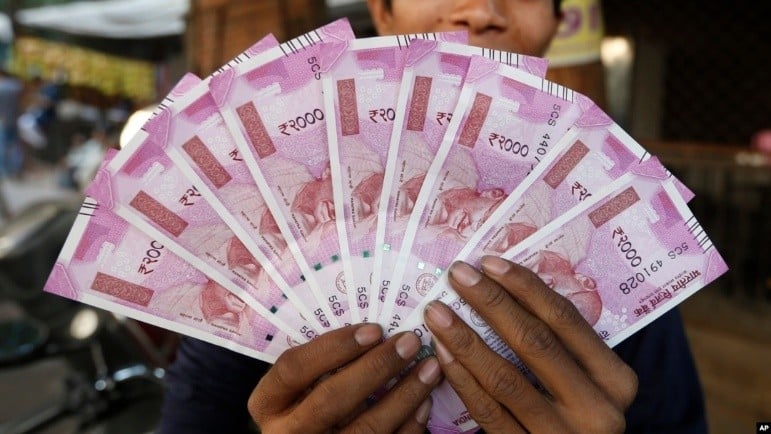
- Mechanism: Importers pay in their domestic currency into a Special Vostro Account of the partner country’s bank.
- Settlement: Exporters are paid from this account in their own local currency, bypassing the need for an intermediate exchange.
- Scope: It covers current account transactions (goods and services) and permitted capital account transactions.
- Infrastructure: Requires interlinking of national payment systems (like India’s UPI with UAE’s IPP).
- Goal: To reduce the “Dollar-dependency” in global value chains.
Why India is Shifting to Local Currency for West Asian Oil
India imports nearly 80% of its oil, with the Gulf Cooperation Council (GCC) accounting for nearly half of these imports.
- Mitigating Exchange Rate Volatility: A depreciating Rupee (hitting all-time lows of ₹94/$) makes dollar-denominated oil significantly more expensive, even if global oil prices are stable.
- Reducing Transaction Costs: Converting Rupee to Dollar and then Dollar to Dirham/Riyal incurs a 2–3% loss per stage. Local trade can save 5–6% in total transaction value.
- Energy Security Amid War: Recent conflicts in West Asia (2025–26) have spiked oil prices. Paying in Rupee prevents a “fiscal double-hit” of high prices and a weak currency.
- Circumventing Sanctions: Following the Russia-Ukraine precedent, India seeks “sanction-proof” payment channels to ensure uninterrupted energy flows during geopolitical friction.
- Improving Trade Deficit Management: By using Rupees for imports, India can encourage West Asian nations to use those Rupee reserves to buy Indian exports (food, textiles, pharma).
Future Benefits for India
- Internationalization of the Rupee: Wider acceptance of the INR for high-value commodities like oil is a prerequisite for it becoming a global reserve currency.
- Reduced Forex Pressure: India can preserve its $USD$ reserves for other critical needs (like external debt servicing) rather than spending them on routine energy imports.
- Monetary Policy Autonomy: India becomes less vulnerable to the “Spillover Effect” of US Federal Reserve interest rate hikes, which typically trigger capital flight from emerging markets.
- Strengthened Strategic Partnerships: Moving from a “buyer-seller” relationship to a deep financial integration (e.g., India-UAE CEPA) locks in long-term regional stability.
- Global Value Chain Integration: Lower logistics and transaction costs will make Indian SMEs more competitive in West Asian markets.
Pushback Against Discarding the Dollar System
- The “Trump Factor” & Tariffs: The US administration (under Donald Trump) has threatened 100% tariffs on countries that actively move to “discard” the dollar.
- Liquidity & Acceptability: The USD remains the most liquid currency globally. Partners may be hesitant to hold large reserves of the Rupee if they cannot easily spend it elsewhere.
- Trade Imbalance Issues: Since India imports more from the Gulf than it exports, Gulf nations might accumulate a “Rupee Glut” (excess Rupees) they have no use for, similar to the initial issues with Russia.
- Risk of Fragmentation: Transitioning could lead to competing currency blocs, complicating global accounting and increasing exchange rate determination problems.
- Financial Stability Risks: A sudden shift could deter foreign institutional investors (FIIs) who prefer the predictability of dollar-denominated assets.
The Way Forward
- Expanding LCSS Frameworks: India must scale the Local Currency Settlement System (LCSS) beyond the UAE to Saudi Arabia, Oman, and Qatar.
- Boosting High-Value Exports: To prevent the “Rupee Glut,” India must export more engineering goods, high-tech, and refined products to the Gulf to balance the accounts.
- Developing Deep Financial Markets: India needs to allow foreign entities to invest their Rupee reserves back into Indian government bonds and equity markets safely.
- Interlinking Digital Infrastructure: Broadening the footprint of UPI and RuPay in West Asia to facilitate retail and remittance payments alongside bulk oil trade.
- Maintaining Multi-Alignment: India must frame this as “currency diversification” rather than “anti-dollar” to manage its strategic relationship with the United States.
SC Status and Religious Conversion (2026 Ruling)
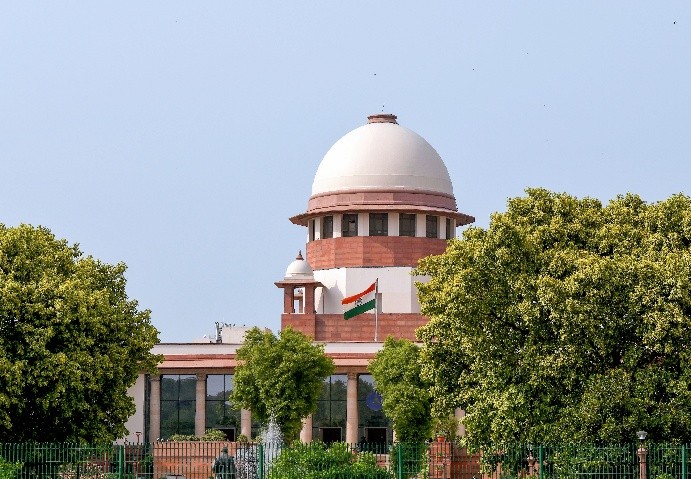
The debate over Scheduled Caste (SC) status for Dalit converts to Christianity and Islam is one of India’s most complex legal and sociological challenges. In March, 2026, the Supreme Court delivered a landmark judgment in Chinthada Anand v. State of Andhra Pradesh, reaffirming the existing religious boundaries of the SC category.
Summary: SC Status and Religious Conversion (2026 Ruling)
The Supreme Court clarified that SC status is not merely a birthright but is legally tied to the religion one “professes.”
- Immediate Loss of Status: The Court ruled that conversion to any religion other than Hinduism, Sikhism, or Buddhism results in the “immediate and complete loss” of SC status.
- Interpretation of “Profess”: To “profess” a religion means to publicly practice or declare it. A person cannot publicly identify as a Christian or Muslim while claiming statutory benefits meant for SCs.
- Loss of Legal Protection: Because the status is lost, converts cannot invoke the SC/ST (Prevention of Atrocities) Act, 1989, even if they face caste-based violence.
- Absolute Bar: The Court held that Clause 3 of the 1950 Order is an “absolute bar” that admits no exceptions for religions of “foreign origin” (Christianity/Islam).
- Theological Basis: The Court noted that since Christianity and Islam do not scripturally recognize the caste system, a person leaving Hinduism for these faiths is legally presumed to have left the “disability of untouchability” behind.
Significant Judicial Proceedings on SC Status
- Constitution (Scheduled Castes) Order, 1950: Originally restricted SC status to Hindus. It was amended in 1956 to include Sikhs and in 1990 to include Buddhists.
- Soosai v. Union of India (1985): The SC dismissed a plea from a Dalit Catholic, stating there was insufficient “empirical evidence” to prove that social disabilities persist in the same degree after conversion to Christianity.
- K.P. Manu v. Scrutiny Committee (2015): The SC allowed for “Reconversion.” It ruled that a person who returns to Hinduism can reclaim SC status if they prove their original community has accepted them back.
- Chinthada Anand Case (2026): The most recent ruling which quashed an FIR filed by a Christian pastor under the Atrocities Act, stating his status as a “pastor” was definitive proof of his conversion and subsequent loss of SC rights.
Arguments for Extending SC Status (Dalit Christians & Muslims)
Proponents argue that “caste follows the person,” not the faith.
- Persistence of Stigma: Sociological data shows that conversion does not end “untouchability”; Dalit converts often have separate graveyards and churches/mosques.
- Violation of Equality (Article 14 & 15): Critics argue that making a state benefit contingent on remaining in a specific religion violates the secular nature of the Constitution.
- Inconsistency with ST/OBC: Scheduled Tribes (ST) and Other Backward Classes (OBC) are religion-neutral categories. Denying this to SCs is seen as discriminatory.
- The “Exit” Paradox: Converting is often an attempt to escape caste, but by losing state protection, the individual becomes more vulnerable to the very discrimination they tried to flee.
- Recommendations of Commissions: The Ranganath Mishra Commission (2007) recommended completely de-linking SC status from religion, calling the current exclusion “unconstitutional.”
Arguments Against Extending SC Status
The Government and certain social groups argue that the SC category was designed for a specific historical wrong.
- Rooted in Untouchability: The SC category was specifically created to address the unique “historical disability” of untouchability found within the Hindu fold.
- Theological Contradiction: Since Islam and Christianity claim to be egalitarian and casteless, providing “caste-based” benefits to their followers is a theological and legal contradiction.
- Protecting the “Pie”: Existing SC groups (Hindus, Sikhs, Buddhists) fear that adding millions of new beneficiaries would dilute the limited 15% quota, depriving the “most backward” of their due.
- Incentivizing Conversion: Opponents argue that extending benefits would lead to “mass conversions,” as the social “cost” of leaving the original faith (loss of reservation) would be removed.
- Foreign Origin Argument: The State often argues that religions like Sikhism and Buddhism are “Indic” and internal to the broader Hindu civilizational context, unlike Islam or Christianity.
The Way Forward
The resolution of this issue likely lies in a mix of empirical data and legislative action.
- K.G. Balakrishnan Commission: The findings of this commission (expected in April 2026) will be the primary source of contemporary empirical data on whether converts still face “untouchability.”
- Standardizing “Backwardness”: Moving toward a model like the OBC list, where social and educational backwardness is the primary metric regardless of religion, could align with the spirit of Article 14.
- Parliamentary Prerogative: The Supreme Court has repeatedly stated it cannot amend the 1950 Order. Any change must come from a Constitutional Amendment by Parliament under Article 341(2).
- Strengthening Civil Rights: Regardless of SC status, the State must ensure that the Protection of Civil Rights Act, 1955 is robustly applied to all citizens facing discrimination, regardless of their faith.
- Judicial Review of the 1950 Order: A larger Constitution Bench may eventually need to decide if the “religious bar” in the 1950 Order itself violates the Basic Structure of the Constitution (Secularism).
Prelims Boosters
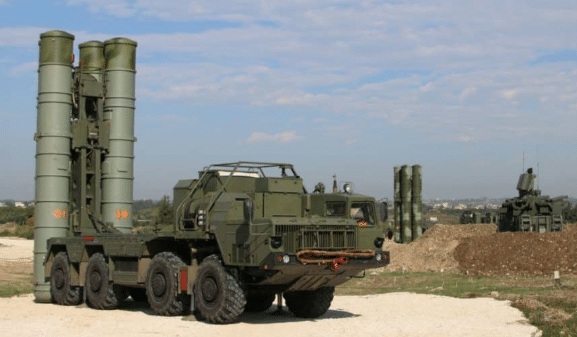
S-400 Triumf
- Type: Long-range Surface-to-Air Missile (SAM) system.
- Origin: Developed by Almaz-Antey, Russia.
- Part of Sudarshan Chakra; a multi-layer defense system to protect assets.
- Layered Defence: It is unique because it uses four different types of missiles to create a multi-layered shield.
- Range & Altitude: Can engage targets up to 400 km away and at altitudes up to 30 km.
- Target Diversity: Can intercept aircraft, UAVs (drones), cruise missiles, and ballistic missiles.
- Speed: Capable of neutralizing targets moving at Mach 14 (~17,000 km/h).
- Tracking: Its radar can track 300 targets simultaneously and engage 36-80 targets (depending on configuration) at once.
- Anti-Stealth: Its multifunction radars (like the 91N6E Big Bird) are designed to detect “low-observable” (stealth) aircraft.
- Mobility: It is a mobile system (truck-mounted). It features “Shoot-and-Scoot” capability—deployable in 5–10 minutes.
- Deployment in India: Systems are currently deployed at the Western Front (facing Pakistan), the Northern Border (facing China), and the Siliguri Corridor (Chicken’s Neck).
IVFRT Scheme
- Implemented by the Ministry of Home Affairs (MHA).
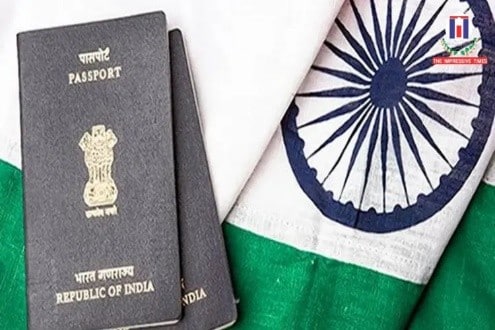
- Purpose: To interlink and optimize functions related to immigration, visa issuance, and registration of foreigners. It creates a unified digital platform to track a foreigner’s journey from “Visa application to Exit.”
- Core Philosophy: “Facilitate legitimate travelers while strengthening national security.”
- The system links key stakeholders such as Indian Missions abroad, Immigration Check Posts (ICPs), Foreigners Regional Registration Offices (FRROs), and security agencies into a unified framework.
- Technological Modernization: The scheme adopts emerging technologies such as biometrics, self-service kiosks, and mobile-based services to ensure a contactless and faceless visa process.
- Security & Surveillance: A critical component is the tracking of foreigners within the country to manage illegal migration and ensure compliance with visa norms.
- Operational Efficiency: The system has already achieved a 100% contactless and faceless visa process, reducing e-Visa clearance times (91.24% cleared within 72 hours) and cutting average manual clearance at posts to 2.5–3 minutes.
AssamSAT Mission
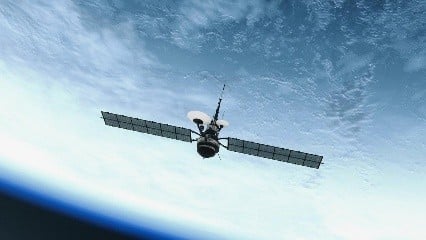
- Pioneering Status: Assam is the first Indian state to float a tender for its own group of earth-observation satellites.
- It is a state-level Earth Observation (EO) satellite system.
- Primary Goals:
- Disaster Management: Real-time monitoring of the flood-prone Brahmaputra valley.
- Border Security: Surveillance of international borders (Bangladesh and Bhutan) to prevent infiltration and smuggling.
- Governance: Monitoring infrastructure projects (roads, embankments) and tracking illegal activities like poaching in Kaziranga or drug trafficking.
- Orbit: Low-Earth Orbit (LEO).
- Quantity: The mission involves a constellation of at least 5 satellites.
- Special Technology: Expected to carry Synthetic Aperture Radars (SAR).
- Assam is under cloud cover for nearly half the year; SAR can “see” through clouds and darkness, unlike optical sensors.
- Implementation Model: DBLOTT (Design–Build–Launch–Operate–Train–Transfer). The state will eventually own the assets.
- Collaborators: Proposed in collaboration with IN-SPACe (Indian National Space Promotion and Authorisation Centre) and ISRO.
Natural Mineral Water
- It must come from underground sources (aquifers/springs) that are naturally protected from pollution.
- It is water obtained directly from underground as opposed to surface sources (like rivers). To be labeled Natural Mineral Water in India (under IS 13428), it must be microbiologically wholesome and possess a constant level of minerals and trace elements.
- Under the Food Safety and Standards (Food Products Standards and Food Additives) Regulations, specific rules apply:
- Prohibited Treatments
- No RO (Reverse Osmosis) or UV treatment
- No chemical disinfection or addition of antimicrobial agents.
- Permitted Treatments: Only physical processes like filtration or decantation to remove unstable elements (like sand or silt) are allowed.
- Aeration: It may be aerated or de-aerated (adding/removing carbon dioxide) for carbonation.
- 📊 Key Chemical Characteristics
- TDS (Total Dissolved Solids): Must be high enough to provide a distinct taste and nutritional value.
- Trace Elements: Naturally contains minerals like Calcium, Magnesium, Potassium, and Sodium in specific ratios.
- Microbiological Purity: Must be free from pathogens like E. coli and Salmonella at the point of origin and during bottling.
Veerangana Durgavati Tiger Reserve
- State: Madhya Pradesh (MP).
- Ranking: It is the 7th tiger reserve in Madhya Pradesh and the 54th in India.
- Districts: Spread across Sagar, Damoh, and Narsinghpur districts.
- Composition: It was created by merging parts of the Nauradehi Sanctuary and the Veerangana Durgavati Sanctuary.
- Landscape: It is part of the Vindhyan Range and acts as a crucial corridor for tiger movement.
- 🐅 Ecological Significance & Connectivity
- Corridor Hub: It provides a natural “green bridge” for tigers moving between the Panna Tiger Reserve and the Satpura Tiger Reserve.
- Flora & Fauna: Dominated by Teak forests and dry deciduous vegetation. It hosts tigers, leopards, sloth bears, and the Indian wolf.
- River Basin: The reserve falls within the Narmada and Yamuna river basins.
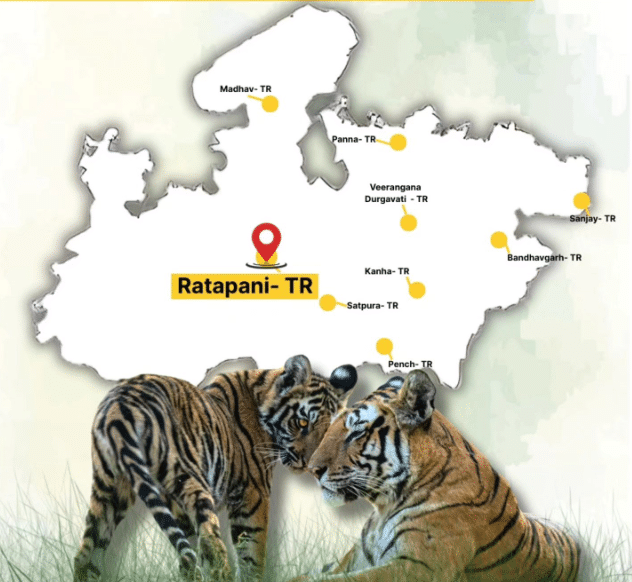
- Madhya Pradesh Chief Minister has laid the foundation for a new soft release Boma (enclosure) at the Veerangana Durgavati Tiger Reserve (VDTR), marking the start of India’s third home for cheetahs.
- 📜 Historical Context
- The Namesake: Named after Rani Durgavati, the ruling Queen of Gondwana in the 16th century, known for her resistance against the Mughal Empire (specifically under Akbar’s general, Asaf Khan).
Prelims MCQ
Q1. With reference to the S-400 Triumf missile system, consider the following statements:
- It is a long-range surface-to-air missile system developed by Russia, capable of engaging targets up to an altitude of 30 km.
- It forms a multi-layered defense shield by utilizing four different types of missiles within a single system.
- Its radar system is designed with anti-stealth capabilities and can track up to 300 targets simultaneously.
Which of the statements given above are correct?
- 1 and 2 only
- 2 and 3 only
- 1 and 3 only
- 1, 2, and 3
Q2. With reference to the Immigration, Visa, and Foreigners Registration & Tracking (IVFRT) Scheme, consider the following statements:
- It is a Mission Mode Project implemented by the Ministry of External Affairs to facilitate the global mobility of Indian citizens.
- The scheme aims to create a unified digital platform that tracks a foreigner’s journey from the stage of visa application until their exit from the country.
- It integrates diverse stakeholders, including Indian Missions abroad, Immigration Check Posts (ICPs), and Foreigners Regional Registration Offices (FRROs).
Which of the statements given above are correct?
- 1 and 2 only
- 2 and 3 only
- 1 and 3 only
- 1, 2, and 3
Q3. With reference to the ‘AssamSAT Mission’, consider the following statements:
- Assam is the first state in India to float a tender for its own constellation of Earth-observation satellites.
- The mission will utilize Synthetic Aperture Radar (SAR) technology to ensure surveillance capability despite the frequent cloud cover in the region.
Which of the statements given above is/are correct?
- 1 only
- 2 only
- Both 1 and 2
- Neither 1 nor 2
- the satellites are expected to carry SAR technology. Unlike optical sensors, SAR can “see” through clouds and darkness, making it ideal for monitoring floods in the Brahmaputra valley and border surveillance.
Q4. With reference to ‘Natural Mineral Water’ standards in India (IS 13428), consider the following statements:
- It must be obtained exclusively from underground sources like aquifers or springs that are naturally protected from pollution.
- Unlike packaged drinking water, it is prohibited from undergoing treatments such as Reverse Osmosis (RO), UV treatment, or chemical disinfection.
- The regulations allow for the manual addition or removal of specific minerals to ensure a constant Total Dissolved Solids (TDS) level before bottling.
Which of the statements given above are correct?
- Only one
- Only two
- All three
- None
Q5. Consider the following statements regarding the Veerangana Durgavati Tiger Reserve (VDTR):
- It was formed by merging parts of the Nauradehi and Veerangana Durgavati sanctuaries, making it the 7th tiger reserve in Madhya Pradesh.
- The reserve serves as an ecological corridor connecting the Panna Tiger Reserve with the Satpura Tiger Reserve within the Vindhyan Range.
- Beyond its role as a tiger habitat, the reserve has been designated to become India’s third home for cheetahs through the construction of a soft-release Boma.
How many of the statements given above are correct?
- Only one
- Only two
- All three
- None