Dynamics of Centre State Relations
In a federal system like India, the relationship between the Centre and the States is the bedrock of democratic stability and national integrity. Often described as “Quasi-federal” or a “Union of States,” the Indian model requires a delicate balance between a strong central authority and autonomous state units.
Importance of Harmonious Relation
- Ensuring National Security & Integrity: Internal security challenges—such as terrorism, left-wing extremism, and cross-border crimes—require seamless coordination between Central agencies (NIA, IB) and State police forces.
- Effective Implementation of Welfare Schemes: Most “Centrally Sponsored Schemes” (e.g., Jal Jeevan Mission, PM-AWAS) are funded by the Centre but executed by the States. Friction leads to “policy paralysis”.
- Economic & Fiscal Stability: A unified market (via GST) and efficient resource allocation (via the Finance Commission) rely on mutual trust. Harmonious relations prevent “fiscal competition” (like states withdrawing from the National Pension System) and ensure a stable environment for Foreign Direct Investment (FDI).
- Disaster Management & Crisis Response: During events like the COVID-19 pandemic or major floods, the Centre provides the “macro-guidelines” and resources, while the States manage the “micro-execution.”
- Accommodating Regional Aspirations within National Unity: India is a “Union of States” with immense linguistic and cultural diversity. Harmonious relations ensure that regional identities (represented by States) feel respected and included.
Constitutional and Legal Provisions for Smooth Relations
- Seventh Schedule (Article 246): Clearly demarcates powers into three lists—Union, State, and Concurrent. This ensures that both levels of government have defined jurisdictions to avoid overlap and friction.
- Inter-State Council (Article 263): Empowered to investigate and discuss subjects of common interest. It serves as the primary constitutional forum for resolving disputes and coordinating policy between the Union and the States.
- Finance Commission (Article 280): A quasi-judicial body appointed every five years to recommend the distribution of net tax proceeds between the Centre and States (Vertical Devolution) and among States (Horizontal Devolution), ensuring fiscal equity.
- All India Services (Article 312): Officers (IAS, IPS) are recruited by the Centre but serve the States. This creates a “shared bureaucracy” that maintains uniform administrative standards across the country.
- GST Council (Article 279A): A post-2016 legal innovation that embodies “Cooperative Federalism.” It is a joint forum where the Centre and States decide on indirect tax rates through a consensus-based voting mechanism.
Despite the framework, several states have recently accused the Union of overstepping its constitutional boundaries, citing “creeping centralisation.”
Arguments Regarding Central Encroachment
- Misuse of the Office of Governor: States often allege that Governors act as “agents of the Centre,” particularly in opposition-ruled states, by indefinitely delaying assent to Bills (Article 200) or interfering in university administrations.
- Fiscal Centralisation & Cesses: While tax devolution happens via the Finance Commission, the Centre increasingly uses Cesses and Surcharges (which are not part of the divisible pool). This effectively reduces the actual share of revenue reaching the States.
- Encroachment on State List Subjects: The Union has been accused of legislating on subjects like Health, Education, and Agriculture (e.g., through national-level schemes or central laws) even though these are primarily in the State or Concurrent lists.
- Terms of Reference (ToR) of Finance Commissions: Recent friction has emerged over the ToR of the 16th Finance Commission, with states arguing that the Centre uses these mandates to impose “fiscal discipline” that restricts the States’ sovereign power to spend on welfare.
- Over-regulation through Central Agencies: The proactive use of central agencies (ED, CBI, NIA) in cases traditionally handled by state police is often seen by regional governments as a tool to undermine the state’s executive autonomy.
Way Forward for Smooth Relations
To transition from “Confrontational Federalism” to “Collaborative Federalism,” the following structural reforms are necessary:
- Punchhi Commission Implementation: The recommendations of the M.M. Punchhi Commission (2010) should be adopted, particularly regarding a “fixed tenure” for Governors and a “6-month timeline” for them to decide on State Bills.
- Strengthening the Inter-State Council: The Council should be made a permanent body with mandatory periodic meetings (as suggested by the Sarkaria Commission) to discuss major policy changes before they are introduced in Parliament.
- Reform of Fiscal Federalism: Cesses and surcharges should be brought under the divisible pool of taxes. Furthermore, Centrally Sponsored Schemes (CSS) should offer more “flexibility” to states to adapt them to local geographical and social realities.
- Consultative Legislating: For subjects in the Concurrent List, the Centre should establish a convention of consulting State Governments before moving a Bill. This prevents legal stalemates and “Anti-Union” sentiments at the grassroots.
- Activating Zonal Councils: These councils should be utilized for “Regional Federalism,” solving trans-boundary issues like river water disputes, internal security, and infrastructure connectivity at a sub-national level before they escalate to the Supreme Court.
250 Years of American Revolution
The American Revolution (1775–1783) was a watershed moment in world history, marking the first time a colony successfully overthrew its imperial master to establish a nation based on Enlightenment ideals. For the UPSC, it is studied as the precursor to modern democratic constitutionalism and a major influence on the Indian National Movement.
Factors Leading to the Revolution

The revolution was not a sudden event but the result of a decade-long estrangement between Britain and its 13 colonies.
- Economic Mercantilism: Britain treated the colonies as a source of raw materials and a market for finished goods. Laws like the Navigation Acts forced colonists to trade only with British ships and ports, stifling local industry.
- Taxation Without Representation: To recover debts from the Seven Years’ War (1756–63), Britain imposed direct taxes (e.g., Stamp Act 1765, Sugar Act 1764). Colonists argued that as they had no representatives in the British Parliament, the Parliament had no right to tax them.
- End of “Salutary Neglect”: For years, Britain had been lenient in enforcing trade laws. The sudden shift to strict administrative control and the stationing of British troops (Quartering Act) created intense resentment.
- Ideological Awakening: Enlightenment thinkers like John Locke (Natural Rights) and Thomas Paine (whose pamphlet Common Sense argued for independence) convinced the masses that a monarch’s power is not divine but based on a “Social Contract” with the people.
- Prohibitive Territorial Policies: The Proclamation of 1763 forbade colonists from settling west of the Appalachian Mountains, frustrating those who had fought the French for that very land.
Brief Chronology of Key Events
| Year | Event | Significance |
| 1770 | Boston Massacre | British soldiers fired on a crowd; used as propaganda to fuel anti-British sentiment. |
| 1773 | Boston Tea Party | Colonists dumped 342 chests of tea into the harbor to protest the Tea Act monopoly. |
| 1774 | 1st Continental Congress | Delegates from 12 colonies met in Philadelphia to petition King George III for redress of grievances. |
| 1775 | Battles of Lexington & Concord | The “shot heard ’round the world”; start of armed conflict. |
| 1776 | Declaration of Independence | Adopted on July 4; formally announced the birth of the USA based on human equality. |
| 1781 | Surrender at Yorktown | General Cornwallis (later sent to India) surrendered to American and French forces. |
| 1783 | Treaty of Paris | Britain officially recognized the independence of the United States. |
Fundamental Global Changes
The American Revolution acted as a “template” for future political transformations.
- Rise of Constitutionalism: It led to the world’s first written constitution, introducing a “checks and balances” system (Separation of Powers) that most modern democracies, including India, follow.
- Igniting the French Revolution: The success of the American rebels and the bankruptcy of the French treasury (due to supporting the Americans) directly triggered the French Revolution of 1789.
- End of the First British Empire: Britain shifted its focus from the West (Americas) to the East (India), leading to more direct and aggressive administrative control in the subcontinent (e.g., Pitts India Act 1784).
- Promotion of Republicanism: It shattered the “Divine Right of Kings” theory, proving that a government could be run by elected representatives of the people rather than a hereditary monarch.
- Inspiration for Decolonization: It provided a moral and political framework for 19th-century independence movements in Latin America (led by Simon Bolivar) and eventually for 20th-century Asian and African colonies.
Lessons for India
India can draw profound parallels and lessons from the American experience:
- Unity in Diversity: The 13 colonies were diverse and often bickering, but they united against a common external threat. India’s strength lies in a similar Federal Unity where regional identities coexist with national goals.
- Dangers of Fiscal Centralization: The “Taxation without Representation” cry reminds us that the Centre must ensure Fiscal Federalism. Policies like the GST must be managed through consensus to prevent state alienation.
- The Role of Intellectuals: Just as Jefferson and Paine mobilized the Americans, Indian leaders (like Raja Ram Mohan Roy or Ambedkar) showed that intellectual reform is a prerequisite for political freedom.
- Civilian Control over Military: One of the greatest legacies of George Washington was resigning his commission to ensure the military remained subordinate to the elected civilian government—a principle India has strictly upheld.
- The Limits of Force: Britain had a professional army but lost to a motivated “People’s Militia.” This highlights that a state cannot govern effectively for long without the consent of the governed.
Prelims Boosters
CALM-Brain
- It is India’s first-of-its-kind digital repository for data on brain structure and function regarding major psychiatric disorders.
- The repository has been developed by the National Institute of Mental Health and Neuro Sciences (NIMHANS) and the National Centre for Biological Sciences (NCBS) – TIFR under the Rohini Nilekani Centre for Brain and Mind (CBM).
- Core Objectives & Coverage- Focus Disorders: It specifically tracks five major neuropsychiatric conditions: Addiction, Bipolar Disorder, Dementia, Obsessive-Compulsive Disorder (OCD), Schizophrenia.
- Data Types: The repository is multi-modal, integrating clinical records, neuroimaging (fMRI, MRI, EEG), behavioral data, eye-tracking, and genetic information.
- Longitudinal Study: It tracks individuals over time to understand disease onset and progression.
- Family-Based Analysis: It includes data from over 2,700 participants across 1,100 families (studying both affected and unaffected members) to identify biomarkers.
- CALM-Brain provides context-specific data for the Indian population.
- Precision Psychiatry: It aims to move away from “one-size-fits-all” treatments toward personalized/precision medicine for mental health.
- Biorepository Linkage: The data is linked to a stem cell biobank, allowing researchers to study the biological origins of mental illness at a cellular level.
- Early Intervention: By identifying neurocognitive markers, the project helps in diagnosing disorders before severe symptoms manifest.
Modified UDAN Scheme
- The Modified UDAN (Ude Desh ka Aam Nagrik) Scheme is a revamped version of the original Regional Connectivity Scheme (RCS) approved by the Union Cabinet.
- It addresses the “viability crisis” of the previous phases, where nearly 50% of routes (327 out of 663) were discontinued after initial subsidies ended.
- High Discontinuation Rates: According to a CAG of India report, only 7% to 10% of routes remained financially viable after their initial subsidy period ended.
| Feature | Original UDAN (2016) | Modified UDAN (2026) |
| Subsidy Period | 3 Years | Extended to 5 Years |
| Funding Source | RCS Levy on passengers (cross-subsidy) | Direct Budgetary Support (Exchequer) |
| Focus Area | Unserved/Underserved Airports | 100 Airports + 200 Helipads |
| Duration | 10 Years (till 2026/27) | Extended for 10 years (2026–2036) |
- Operation & Maintenance (O&M) Support: For the first time, the government will provide O&M funding for 3 years (capped at ₹3.06 crore/year for airports and ₹0.90 crore/year for heliports) to sustain airports with low traffic.
- Challenge Mode for Development: 100 airports will be developed using a “Challenge Mode,” prioritizing airstrips that show higher readiness and local demand.
- Last-Mile Helipads: A massive push for 200 modern helipads in hilly, remote, and island regions (e.g., J&K, Ladakh, NER, and A&N Islands) with a dedicated outlay of ₹3,661 crore.
- Atmanirbhar Aircraft Procurement: To solve the shortage of small aircraft, the government will procure indigenous planes like HAL Dornier (for Alliance Air) and HAL Dhruv helicopters (for Pawan Hans).
AI Tokens
Tokens are the smallest units of data that a Large Language Model (LLM) processes. While humans read words, AI models break text down into tokens. A token can be a single character, a whole word, or even a part of a word (like the ing in running).
Functioning:

- Tokenization: When you enter a prompt, the tokenizer slices the text into tokens.
- Numerical Conversion: Each token is converted into a unique numerical ID (vector) that the model can understand.
- Processing: The AI predicts the next most likely token in a sequence based on mathematical patterns learned during training.
- Detokenization: The predicted numerical tokens are converted back into human-readable text for the final response.
- Key Characteristics
- Language Variability: Different languages require different numbers of tokens; for example, complex scripts or rare languages often use more tokens per word than English.
- Context Window: Every AI model has a context window limit (e.g., 128k tokens), which defines how much information it can remember or process at one time.
- Statelessness: Models generally process tokens in chunks; they don’t know who you are unless the previous tokens of the conversation are re-sent to the model.
- Granularity: Tokens allow models to understand the relationship between different parts of words, enabling them to handle spelling, grammar, and even coding languages effectively.
Gruh Sugam Portal
- The Gruh Sugam Portal (also referred to as Gruha Sugam) is a specialized digital platform launched by the National Housing Bank (NHB).
- It is a dedicated digital bridge between government employees and lending institutions. The portal functions as an aggregator where employees can register their home loan requirements, receive multiple competitive offers from banks, and complete the application process digitally through their respective administrative units.
| Feature | Details |
| Parent Ministry | Ministry of Finance (NHB is a Statutory Body under it). |
| Nature | Unified Digital Marketplace for housing loans. |
Core Objectives & Features

- Location Independence: Designed for personnel posted in remote or border areas who cannot physically visit banks.
- Digital Integration: Personnel apply through their Administrative Units digitally. No physical paperwork or bank visits are required for initial approvals.Marketplace Model: It acts as an aggregator where multiple Primary Lending Institutions (PLIs)—including banks and HFCs—provide competitive offers.
- Transparency: Users can compare interest rates and loan terms across different lenders on a single dashboard to find the “best-suited offer.”
- End-to-End Monitoring: Includes built-in features for Grievance Redressal, consumer protection, and an AI-enabled Chatbot for real-time query resolution.
Nasha Mukt Vidyalaya Initiative
| Feature | Details |
| Launch Ministries | Joint initiative of the Ministry of Education (MoE) and Ministry of Home Affairs (MHA). |
| Parent Campaign | Nasha Mukt Bharat Abhiyan (NMBA) (Ministry of Social Justice & Empowerment). |
| Timeline | A 3-Year Action Plan (2026–2029). |
| Primary Target | Students, teachers, and school environments (both Government and Private). |
| Apex Guidance | Directives from the 9th Apex Meeting of the Narco-Coordination Centre (NCORD). |
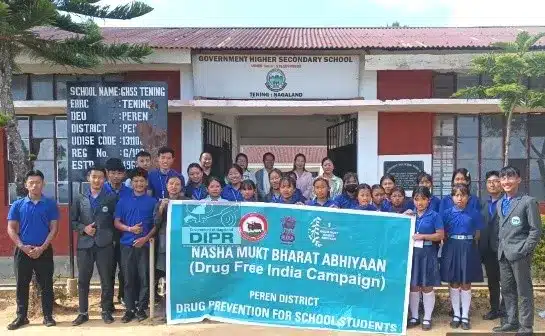
- Declaration: The area within a 500-metre radius of every school must be formally declared a “Drug-Free Zone.”
- Enforcement: It mandates the strict prohibition of the sale of any tobacco, alcohol, or narcotic substances within this perimeter.
- Reporting Mandate: School heads and designated “Nodal Teachers” are legally empowered and required to report any violations directly to local law enforcement (Police) for immediate action.
- The initiative utilizes the Navchetna (New Consciousness) modules developed by the Ministry of Social Justice & Empowerment:
- Target: 9 teacher-driven modules (8 for students of Classes 6th–11th and 1 for parents).
- Focus: Life-skills training, peer-pressure management, and identifying early signs of substance use.
- Implementation: Covers 30,000 schools across 300 vulnerable districts in the first phase.
- Strategic Pillars
- First Line of Defence: Schools are treated as the primary platform for behavioral change and early intervention.
- Peer-Led Intervention: Creation of “Nasha Mukt Clubs” in every school to foster student-to-student support systems.
- Multi-Level Monitoring: A structured reporting framework exists at the School, District, and State levels, integrated with the NMBA Dashboard.
- Linkage with Health: Schools are required to establish physical/operational links with local health systems and District De-addiction Centres (DDACs) for referral and rehabilitation.
Prelims MCQ
Q1. With reference to the ‘CALM-Brain’ initiative, consider the following statements:
- It is India’s first digital repository specifically designed to study the brain structure and functions related to major psychiatric disorders.
- The project is a collaborative effort between NIMHANS and the National Centre for Biological Sciences (NCBS).
- It focuses exclusively on tracking neurodegenerative disorders like Alzheimer’s and Parkinson’s to identify genetic biomarkers.
How many of the statements given above are correct?
- Only one
- Only two
- All three
- None
Q2. With reference to the ‘Modified UDAN (Ude Desh ka Aam Nagrik) Scheme’, consider the following statements:
- Unlike the original scheme which relied on a cross-subsidy levy on passengers, the modified version is funded through direct budgetary support from the exchequer.
- The subsidy period under the Viability Gap Funding (VGF) has been extended from the initial 3 years to 5 years to ensure better route sustainability.
- For the first time, the government will provide Operation & Maintenance (O&M) support for a period of three years to sustain airports with low traffic.
How many of the statements given above are correct?
- Only one
- Only two
- All three
- None
Q3. With reference to ‘AI Tokens’ in Large Language Models (LLMs), consider the following statements:
- Tokens are the smallest units of data processed by an LLM, where a single token always corresponds to exactly one complete dictionary word.
- The “Context Window” of an AI model refers to the maximum number of tokens the model can process or “remember” in a single session.
Which of the statements given above is/are correct?
- 1 only
- 2 only
- Both 1 and 2
- Neither 1 nor 2
Q4. With reference to the ‘Gruh Sugam Portal’, consider the following statements:
- It is a digital platform launched by the National Housing Bank (NHB) to serve as a unified marketplace for housing loans.
- The portal is specifically designed to enable government and defense personnel posted in remote areas to complete home loan processes without physical bank visits.
- Although it deals with housing finance, the portal is under the administrative jurisdiction of the Ministry of Finance rather than the Ministry of Housing and Urban Affairs.
How many of the statements given above are correct?
- Only one
- Only two
- All three
- None
Q5. With reference to the ‘Nasha Mukt Vidyalaya Initiative’ launched in 2026, consider the following statements:
- It is a joint initiative of the Ministry of Education and the Ministry of Home Affairs, functioning as a sub-component of the Nasha Mukt Bharat Abhiyan.
- Under this initiative, a 500-metre radius around every school (both government and private) is mandated to be formally declared a “Drug-Free Zone.”
- The initiative utilizes the ‘Navchetna’ modules, which are specifically designed to provide life-skills training and peer-pressure management for students.
How many of the statements given above are correct?
- Only one
- Only two
- All three
- None