US–China Reset: Strategic Choices for India
Changing Global Context
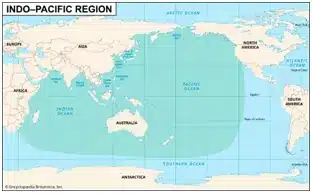
The global order is undergoing significant transformation:
- The US–China relationship is shifting from direct confrontation to managed competition
- The United States is becoming less predictable, focusing on domestic priorities and selective engagement
- China is positioning itself as a stable and long-term strategic actor
Additionally,
- The Iran conflict and global energy disruptions have reshaped geopolitical priorities
- The global economy is moving towards regionalisation and supply chain restructuring
This creates a complex environment for India’s foreign policy.
Implications for India India faces a narrowing strategic space due to these developments. • US–China tensions are reducing but not disappearing As a result, • India must navigate between cooperation and competition | Key Challenges India must address several structural challenges: • China’s Dominance in manufacturing and supply chains
|
Five Strategic Responses for India
Recalibrate Expectations from the US
India should deepen cooperation with the US in critical areas while maintaining realistic expectations.
- Focus on defence modernisation, maritime security, and critical technologies
- Avoid overdependence or unrealistic expectations of full alignment
- Maintain strategic autonomy
2. Engage China with Guarded Realism
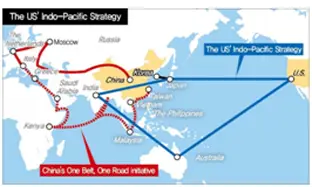
India must continue dialogue with China while protecting core interests.
- Address border disputes firmly, especially along the Line of Actual Control
- Avoid escalation while resisting unilateral changes
- Explore limited cooperation in economic and multilateral domains
Reduce Critical Dependencies
Reducing dependence on China in key sectors is essential.
- Focus on semiconductors, energy, and critical minerals
- Avoid replacing dependence on China with dependence on the US
- Invest in domestic capabilities and innovation
Avoid Middle Power Illusion
India should not assume that it can shape global rules independently.
- Middle powers often lack rule-making authority
- India should focus on strengthening its internal capabilities
- Strategic partnerships should be issue-based, not ideological
Strengthen Neighbourhood Policy
India must reinforce its regional engagement.
- Revitalise neighbourhood-first and Act East policies
- Ensure economic cooperation translates into growth for neighbours
- Balance global ambitions with regional priorities
Way Forward
India’s strategy must be based on long-term capacity building:
- Invest in domestic economic strength and technological capability
- Strengthen defence preparedness and border infrastructure
- Build resilient supply chains
- Promote regional integration and partnerships
Kerala’s Development Model: Growth with Equity under Constraints
Economic Growth with Planning Continuity
Kerala has maintained a structured and planned approach to development.
- Continued formal planning process even after the decline of centralised planning institutions
- Significant increase in capital expenditure since 2017
- Growth rates comparable to or higher than the national average
This reflects a model where state-led planning complements market forces.
Inclusive Development and Social Justice
Kerala’s development model emphasises equity alongside growth.
- Higher budgetary allocation for Scheduled Castes and Scheduled Tribes
- Introduction of Elderly Budget, covering pensions, healthcare, and welfare
- Over seventy-five percent of elderly population covered by pension schemes
- Increased allocations for persons with disabilities
The Public Distribution System acts as a near-universal safety net, ensuring food security and price stability.
Human Development Achievements
Kerala has achieved strong outcomes in education and health.
Education: | Health:
|
These achievements demonstrate sustained investment in human capital.
Women Empowerment and Social Innovation
Kerala has made notable progress in gender and community development.
- High female literacy and life expectancy
- Kudumbashree model promoting women’s empowerment and livelihoods
- Gender budgeting as a significant component of public expenditure
These initiatives strengthen inclusive and participatory development.
Infrastructure and Economic Transformation
The State has invested in modern infrastructure to support growth.
- Development of major roads and connectivity projects
- Expansion of Kochi Metro and Water Metro systems
- Commissioning of Vizhinjam International Seaport
- Growth in renewable energy, especially solar power
These efforts enhance both economic efficiency and regional connectivity.
Industrial and Service Sector Growth
Kerala has diversified its economic base.
- Growth of MSMEs and modern industries
- Expansion in sectors such as IT and tourism
- Improvement in public sector performance
The State has also emerged as a growing startup ecosystem hub, reflecting a shift towards knowledge-based industries.
Strength in Disaster Management
Kerala has gained recognition for effective disaster management.
- Strong decentralised response mechanisms
- Effective handling of floods, pandemics, and emergencies
- Integration of community participation in disaster response
This highlights the importance of institutional capacity and preparedness.
Fiscal Constraints and Federal Challenges
Despite achievements, Kerala faces structural financial challenges.
- Impact of GST regime and reduced fiscal autonomy
- Withdrawal of GST compensation
- Restrictions on borrowing and increasing dependence on central transfers
- Declining share of unconditional transfers
These factors limit the State’s ability to sustain high public investment.
Key Challenges • Fiscal stress due to federal structure | Way Forward • Strengthen cooperative federalism and fiscal autonomy |
Prelims Boosters
Raja Ravi Varma
Context:
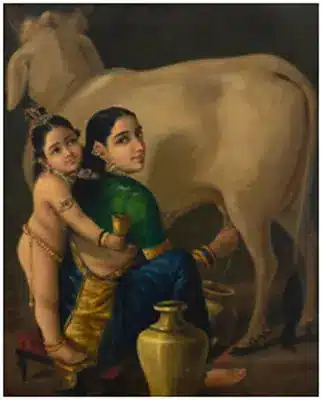
- His painting “Yashoda and Krishna” was recently sold at a record price
About
- Raja Ravi Varma was a prominent Indian painter known for blending Hindu mythological themes with European realism and naturalism
- He was born on 29 April 1848 in Kilimanoor, Kerala, into the Koil Thampuran family
Early Life and Career
- He showed excellence in art from an early age
- He later became one of the first Indian artists to use oil paints
- He also mastered lithographic printing, which allowed large-scale reproduction of his paintings
Art and Themes
- His works mainly depicted:
- Scenes from Hindu mythology
- Portraits of Indian and British personalities
- His paintings are known for their realistic style and detailed expressions
Notable Works
|
Printing Press and Reach
|
Awards and Recognition
- Awarded the Kaiser-i-Hind Medal in 1904
- His painting “Nair Lady Adorning Her Hair” received:
- Governor’s Gold Medal (Madras Presidency)
- Certificate of Merit at Vienna Exhibition
- Awarded Kaiser-i-Hind Medal
Sukhna Wildlife Sanctuary
Context:
- The sanctuary is emerging as a successful example of ecological restoration in the fragile Shivalik Hills
About
- Sukhna Wildlife Sanctuary is a protected area located in Chandigarh, near the famous Sukhna Lake. It lies at the foothills of the Shivalik range. The sanctuary was established in 1998
- It developed as a result of afforestation efforts for soil conservation around the lake
- The lake was created in 1958 by Le Corbusier
- Formed by diverting the Sukhna Choe, a seasonal stream from the Shivalik hills
Geographical Features
- The region is geologically fragile and erosion-prone
- Soil type:
- Mainly sandy Shivalik soil with some clay pockets
- The sanctuary includes about 150 small and large water bodies forming the catchment area
Vegetation
- Composed of a mix of:Forests, Grasslands and Wetlands
- The presence of Sukhna Lake plays a key role in maintaining the ecosystem
Flora
- Common plant species include:Khair, Phulai, Kikar, Shisham, Amaltas, Amla and Vasaka
Fauna
- Major animals found include:Squirrel, Common mongoose, Indian hare, Porcupine, Jungle cat, Jackal and Wild boar
Commission for Air Quality Management (CAQM)
Context:
- The 128th meeting of the Enforcement Task Force (ETF) of CAQM was recently held
About
- The Commission for Air Quality Management (CAQM) is a statutory body
- Established under the Commission for Air Quality Management in NCR and Adjoining Areas Act, 2021
- It is responsible for air pollution control in Delhi-NCR and nearby regions
Mandate
- To ensure better coordination and policy implementation on air quality
- To identify and resolve issues related to air pollution and Air Quality Index (AQI)
- To take measures for prevention and control of air pollution
- Works in coordination with:Delhi, Punjab, Haryana, Rajasthan, Uttar Pradesh
Powers
- It can restrict activities affecting air quality and can conduct research and investigations
- Issues directions and guidelines, which are legally binding
- It has authority to inspect and enforce compliance
- Its orders are mandatory for all authorities and individuals and it is accountable to Parliament
Composition
- Chairperson: Senior government official (Secretary/Chief Secretary rank)
- Ex-officio members: From Delhi, Punjab, Haryana, Rajasthan, Uttar Pradesh
- Full-time members: Technical experts
- Includes representatives from:Central Pollution Control Board (CPCB), Indian Space Research Organisation (ISRO), NITI Aayog and Non-government organisations
Rongali Bihu (Bohag Bihu)
Context:
- The festival of Rongali Bihu is being celebrated across Assam
About
- Rongali Bihu, also known as Bohag Bihu, is one of the major festivals of Assam
- It marks the Assamese New Year and the arrival of spring
- The term “Rongali” comes from ‘Rong’ meaning joy and celebration
- It reflects the rich cultural traditions of Assamese society
Features of Celebration
- People celebrate with music, dance, and community gatherings
- Women wear traditional attire such as mekhela chador made of silk or cotton
- The gamocha (Bihuwaan) is exchanged as a symbol of respect and affection
About Bihu Festival (Overall)
- Bihu is celebrated by people of Assam irrespective of caste, religion, or community
- There are three types of Bihu:
- Rongali Bihu (Bohag Bihu):Celebrated in April and Marks New Year and spring season
- Kati Bihu (Kongali Bihu):Celebrated in October and Associated with crop protection and scarcity
- Magh Bihu:Celebrated in January. Marks harvest season and feasting
YUVIKA (Yuva Vigyani Karyakram)
Context:
- The programme has benefited 1,320 students, promoting interest in space science
About
- YUVIKA (Yuva Vigyani Karyakram) is a young scientist programme
- Conducted by Indian Space Research Organisation
- It is a residential training programme for school students
- Target group: Class 9 students across India
Objective
- To provide basic knowledge of space science and technology
- To encourage students to pursue careers in space sector
- To identify and nurture talent at an early stage
Key Features
- Merit-based selection through academic performance and online quiz
- Ensures transparent selection process
- Provides 15 percent reservation for rural and remote area students
- Ensures inclusive participation across the country
- So far, 1,320 students have benefited from the programme
Key Features
- Merit-based selection through academic performance and online quiz
- Ensures transparent selection process
- Provides 15 percent reservation for rural and remote area students
- Ensures inclusive participation across the country
- So far, 1,320 students have benefited from the programme
Prelims MCQs
Q1. With reference to Rongali Bihu (Bohag Bihu), consider the following statements:
- It marks the Assamese New Year.
- It is associated with the harvest season.
- It signifies the arrival of spring.
Which of the statements given above is/are correct?
(a) 1 only
(b) 1 and 3 only
(c) 2 and 3 only
(d) 1, 2 and 3
Q2With reference to the Commission for Air Quality Management (CAQM), consider the following statements:
- It is a statutory body established by an Act of Parliament.
- It is responsible for air quality management across the entire country.
- Its directions are legally binding on authorities.
Which of the statements given above is/are correct?
(a) 1 only
(b) 1 and 3 only
(c) 2 and 3 only
(d) 1, 2 and 3
Q3. With reference to Sukhna Wildlife Sanctuary, consider the following statements:
- It is located in Chandigarh.
- It lies in the foothills of the Shivalik range.
- It was established in 1958 along with Sukhna Lake.
Which of the statements given above is/are correct?
(a) 1 only
(b) 1 and 2 only
(c) 2 and 3 only
(d) 1, 2 and 3
Q4. With reference to Raja Ravi Varma, consider the following statements:
- He combined Indian mythological themes with European artistic techniques.
- He was among the first Indian artists to use oil painting.
- His works were limited only to abstract art forms.
Which of the statements given above is/are correct?
(a) 1 only
(b) 1, 2 and 3
(c) 2 and 3 only
(d) 1 and 2
Q5. Which of the following statements correctly describes YUVIKA programme?
(a) A scholarship scheme for engineering students
(b) A defence training programme for cadets
(c) A space training initiative for school students by ISRO
(d) A fellowship for PhD researchers