Transforming India’s Nuclear Power Landscape
India is at a crucial stage in its energy transition towards sustainability and long-term energy security goals. The country aims to achieve net-zero emissions by 2070 while meeting rapidly increasing electricity demand. Nuclear energy is being repositioned as a reliable and low-carbon source within the overall energy mix. Recent policy initiatives indicate a shift towards expanding nuclear capacity and encouraging wider participation.
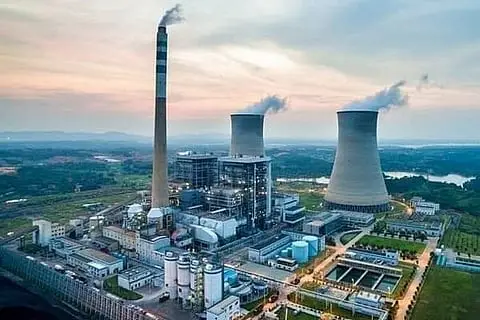
Current Status of Nuclear Energy in India
- India’s nuclear power sector remains relatively small compared to its total electricity generation capacity.
- Installed nuclear capacity is around 8,000 MW, contributing nearly three percent of total electricity generation.
- The sector is largely dominated by public sector entities such as the Nuclear Power Corporation.
- Nuclear energy currently provides stable baseload power but has seen limited expansion over previous decades.
Importance of Nuclear Energy
- Nuclear energy provides continuous baseload power unlike intermittent renewable energy sources like solar and wind.
- It is a low-carbon energy source and supports India’s commitments towards climate change mitigation goals.
- Nuclear power requires comparatively less land, making it efficient for large-scale electricity generation needs.
- It complements renewable energy sources by ensuring grid stability and uninterrupted power supply.
Limitations of Renewable Energy
- Renewable energy sources depend heavily on weather conditions and time variations affecting power generation levels.
- Their intermittent nature requires significant investments in storage technologies for continuous electricity supply.
- Renewable energy projects require large land areas compared to thermal and nuclear power plants.
- Sole reliance on renewables may not ensure long-term stability and reliability of the power grid.
Policy Shift: SHANTI Framework
- The SHANTI framework represents a major transformation in India’s nuclear energy policy and regulatory structure.
- It aims to allow private and foreign participation in nuclear power generation and related infrastructure development.
- The framework seeks to replace earlier restrictive laws and create a more enabling investment environment.
- India has set an ambitious target of achieving around 100 GW nuclear capacity by the year 2047.
Key Challenges
- Nuclear energy expansion faces high capital costs and long gestation periods for project completion.
- Liability laws continue to discourage private sector participation and foreign investment in nuclear projects.
- Dependence on imported technology and fuel creates strategic and economic vulnerabilities for the country.
- Safety concerns, waste management issues, and public acceptance remain significant challenges for expansion.
India’s Indigenous Nuclear Capacity
- India has developed strong indigenous expertise, especially in Pressurised Heavy Water Reactor technology systems.
- These reactors have been successfully adapted and scaled for domestic electricity generation requirements.
- The fleet-based approach aims to reduce costs through standardisation and economies of scale.
- Large-scale expansion will require stronger institutional capacity and sustained financial investment support.
Role of Small Modular Reactors
- Small Modular Reactors are emerging as a promising alternative for future nuclear energy development.
- They require lower initial investment and can be constructed faster compared to traditional large reactors.
- These reactors are suitable for industrial applications and decentralised energy generation across regions.
- India is investing in developing indigenous SMR technology for long-term energy security objectives.
Three-Front Strategy
- India must promote indigenisation to reduce dependence on foreign nuclear reactor technologies and designs.
- Research and development should focus on advanced systems including thorium-based nuclear energy solutions.
- Private sector participation is necessary to mobilise capital and improve efficiency in project execution.
- Institutional reforms are required to ensure smooth coordination between different stakeholders in the sector.
Way Forward
- A transparent and predictable regulatory framework is necessary to attract investments into nuclear energy projects.
- Addressing liability concerns and improving financing mechanisms will support faster expansion of the sector.
- Continued investment in indigenous technology and domestic manufacturing capabilities is essential for growth.
- Public awareness and trust must be enhanced through strong safety standards and transparent communication.
Nuclear energy has the potential to play a significant role in India’s long-term energy security strategy. Achieving ambitious capacity targets will require effective implementation of reforms and sustained investments. A balanced approach combining nuclear and renewable energy is essential for sustainable development goals. India’s nuclear transformation will be critical for achieving both economic growth and climate commitments.
Climate Cooperation: A Sustainable Solution to Energy Price Crises
The global energy crisis shows risks of heavy dependence on fossil fuels in modern economies. Geopolitical conflicts disrupt oil and gas supplies, leading to rising prices and inflation globally. This affects households, industries, and overall economic stability across both developed and developing nations. Climate cooperation provides a long-term and sustainable solution to both energy and climate challenges.
Energy Crisis and Fossil Fuel Dependence
- Fossil fuel dependence makes countries vulnerable to geopolitical shocks and supply disruptions worldwide.
- Conflicts reduce energy supply, causing sudden increases in fuel prices across global markets.
- Higher prices increase costs for transport, production, and household consumption across economies.
- Import-dependent countries face greater inflation and economic stress during such crises.
Link with Climate Change
- Fossil fuels are major contributors to global warming and environmental degradation worldwide.
- Climate change leads to floods, droughts, and extreme weather events affecting livelihoods.
- These disruptions increase economic instability and inflation across countries and regions.
- Energy and climate crises are interconnected and require integrated global solutions.
Benefits of Clean Energy
- Renewable energy sources like solar and wind are not affected by geopolitical conflicts or disruptions.
- Clean energy reduces pollution and improves public health and environmental sustainability globally.
- It creates employment opportunities and supports long-term economic growth across regions.
- Renewable energy is increasingly becoming cheaper compared to traditional fossil fuel sources.
Global Inequality in Climate Finance
- Developed countries dominate climate finance while developing countries receive limited financial support.
- Vulnerable nations struggle to invest in clean energy and climate resilience infrastructure.
- This creates inequality in global energy transition and slows down collective progress.
- Equitable financial support is essential for achieving a truly global transition.
Role of Climate Cooperation
- Climate cooperation helps countries address energy and climate challenges collectively and effectively.
- Platforms like UN Climate Change enable dialogue and coordinated global action.
- Cooperation supports technology sharing and financial assistance among countries.
- It promotes collaboration over competition in global energy and climate governance.
Need for Faster Transition
- The shift towards clean energy must accelerate to meet global climate and energy goals.
- Investments are needed in renewables, storage systems, and modern electricity infrastructure.
- Policies must support communities affected by the transition from fossil fuel-based economies.
- Faster transition will bring economic, environmental, and social benefits worldwide.
Fossil fuel dependence leads to repeated energy crises and economic instability across nations. Climate cooperation offers a stable and sustainable pathway for future energy security. Clean energy transition is necessary for both economic growth and environmental protection. Coordinated global action is essential to overcome energy price instability and climate challenges.
PRELIMS BOOSTERS
No-Cloning Theorem (Quantum Physics)
Context:
- New research suggests a possible workaround using encrypted quantum information storage techniques
What is No-Cloning Theorem?
- It is a principle of quantum mechanics stating that an unknown quantum state cannot be copied exactly
- Unlike classical data, quantum information cannot be perfectly duplicated without disturbance
Key Features
- Applies only to unknown quantum states (qubits); known states can be recreated
- Exact copying is impossible; only approximate and imperfect copies can be made
- Based on linearity of quantum mechanics, which prevents universal copying
- Any attempt to copy disturbs the original quantum state
Recent Development (Loophole)
- Scientists found that quantum data can be stored in an encrypted and distributed form
- The information appears as random noise unless a specific key is used
- This does not violate the theorem but works within its limits
Importance
- Forms the basis of quantum cryptography (secure communication systems)
- Ensures that any interception can be detected
- Important for quantum computing and error correction techniques
- Highlights difference between classical and quantum information systems
Sādhana Saptah Initiative
Context:
- Sādhana Saptah 2026 aims to build a future-ready civil services system in India
About
- Sādhana Saptah Initiative is a programme under Mission Karmayogi
- Mission Karmayogi is the National Programme for Civil Services Capacity Building
- The term SĀDHANA stands for Strengthening Adaptive Development and Humane Aptitude for National Advancement
Objective
- To develop skills for citizen-centric governance
- To enhance efficiency, accountability, and responsiveness in civil services
- To support the vision of Viksit Bharat 2047
Organisation Involved
- Led by: Department of Personnel and Training (DoPT), Capacity Building Commission and Karmayogi Bharat
- Brings together: Central Ministries, State Governments and Union Territories and Training institutions
Key Features
- Based on three Sutras (pillars): Technology, Tradition and Tangible Outcomes
- Provides learning through:
- iGOT Karmayogi platform courses
- Group discussions (Samuhik Charcha)
- Webinars and workshops
- Focus areas include: Leadership, Communication, Data analysis, Project management, Digital governance.
Significance
- Promotes capacity building of civil servants
- Encourages modern and citizen-focused administration
- Strengthens governance delivery systems in India
Barnawapara Wildlife Sanctuary
Context:
- Blackbucks have been reintroduced into Rampur grassland of the sanctuary
About
- Barnawapara Wildlife Sanctuary is located in Mahasamund district, Chhattisgarh
- Named after the Bar and Nawapara forest villages situated within the sanctuary
- Spread over an area of about 245 square kilometres
Location and Geography
- Water sources include tributaries of the Mahanadi River
- Balamdehi River forms the western boundary
- Jonk River forms the northeastern boundary
Vegetation
- Dominated by tropical dry deciduous forests
- Provides suitable habitat for diverse wildlife
Flora
- Major trees include Teak, Sal, Bamboo, and Terminalia species
- Other plants include Semal, Mahua, Ber, and Tendu
Fauna
- Important animals found include: Tiger and Leopard, Indian bison (Gaur), Nilgai and Wild boar, Sambar and Cheetal & Porcupine and Python
- Rich bird diversity with around 150 species, including: Parrots, Herons and Egrets, Peafowl, Blackbuck
Significance
- Important for conservation of central Indian forest biodiversity
- Supports grassland and forest ecosystem restoration efforts
- Recent reintroduction highlights wildlife management initiatives
Azerbaijan
Context:
- India and Azerbaijan held Foreign Office Consultations in Baku to review bilateral relations
About
- Azerbaijan is a transcontinental country located between Eastern Europe and Western Asia
- It is the largest country in the Caucasus region
- Often called the “Land of Fire” due to natural gas seeps
- Capital: Baku
Location and Boundaries
- Bounded by: Caspian Sea to the east, Russia to the north, Georgia to the northwest, Armenia to the west and Iran to the south
- Shares a short border with Turkey through the Nakhchivan exclave
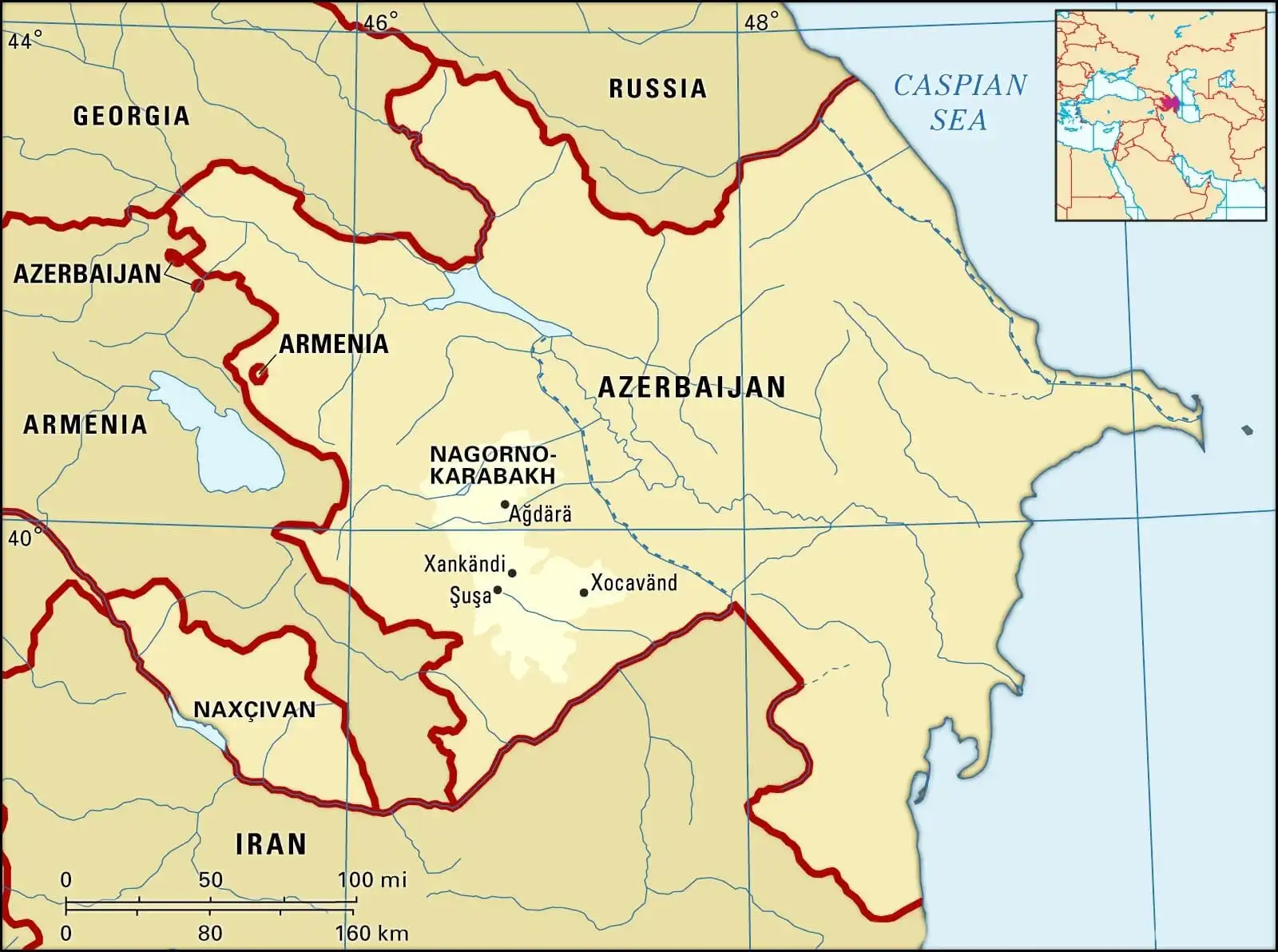
Key Geographical Features
- Caucasus Mountains: Greater Caucasus in the north and Lesser Caucasus in the west
- Caspian coastline: Includes Absheron Peninsula, where Baku is located
- Mud Volcanoes: Nearly half of the world’s mud volcanoes are found here
- Kura-Aras Lowland: Major river valley and fertile plain
- Rich in oil and natural gas reserves
Significance
- Important energy supplier due to large oil and gas reserves
- Acts as a key link in the International North-South Transport Corridor (INSTC)
- Strengthens India’s connectivity with Central Asia, Russia, and Europe
Project Chetak
Context:
- The 47th Raising Day of Project Chetak was celebrated at Bikaner, Rajasthan
About Project Chetak
- Project Chetak is an infrastructure project of the Border Roads Organisation
- It was raised in 1980 in the western border region of India
- It focuses on road construction and maintenance in border areas
Area of Operation
- Covers regions in: Rajasthan, Punjab and Northern Gujarat
- One of the largest BRO projects, covering over 4000 km of roads
Functions
- Develops and maintains border road infrastructure
- Provides connectivity to remote and strategic areas
- Supports movement of defence forces near the International Border
- Upgrades roads to national highway double-lane standards
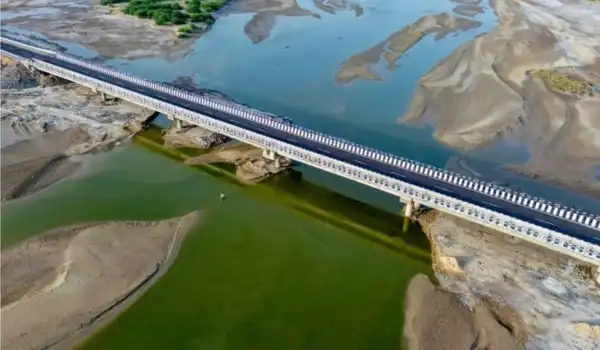
Significance
- Strengthens national security and border management
- Enhances connectivity and regional development
- Supports economic growth in remote areas
About Border Roads Organisation (BRO)
- Established in 1960
- Works under the Ministry of Defence (since 2015)
- Responsible for building: Roads, Bridges, Tunnels and Airfields
- Motto: “Shramena Sarvam Sadhyam” (Everything is achievable through hard work)