RTE Act: Bridging Social Divides through Inclusive Education
The Right to Education framework reflects India’s constitutional commitment to equality by ensuring that education becomes a tool for social transformation rather than social division. The provision mandating reservation in private schools seeks to create shared learning spaces where children from diverse socio-economic backgrounds can study together and build a more inclusive society.

Core Provision of RTE (Section 12(1)(c))
- The law mandates that private schools reserve 25% seats for economically weaker sections.
- The objective is to ensure access to quality education for disadvantaged children.
- It promotes social integration by bringing children from different backgrounds into the same classroom.
Judicial Reinforcement
- The Supreme Court reaffirmed the constitutional validity and importance of this provision.
- The Court emphasised that the provision is not merely about access but about equality of status.
- It aims to create shared educational spaces that reflect social diversity.
Concept of Social Inclusion
- Social inclusion means reducing barriers between different social and economic groups.
- Mixed classrooms help children interact across class boundaries and develop mutual understanding.
- Such exposure builds confidence, aspirations, and a broader worldview among disadvantaged children.
Misconceptions About the Provision
- The provision is often wrongly seen as promoting privatisation of education.
- In reality, it recognises that private schools are part of the broader education ecosystem.
- It does not reduce the responsibility of the state to strengthen public education.
Shift Towards Private Schooling
- The movement towards private schools began before the RTE Act due to concerns about quality in government schools.
- Declining enrolment in public schools reflects issues such as infrastructure gaps and teacher shortages.
- Therefore, the problem lies in systemic issues, not in the RTE provision itself.
Evidence of Impact
- Millions of children have benefited from this provision since its implementation.
- High retention rates indicate that children are able to continue their education successfully.
- Research shows that mixed classrooms improve social behaviour and reduce discrimination.
Benefits Beyond Academics
- Children gain exposure to better facilities, peer networks, and institutional culture.
- This enhances self-confidence, ambition, and long-term opportunities.
- Education becomes a pathway for social mobility and breaking poverty cycles.
Implementation Challenges
- Some private schools resist inclusion or impose indirect costs on families.
- There are issues of transparency, delayed reimbursements, and weak monitoring.
- Awareness among beneficiaries is uneven, especially in rural areas.
Administrative and Policy Gaps
- Lack of efficient grievance redressal mechanisms affects implementation.
- Variations across states create uneven access and outcomes.
- Weak last-mile delivery reduces the effectiveness of the scheme.
Recent Improvements
- Digital admission systems have improved transparency and accountability.
- States have strengthened monitoring mechanisms to ensure compliance.
- Better tracking systems have enhanced access for eligible children.
Way Forward
- Governments must ensure timely reimbursements to private schools.
- Hidden costs must be eliminated to make education truly accessible.
- Strong enforcement of inclusion norms and grievance mechanisms is needed.
- Simultaneously, public education must be strengthened to ensure balanced development.
The RTE provision on social inclusion represents a powerful constitutional tool to bridge socio-economic divides through education. Its true success lies not only in expanding access but in creating meaningful integration, where classrooms become spaces of equality, dignity, and shared opportunity for all children.
After UAE’s Exit from OPEC, India Must Recalibrate Its Energy Strategy
The exit of the United Arab Emirates from OPEC marks a significant shift in global oil geopolitics, reflecting both internal cartel tensions and changing strategic priorities in West Asia. For India, a major energy importer, this development is not merely about oil prices but about rethinking long-term energy partnerships, supply security, and geopolitical positioning in an increasingly uncertain global energy landscape.
Why UAE Exited OPEC
- The UAE seeks to expand oil production beyond OPEC’s quota restrictions to maximise revenues.
- It possesses low-cost production capacity, making higher output economically viable even at moderate prices.
- Growing differences with Saudi Arabia over production strategies have weakened internal cohesion.
- The UAE is pursuing a more independent economic and geopolitical strategy in the region.
Implications for OPEC and Global Oil Markets
- The exit signals weakening discipline within OPEC and challenges its ability to control supply.
- It may encourage other members to prioritise national interests over cartel commitments.
- Increased production competition could lead to softer oil prices in the long term.
- However, short-term price volatility will continue due to geopolitical disruptions such as conflicts in West Asia.
Strategic Significance Beyond Oil
- The move reflects broader geopolitical realignments within the Gulf region.
- It raises questions about the cohesion of regional groupings like the Gulf Cooperation Council (GCC).
- The UAE’s evolving alignment with global powers and regional actors indicates shifting power balances.
Impact on India
- India imports nearly 85–90% of its crude oil requirements, making it highly vulnerable to global price changes.
- Lower oil prices in the long run can reduce India’s import bill and inflationary pressures.
- However, instability in West Asia affects Indian diaspora, remittances, and energy supply security.
- Any disruption in the Strait of Hormuz directly impacts India’s energy imports.
Risks for India
- Increased regional instability can threaten the safety of Indian workers in Gulf countries.
- Volatility in oil prices can affect fiscal stability and current account balance.
- Dependence on a limited number of suppliers exposes India to geopolitical risks.
Need for Energy Diversification
- India must diversify its crude oil import sources beyond the Gulf region.
- Expanding ties with countries like the United States, Russia, and Africa can reduce dependency.
- Strategic petroleum reserves should be strengthened to manage supply disruptions.
Role of Alternative Energy
- India must accelerate its transition towards renewable energy sources such as solar and wind power.
- Promotion of electric mobility and green hydrogen can reduce fossil fuel dependence.
- Energy efficiency measures can further reduce vulnerability to global shocks.
Strengthening Energy Diplomacy
- India needs proactive energy diplomacy with Gulf countries to ensure stable supply arrangements.
- Long-term contracts and strategic partnerships can enhance energy security.
- Engagement in multilateral energy forums can strengthen India’s global energy position.
Institutional and Policy Response
- India should develop a clear long-term energy strategy aligned with geopolitical realities.
- Coordination between economic, foreign policy, and energy sectors is essential.
- Policy clarity can attract investments in energy infrastructure and diversification.
The UAE’s exit from OPEC is a reminder that global energy markets are becoming more fragmented and geopolitically complex. For India, this moment presents both risks and opportunities, making it essential to move beyond short-term price considerations and build a resilient, diversified, and strategically aligned energy framework for the future.
Prelims Boosters
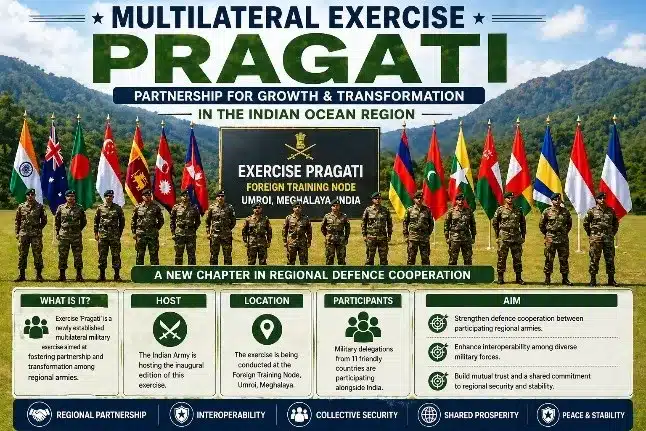
Multilateral Exercise ‘Pragati’
Context:
- The Indian Army is conducting the first (inaugural) Exercise Pragati in Meghalaya
About
- Exercise Pragati is a multilateral military exercise
- It stands for: Partnership of Regional Armies for Growth and Transformation in the Indian Ocean
- It is hosted by the Indian Army
Location
- It is being conducted at: Foreign Training Node, Umroi (Meghalaya)
Participation
- It includes: India + 11 friendly countries
Aim
- It aims to:
- Strengthen defence cooperation
- Improve interoperability (ability to work together)
- Build trust among regional armies
- Promote regional stability
Key Features
1. Multilateral Platform
2. Focus on Indian Ocean Region (IOR)
3. Joint Training
|
4. Collective Security Concept
5. Specialized Training Location
|
Significance
- It strengthens India’s defence diplomacy
- It reinforces Neighbourhood First policy
- It enhances regional security cooperation in IOR
- It positions India as a key security partner in the region
Organisation of the Petroleum Exporting Countries (OPEC)
Context:
- The United Arab Emirates (UAE) has announced its exit from OPEC and OPEC+ from May 1, 2026, which may impact global oil markets.
About
- OPEC is a permanent intergovernmental organization of oil-exporting countries
- It was established in 1960 (Baghdad)
- Founding members:
- Iran, Iraq, Kuwait, Saudi Arabia, Venezuela
- Headquarters: Vienna, Austria
Objective
- It aims to:
- Stabilize global oil prices
- Ensure steady supply of oil
- Protect interests of oil-producing countries
Key Features
1. Global Influence
2. Production Control
|
3. Membership
|
What is OPEC+?
- OPEC+ is an expanded group formed in 2016
- It includes: OPEC members + non-OPEC oil producers
- Key countries: Russia, Mexico, Kazakhstan, Oman, etc.
- It coordinates global oil supply decisions
Recent Development (UAE Exit)
- UAE exit is due to:
- Desire for greater production flexibility
- Strategic and economic priorities
- Impact:
- It may weaken OPEC’s control over oil prices
- It may increase global oil supply competition
Significance
- OPEC plays a major role in global energy security
- It influences fuel prices, inflation, and global economy
- Changes in OPEC affect countries like India (major oil importer)
Atacama Desert
Context:
- Light pollution is threatening the world’s darkest skies in the Atacama Desert
About
- The Atacama Desert is the driest desert in the world
- It is located in northern Chile (South America)
Location & Extent
- It lies between: Andes Mountains (east) and Pacific Ocean (west)
- It stretches for about 1000 km along Chile’s coast
- It is bordered by: Peru, Bolivia, Argentina
Climatic Features
1. Extremely Dry
|
2. Temperature
|
Physical Features
- It contains salt flats, rocky terrain, and sand dunes
- It has around 12 volcanoes (mainly near Andes)
Natural Resources
- It has large deposits of: Sodium nitrate (used in fertilizers and explosives)
Special Features
Dark Sky Region
- It is one of the best places in the world for astronomy
- Very low light and cloud cover
Chinchorro Mummies
- It has the oldest artificially mummified human remains
Significance
- It is important for astronomical research
- It is a unique extreme ecosystem
- It is rich in mineral resources
Somalia
Context:
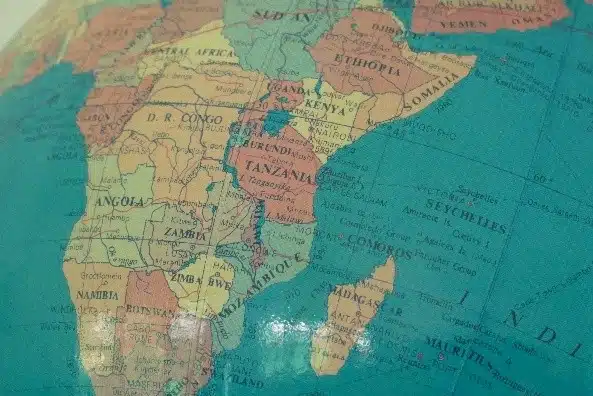
- Somalia is frequently in news due to its strategic location in the Horn of Africa and maritime routes
About
- Somalia is a country located in the Horn of Africa (eastern Africa)
- The Equator passes through southern Somalia
- Capital: Mogadishu
Location & Boundaries
- It is bordered by: Djibouti (northwest); Ethiopia (west); Kenya (southwest)
- It has maritime borders with:
- Gulf of Aden (north)
- Indian Ocean (east)
Geographical Features
1. Climate
2. Relief (Landforms)
|
3. Rivers
4. Mountains
|
Natural Resources
- It has: Iron ore, Uranium, Copper, Tin, bauxite, gypsum, salt
Significance
- It lies along important global shipping routes (near Gulf of Aden)
- It is strategically important for maritime trade and security
- It is part of the Horn of Africa geopolitical region
Vitamin E
Context:
- A study shows that 300 mg daily Vitamin E can improve liver tissue in fatty liver disease (MASH)
About
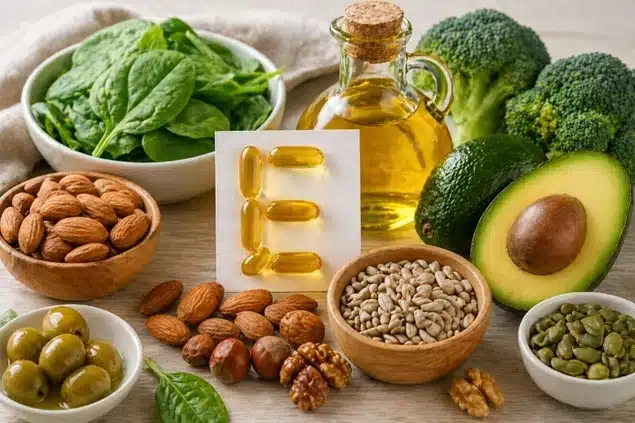
- Vitamin E is a fat-soluble vitamin
- The main usable form in humans is alpha-tocopherol
- It is stored in: Fat tissues and Liver
Functions
1. Antioxidant Role
2. Immune Support
3. Eye & Skin Health
|
4. Blood Function
5. Nutrient Interaction
|
Food Sources
- Vegetable oils (canola, olive oil); Nuts and seeds; Leafy vegetables; Meat and dairy products; Fortified cereals
Deficiency Causes
- It occurs in people with fat absorption problems, such as: Celiac disease, Cystic fibrosis and Pancreatitis
Deficiency Symptoms
- Retinopathy → vision problems
- Peripheral neuropathy → nerve damage (pain/weakness)
- Ataxia → loss of body coordination
- Weak immunity
Significance
- It protects against cell damage and inflammation
- It is important for liver health, immunity, and nerves