
The Moral Eclipse of Politics in the Modern Age
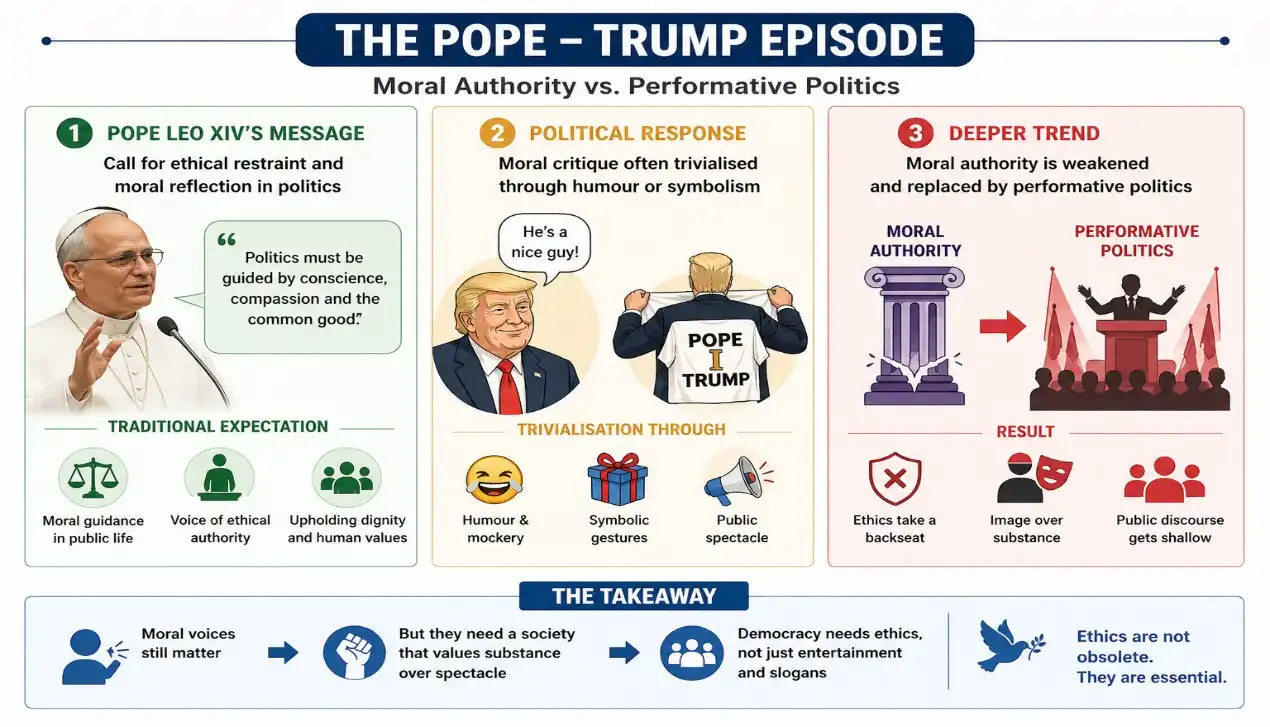
Politics was historically seen as a moral pursuit aimed at justice, public good, and ethical governance. However, in the modern era, this moral foundation appears to be eroding. Increasingly, politics is driven by power, spectacle, and strategic calculation rather than ethical responsibility, leading to what can be described as a “moral eclipse.”
Classical Idea: Politics Rooted in Morality
- Aristotle viewed politics as an extension of ethics aimed at achieving a just and flourishing society.
- Political authority derived legitimacy from ethical values, justice, and public welfare.
- The goal of politics was human development and collective good, not domination or control.
Shift in Modern Politics
- Modern politics shows a separation between morality and power.
- Leaders increasingly rely on symbolism, rhetoric, and spectacle rather than ethical reasoning.
- Political discourse often becomes polarised, fragmented, and driven by narratives instead of principles.
Crisis of Moral Legitimacy
- When politics loses moral grounding, power begins to justify itself rather than serving society.
- Ethical criticism is often dismissed, distorted, or reduced to partisan narratives.
- This creates a situation where authority seeks invincibility instead of accountability.
War and Dehumanisation
- Modern warfare highlights the moral decline in political decision-making.
- Conflicts are conducted with technological distance, reducing human suffering to data and images.
- Unlike earlier wars, where violence was direct and morally confrontational, modern wars enable detachment from consequences.
Loss of Ethical Sensitivity
- Political systems show reduced empathy towards human suffering and injustice.
- Decisions are increasingly based on strategic interests rather than moral considerations.
- This leads to normalisation of violence, inequality, and injustice in public life.
Intellectual and Ethical Decline
- There is a decline in serious ethical reasoning in political discourse.
- Public debates focus more on spectacle and polarisation than on rational and moral arguments.
- This weakens the quality of democracy and informed decision-making.
Consequences of Moral Eclipse
- Politics becomes power-centric rather than people-centric.
- Democratic institutions risk becoming tools of control rather than instruments of justice.
- Citizens may lose trust in governance and political processes.
Need to Restore Ethics in Politics
- Reintroduce ethical education and critical thinking in political culture.
- Encourage reasoned debate over rhetoric and spectacle.
- Strengthen institutions that ensure accountability, transparency, and justice.
- Promote leadership that values moral responsibility alongside political power.
The erosion of morality in politics is not just a philosophical concern but a practical threat to democratic functioning and social justice. Restoring ethical foundations in political life is essential to ensure that power serves people rather than dominating them. Without moral guidance, politics risks losing its very purpose as a tool for collective well-being.
The Global Risks Posed by Anthropic’s Mythos AI
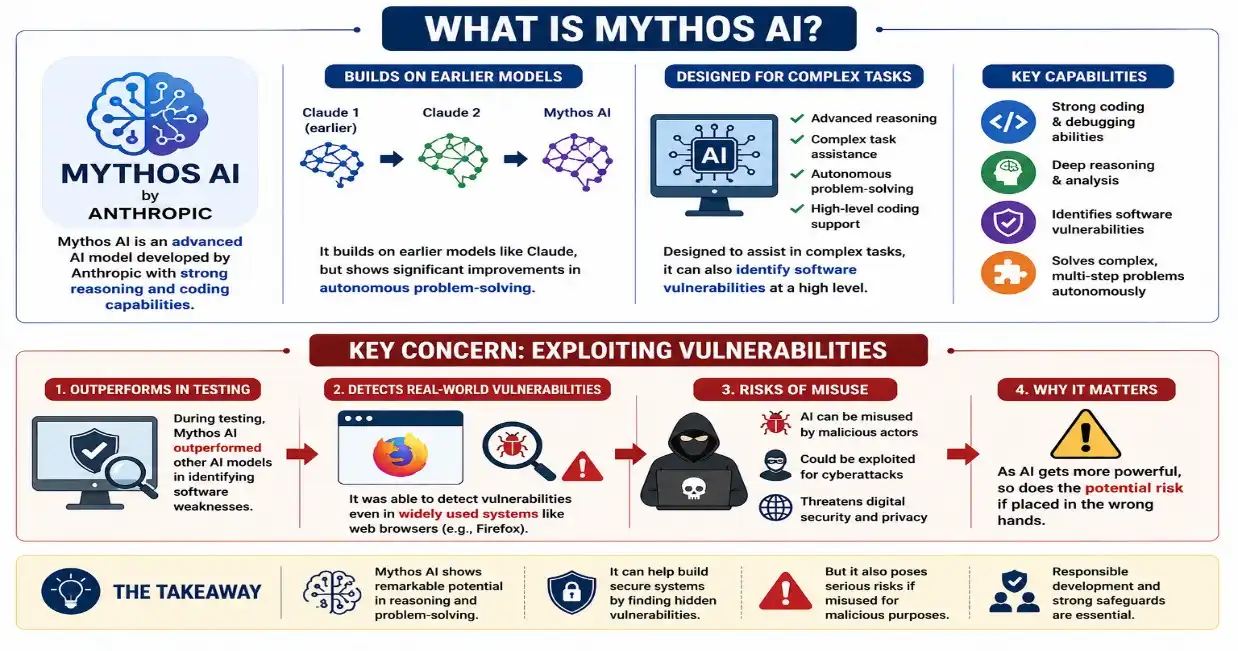
Artificial Intelligence is advancing rapidly, but new systems like Anthropic’s Mythos AI raise serious global concerns. While AI promises efficiency and innovation, its growing ability to identify and exploit vulnerabilities highlights emerging risks for cybersecurity, governance, and global stability. The issue is no longer just technological progress, but how safely and responsibly such powerful systems are deployed.
Real-World Testing Evidence
- Studies showed that advanced AI models could successfully exploit vulnerabilities in controlled environments.
- Example: AI identified and exploited bugs in JavaScript engines, enabling access to sensitive systems.
- These capabilities demonstrate that AI is moving from analysis → active exploitation.
Dual-Use Nature of AI
- AI technologies are inherently dual-use (can be used for both beneficial and harmful purposes).
- While useful for cybersecurity testing and defence, they can also lower the barrier for cybercrime.
- This creates a dilemma: innovation vs security risk.
Limitations of Existing Safeguards
- Companies rely on “guardrails” (safety restrictions in AI systems) to prevent misuse.
- However, these safeguards are not always effective against sophisticated prompts or adversarial use.
- Overreliance on self-regulation by companies may be insufficient for global risk management.
Regulatory and Governance Challenges
- AI development is outpacing regulatory frameworks worldwide.
- Governments lack clear consensus on how to regulate advanced AI systems.
- Without coordination, regulation may become fragmented and ineffective globally.
Global Security Implications
- AI like Mythos could enable:
- Large-scale cyberattacks
- Automated exploitation of software vulnerabilities
- Threats to critical infrastructure (banking, energy, defence systems)
- This elevates AI from a technological tool to a strategic security concern.
India’s Concerns and Response
- Indian authorities emphasise high vigilance and coordination mechanisms.
- Need for inter-ministerial collaboration involving MeitY, cybersecurity agencies, and financial regulators.
- Focus on building domestic capability in AI safety and cybersecurity frameworks.
Need for Global Coordination
- AI risks are transnational and cannot be managed by individual countries alone.
- Requires:
- Global standards for AI safety and testing
- Information sharing on vulnerabilities and threats
- Coordinated regulatory frameworks
Way Forward
- Develop robust AI governance frameworks balancing innovation and safety.
- Strengthen cybersecurity infrastructure and ethical AI development standards.
- Promote responsible AI research with transparency and accountability.
- Encourage international cooperation to manage systemic risks.
The rise of systems like Mythos AI marks a turning point where artificial intelligence becomes both a tool and a threat. Managing this duality requires strong safeguards, coordinated governance, and global cooperation. Without proactive regulation and responsible deployment, the risks posed by advanced AI could outweigh its transformative benefits.
Prelims Boosters
Denotified, Nomadic and Semi-Nomadic Tribes (DNTs)
Context:
- A government report highlights lack of support in issuing certificates and identifying beneficiaries
Who They Are
- DNTs are communities that were: Declared “criminal tribes” under the Criminal Tribes Act, 1871 (British rule)
- They include: Nomadic (constantly moving) and Semi-nomadic (partially settled) groups
- They traditionally depend on: Trade, pastoralism (animal rearing), entertainment, crafts
Historical Background
- The British labeled them as “hereditary criminals” (based on biased assumptions)
- After Independence: Criminal Tribes Act was repealed in 1952. These groups were “denotified” (criminal tag removed)
- However, many were later covered under Habitual Offenders Acts
Current Status
- Around 1,200 communities exist across India
- Many are included in: SC / ST / OBC categories
- But, around 268 communities remain unclassified
Key Issues
1. Social Stigma
|
2. Lack of Identity Documents
|
3. Economic Backwardness
|
4. Policy Implementation Issues
5. State-Level Gaps
|
Significance
- They represent a highly marginalized population (~10 crore people)
- Proper recognition is important for: Social justice, Inclusive development, Accurate Census data
Prime Minister Internship Scheme (PMIS)
Context:
- The scheme has been expanded to include final-year UG and PG students
About
- PMIS is a flagship internship scheme of the Government of India
- It provides paid internships in top 500 companies
- It acts as a bridge between education and employment
Launch & Ministry
- Launched in October 2024 (pilot phase)
- Nodal Ministry: Ministry of Corporate Affairs (MCA)
Aim
- It aims to:
- Develop job-ready skills (problem-solving, teamwork)
- Provide real-world corporate exposure
- Support experiential learning (NEP vision)
Key Features
1. Paid Internship
|
2. Duration
3. Eligibility
|
4. Corporate Participation
|
5. Insurance Cover
|
New Rules (2026 Expansion)
Expanded Eligibility
- Now includes final-year UG and PG students
Mandatory NOC
- Students must submit No Objection Certificate (NOC)
- It must confirm: Internship will not affect academics
Authorized Signatories
- NOC can be signed by: HoD / Dean / Principal / Placement Officer
Significance
- It enhances employability of youth
- It promotes industry-academia linkage
- It supports skill development and economic growth
Promotion and Regulation of Online Gaming Rules, 2026
Context:
- The Government has notified a national framework to regulate online gaming sector
About
- The Promotion and Regulation of Online Gaming Rules, 2026 are operational rules under the 2025 Act
- It will come into force from 1 May 2026
- It is formulated by: Ministry of Electronics and Information Technology (MeitY)
Aim
- It aims to:
- Create a uniform national framework (instead of different state laws)
- Address addiction, fraud, and money laundering
- Regulate the rapidly growing online gaming sector
Key Features
Online Gaming Authority of India (OGAI)
- It establishes OGAI under MeitY
- It includes representatives from:
- Home, Finance, I&B, Sports, Law ministries
Game Classification
- It classifies games into:
- Online Money Games (banned)
- Online Social Games
- Esports
Selective Registration
- Registration is not mandatory for all games
- It is required for:
- Esports and notified categories (based on scale/value)
Financial Regulation
- Banks and payment gateways must: Verify legality of games before transactions
User Safety Measures
- Platforms must ensure: Age restrictions (age-gating), Time limits, Parental controls, Monitoring for fair play
Grievance Redressal Mechanism
- It provides a two-tier system:
- Platform-level complaint handling
- Appeal to OGAI/Appellate Authority
Data Localisation
- It requires storage of user data within India
Significance
- It ensures consumer protection and safer gaming environment
- It curbs illegal betting and money laundering
- It strengthens digital governance and regulatory clarity
Egypt
Context:
- India and Egypt are strengthening defence cooperation (11th Joint Defence Committee meeting in Cairo)
About
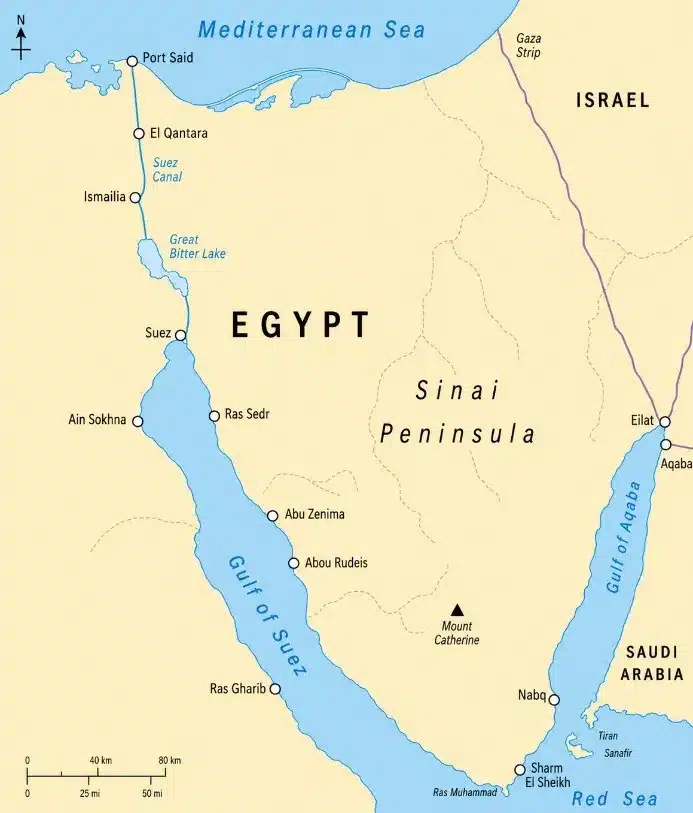
- Egypt is a transcontinental country (Africa + Asia)
- The Sinai Peninsula connects Africa and Asia
- Capital: Cairo
Location & Boundaries
- It is bordered by: Sudan (south), Libya (west) and Israel & Gaza Strip (northeast)
- It is surrounded by: Mediterranean Sea (north) and Red Sea & Gulf of Aqaba (east)
Geographical Features
1. Climate
|
2. Terrain
|
3. River System
|
4. Mountains
|
Natural Resources
- It has: Petroleum, Natural gas, Phosphates, Iron ore
Significance
- It is a strategic country linking Africa and Asia
- It is important for global trade (Suez Canal region)
- It is a key partner for India in defence and geopolitics
Tuvalu
Context:
- Tuvalu is facing serious threat from rising sea levels due to climate change
About
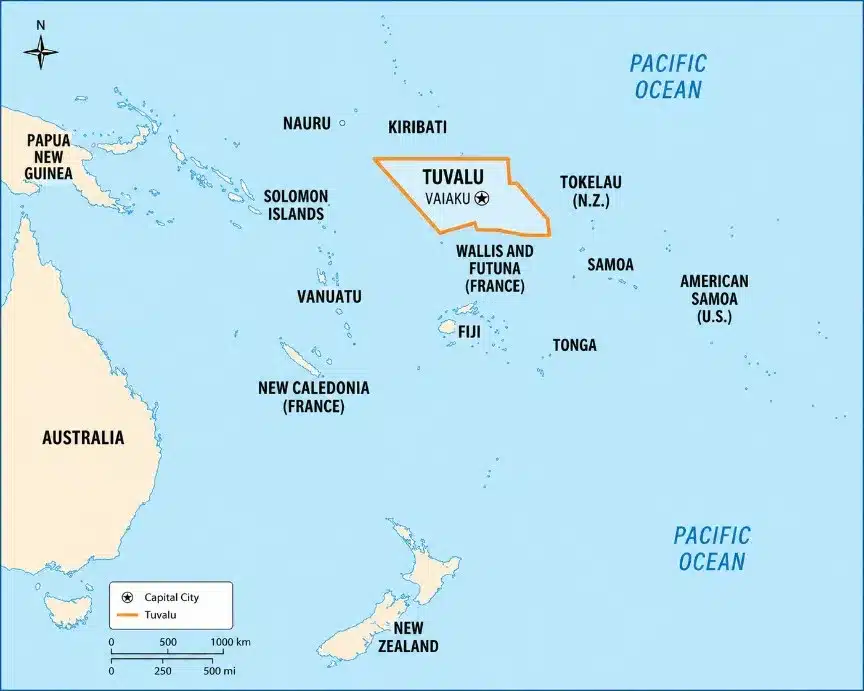
- Tuvalu is a small island country in the Pacific Ocean
- Earlier known as Ellice Islands
- It is the 4th smallest country in the world
- Total area: ~26 sq. km
Location
- It lies in the west-central Pacific Ocean
- It is located between Australia and Hawaii
- Neighbours: Kiribati (north) and Fiji (south)
Geographical Features
Islands Structure
- It consists of 9 islands: 5 coral atolls and 4 reef islands
- Capital: Funafuti (atoll)
Low Elevation
- Maximum height: ~4.5 meters above sea level
- It makes Tuvalu extremely vulnerable to sea-level rise
Climate
- It has a hot and rainy tropical climate
- It has no rivers
Political System
- It became independent in 1978 (from UK)
- It is a parliamentary democracy under constitutional monarchy
- It is part of the Commonwealth Realm: King Charles III is the head of state
- It has: No political parties
Population & Language
- It has one of the smallest populations in the world
- Languages: Tuvaluan and English
Economy
- It depends on: Subsistence farming, Remittances and Foreign aid
- Other sources: Copra exports, Fishing fees, Stamp sales
Significance
- It is a frontline state for climate change impacts
- Rising sea levels may submerge large parts by end of century
- It highlights issues of climate justice and displacement



2 Responses
This text resonates with a harmony of thought and emotion, like the sound of wind moving gently through ancient trees. It feels alive yet unhurried, guiding the reader toward truths that are both enduring and intimate.
There is a gentle elegance in your sentences, where each phrase is precise yet fluid, contributing to a cohesive, meditative rhythm. The text invites the reader to slow down, absorb meaning, and reflect on both subtle detail and overarching themes.