The UPSC Civil Services Examination is often described as a test of knowledge, but in reality, it tests much more than how much an aspirant can study. It tests consistency, judgement, analytical ability, decision-making, time management and the ability to improve under pressure. Thousands of aspirants read the same standard books, follow the same syllabus and attempt similar mock tests, yet their results can be very different. One important reason is how they respond to their mistakes.
Every UPSC aspirant makes mistakes. Some misunderstand a topic, some read too many resources, some postpone answer writing, some neglect revision, while others struggle with time management or consistency. The difference is that high-scoring aspirants do not allow mistakes to remain mistakes. They analyse them, understand their causes and modify their preparation accordingly.
For them, a mistake is not simply evidence of what they don’t know. It is information about how they are preparing.
At Educrat IAS Academy, The Best IAS Coaching Institute, we believe that the question, therefore, is not whether you make mistakes during UPSC preparation. The real question is: What do you do with your mistakes?
1. They Use the Syllabus and PYQs to Understand Their Mistakes
Many aspirants begin UPSC preparation by collecting books, notes, PDFs and lectures. They start studying before developing a clear understanding of what the examination actually demands. This often results in extensive but unfocused preparation.
High-scoring aspirants use the UPSC syllabus and Previous Year Questions (PYQs) as a constant reference point. When they make a mistake, they don’t merely correct the answer. They examine whether their understanding of the syllabus itself was incomplete.
The syllabus tells you the boundaries of your preparation, while PYQs reveal how UPSC interprets those boundaries. Together, they help an aspirant distinguish between useful preparation and unnecessary information.
High-scoring aspirants therefore:
- Read the syllabus line by line.
- Analyse PYQs regularly instead of treating them as a one-time exercise.
- Identify recurring themes and changing question patterns.
- Connect every major topic with its relevant syllabus component.
- Use PYQs to determine the depth and nature of preparation required.
The syllabus and PYQs should function as a filter, helping you decide both what to study and what to leave out.

2. They Don't Collect Resources—They Build a Revision System
A common mistake in UPSC preparation is assuming that more resources automatically mean better preparation. An aspirant may have several books for Polity, multiple current-affairs compilations, numerous PDFs and hours of saved lectures, yet struggle to revise even one source properly.
High-scoring aspirants understand that UPSC preparation is not a competition to collect information. It is a process of retaining and applying relevant information.
When they make the mistake of relying on too many sources, they simplify their preparation instead of adding another resource. They identify one dependable source, supplement it only when necessary and revise it repeatedly.
Their approach is usually:
- One standard source for core concepts.
- Short, personalised notes for revision.
- Additional material only when it fills a genuine knowledge gap.
- Multiple revisions instead of endless first readings.
The important question they ask is not, “What else should I read?”
It is:
“What I have already studied—how well can I recall and apply it?”
That shift can save months of preparation time.
At Educrat IAS Academy, our UPSC CSE Toppers vouch for our strategy of Minimum Resources, Multiple Revision.
3. They Treat Every Test as a Diagnostic Report
For many aspirants, the purpose of a mock test is simply to obtain a score. A low score leads to disappointment, while a high score creates temporary confidence. But the score itself does not explain why the performance happened.
High-scoring aspirants treat every test as a diagnostic report.
A wrong answer can have many causes. The aspirant may not know the concept, may have forgotten it, misunderstood the question, eliminated the wrong option or made a careless error. These problems require different solutions.
After a test, high-scoring aspirants analyse:
- What questions did I get wrong?
- Why did I get them wrong?
- Was the problem knowledge, revision or application?
- Did I misread the question?
- Did I eliminate options incorrectly?
- Did I make a careless mistake?
- Is the same type of mistake appearing repeatedly?
This is where a mistake log becomes extremely useful.
Instead of simply recording the correct answer, aspirants can record the reason for the error and the corrective action required.
A test should therefore answer more than “How much did I score?”
It should answer:
“What should I change before my next test?”
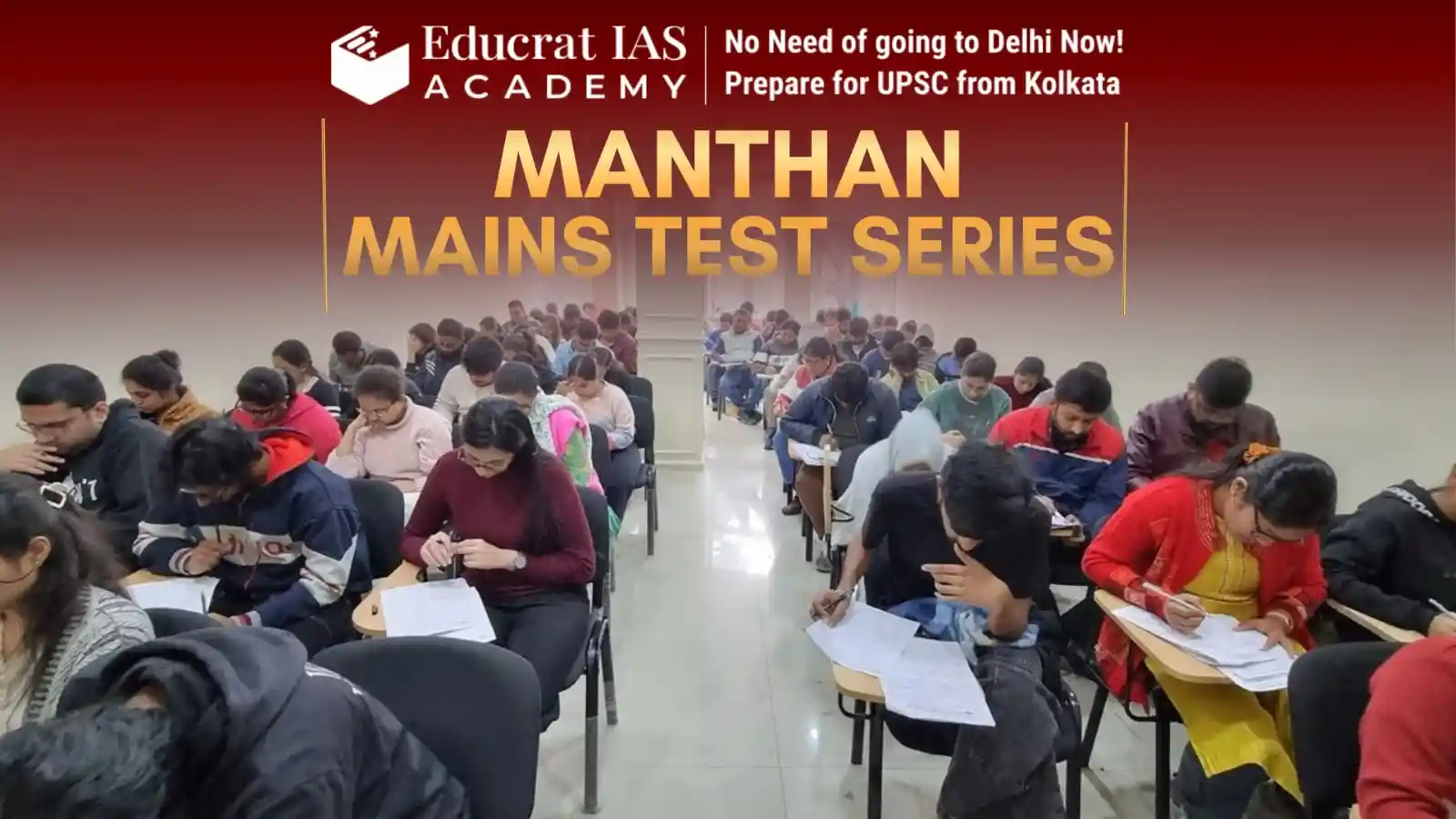
At Educrat IAS Academy, the Top IAS institute in Kolkata, we provide answer keys and model answers after every Mock Test to help our UPSC aspirants analyse their mistakes and prepare more effectively.
4. They Revise Their Mistakes, Not Just Their Books
Revision is one of the most important parts of UPSC preparation, yet it is frequently neglected because aspirants are constantly attracted towards new material.
High-scoring aspirants understand that revision is not simply rereading a book. It is about strengthening weak areas and making previously learned information easier to recall.
The 3R approach—Read, Revise, Recall—can be particularly useful. After studying a topic, an aspirant revisits it and then tries to recall the information without looking at the material.
But high-scoring aspirants add another dimension:
“What did I previously get wrong about this topic?”
This makes revision personalised.
For example, if an aspirant repeatedly confuses two constitutional provisions, that comparison becomes a priority for revision. If they repeatedly forget data used in Society answers, they can create a focused data sheet instead of rereading an entire book.
Their revision therefore focuses on:
- Weak areas.
- Frequently forgotten information.
- Repeated mistakes.
- Important PYQ themes.
- Frequently tested concepts.
- Short notes and recall-based revision.
Your mistake notebook can eventually become one of the most valuable revision resources you possess because it represents your individual weaknesses.
At Educrat IAS Academy, the Top IAS institute in Kolkata, we provide answer keys and model answers after every Mock Test to help our UPSC aspirants analyse their mistakes and prepare more effectively.

5. They Start Answer Writing Before They Feel Completely Ready
Many aspirants postpone answer writing until after completing the syllabus. The logic seems reasonable: “First I will study everything, then I will start writing.”
The problem is that writing a good UPSC Mains answer is itself a skill. Knowledge does not automatically translate into good answers.
High-scoring aspirants begin answer writing relatively early and improve gradually.
They understand that their first answers may not be good. That is precisely why they need practice.
They focus on:
- Understanding the demand of the question.
- Answering every part of the question.
- Developing a clear structure.
- Using relevant examples and data.
- Maintaining balance in analytical answers.
- Writing within the prescribed time.
- Receiving and implementing feedback.
They also don’t confuse sophisticated vocabulary with quality.
A good UPSC answer does not need unnecessarily complicated language. It needs clarity, relevance, structure and substance.
Every weak answer therefore becomes an opportunity to improve the next one.
At Educrat IAS Academy, the Top UPSC institute in Kolkata, we believe that there is no other correct time to begin answer writing than right from the beginning. Stalling over when to begin will only drag you preparation down, therefore start from the very beginning.
6. They Integrate Prelims, Mains and Interview Preparation
Treating Prelims, Mains and the Interview as three completely unrelated examinations can create gaps in preparation.
The stages have different demands, but the knowledge base often overlaps.
High-scoring aspirants develop an integrated understanding of subjects. While studying a topic, they consider its factual, analytical and practical dimensions.
For example, while studying a government policy, they may examine:
- Prelims: objectives, features, institutions and factual details.
- Mains: significance, challenges, implementation and reforms.
- Interview: broader implications, personal assessment and possible solutions.
This approach prevents preparation from becoming fragmented.
At Educrat IAS Academy, instead of studying the same topic three different times, we believe in integrating the preparation, helping the aspirants develop a deeper understanding that can be adapted according to the requirements of each stage.
7. They Convert Current Affairs Into Syllabus-Based Knowledge
Current affairs can become overwhelming if approached without a framework. Some aspirants read newspapers for hours without knowing what to retain, while others ignore current affairs because they consider them unpredictable.
High-scoring aspirants do neither.
They connect current events with the static syllabus.
A Supreme Court judgment can strengthen Polity preparation. A new economic policy can enrich Economy. A climate report can provide Environment data. A demographic development can become useful in Society answers.
The question they ask while reading the news is:
“Where does this fit into my UPSC preparation?”
They focus on:
- Important government policies and schemes.
- Supreme Court and constitutional developments.
- Major economic developments.
- International relations.
- Environment and climate-related developments.
- Important reports, indices and data.
- Social and governance issues.
Current affairs should not become an endless collection of newspaper facts. Their purpose is to add relevance, examples, data and contemporary dimensions to the syllabus.
At Educrat IAS Academy we provide:
Daily Current Affairs Analysis
Monthly Current Affairs Analysis Magazine
Monthly Current Affairs MCQ Magazine
Each Analysis is based on UPSC Syllabus with syllabus mapping to enhance UPSC Preparation.

8. They Plan Realistically Instead of Creating Perfect Timetables
Aspirants often make elaborate schedules that look excellent on paper but are impossible to maintain. They plan extremely long study hours, allocate unrealistic targets and then feel guilty when they cannot follow them.
High-scoring aspirants understand that consistency is more valuable than an impressive timetable.
Their preparation is usually divided into manageable phases:
Foundation → Consolidation → Revision → Testing → Correction → Re-revision
They establish daily and weekly targets, but they also allow room for adjustment.
If one topic takes longer than expected, they modify the plan rather than abandoning it completely.
They regularly monitor:
- Syllabus completion.
- Revision status.
- Test performance.
- Answer-writing progress.
- Weak subjects.
- Time spent versus output achieved.
Planning is not about predicting every hour of the next six months.
It is about ensuring that important work is completed repeatedly and effectively.
At Educrat IAS Academy, we provide personalized sessions to our UPSC aspirants to guide them through planning realistically.
9. They Protect Their Energy and Mental Balance
UPSC preparation is a long process. It requires sustained concentration over months, and sometimes years. Trying to study continuously without adequate rest can eventually reduce productivity.
High-scoring aspirants understand that preparation requires not only discipline but also sustainability.
They recognise the importance of:
- Adequate sleep.
- Regular breaks.
- Physical activity.
- Healthy eating.
- Time away from the study desk.
- Maintaining emotional balance.
The objective is not to have one extremely productive week.
The objective is to maintain consistent performance for a long period.
UPSC preparation is closer to a marathon than a sprint. An aspirant who studies intensely for a few days but repeatedly burns out may ultimately lose more time than an aspirant who maintains a realistic routine.
Consistency beats unsustainable intensity.

10. They Learn From Toppers Without Blindly Copying Them
Every year, successful candidates share their strategies. Their experiences can provide valuable insights, but blindly copying a topper’s routine can become another mistake.
One candidate may study eight hours a day. Another may study ten. One may prefer handwritten notes, another digital notes. One may read a particular newspaper, while another may follow a different source.
High-scoring aspirants look for the principle behind the strategy, rather than copying its exact form.
They ask:
- What problem was this strategy solving?
- Does the same problem exist in my preparation?
- Can I adapt the principle to my own circumstances?
- Is this method improving my performance?
A topper’s strategy should be a reference, not a template.
Your preparation must ultimately reflect your own strengths, weaknesses, background, schedule and learning style.
11. They Don't Allow One Bad Test to Define Their Potential
A low mock-test score can be emotionally difficult. It is easy to compare yourself with others and conclude that you are not capable of clearing the examination.
High-scoring aspirants respond differently.
They separate performance from identity.
A poor score means that something went wrong in that particular performance. It does not automatically mean that the aspirant lacks the ability to succeed.
Instead of saying, “I am bad at Prelims,” they ask:
“What specifically caused my poor performance?”
Perhaps the problem was:
- Insufficient revision.
- Poor elimination.
- Weak conceptual clarity.
- Time management.
- Careless mistakes.
- Excessive guessing.
- Lack of practice.
Once the problem is identified, it becomes actionable.
A bad test can therefore become one of the most useful tests you have taken—if you analyse it properly.
12. They Build a Cycle of Continuous Improvement
The most important habit of high-scoring aspirants is that they don’t stop at identifying mistakes.
They create a cycle:
Attempt → Mistake → Analyse → Identify Cause → Correct → Practise → Retest → Improve
Many aspirants complete only the first two stages.
They attempt a test, make mistakes and move on to the next test.
High-scoring aspirants complete the entire cycle.
If they repeatedly make mistakes in a particular area, they change their approach. If a strategy is not working, they replace it. If their revision is insufficient, they redesign their revision cycle.
This is how preparation compounds over time.
Small improvements may not look dramatic from one test to another. But after months of consistent correction, the difference can become significant.
Build Your Own UPSC Mistake Log
One of the simplest ways to develop this approach is to maintain a dedicated UPSC mistake log.
It does not have to be complicated. For every significant mistake, record four things:
What was the mistake?
Write down the question, concept or problem briefly.
Why did I make it?
Identify whether the cause was lack of knowledge, poor revision, confusion, careless reading, weak elimination or poor answer structure.
What is the correct understanding?
Write the correction concisely.
How will I prevent it from happening again?
Create a specific action.
For example:
Mistake: Confused two constitutional provisions.
Cause: Superficial revision.
Correction: Compare both provisions in a table.
Action: Include the comparison in weekly revision.
This turns a mistake into a system improvement.
The Real Difference: They Don't Repeat the Same Mistake
The objective of UPSC preparation is not to become an aspirant who never makes mistakes. That is unrealistic.
The objective is to become an aspirant who does not repeatedly make the same mistake.
You will forget facts.
You will get mock-test questions wrong.
You will occasionally write weak answers.
You may create an ineffective timetable.
You may waste time on unnecessary resources.
You may experience frustration.
None of these experiences automatically determines your final result.
What matters is whether you learn from them.
High-scoring aspirants gradually develop the ability to recognise patterns in their own preparation.
They know where they are weak.
They know what they repeatedly forget.
They know which questions they tend to get wrong.
They know where their answers lose marks.
They know which habits waste time.
This self-awareness allows them to make targeted improvements rather than randomly changing their preparation every few weeks.

Make Every Mistake Improve Your Preparation
UPSC preparation is not a journey towards perfection. It is a journey towards progressive improvement.
There will be mistakes. There will be poor tests. There will be unfinished targets and difficult phases.
The difference between an ordinary preparation process and a high-performing one often lies in what happens after those setbacks.
High-scoring aspirants use the syllabus to create direction. They use PYQs to understand UPSC’s demand. They use tests to diagnose weaknesses. They use revision to strengthen retention. They use answer writing to improve expression. They use current affairs to enrich static knowledge. They use planning to maintain consistency.
And most importantly, they use mistakes as feedback.
A mistake becomes valuable when it changes your behaviour.
A poor answer becomes valuable when it improves the next answer.
A failed test becomes valuable when it changes your preparation.
A setback becomes valuable when it makes you more aware of what needs to change.
This is the mindset that aspirants need to cultivate throughout their UPSC journey.
At Educrat IAS Academy, we believe that effective UPSC preparation is not simply about studying more. It is about studying with direction, evaluating your performance honestly and continuously improving your strategy.
Success is rarely created by one extraordinary day.
It is built through thousands of small corrections:
One mistake understood.
One weakness corrected.
One answer improved.
One revision strengthened.
One test analysed.
One day better than the previous.
That is how preparation becomes progress.
And with consistent progress, performance becomes success.
EDUCRAT IAS ACADEMY
Prepare with Clarity. Learn with Purpose. Improve with Every Attempt.