Preparing for the UPSC Civil Services Examination after graduation is one of the most transformative decisions a student can make. Every year, thousands of graduates begin their UPSC journey with the dream of becoming IAS, IPS, IFS, and other civil servants. However, most aspirants struggle with one common question; “Where should I begin?”
The UPSC preparation journey can appear overwhelming because of the vast syllabus, intense competition, and long preparation cycle. Without a proper roadmap, many aspirants waste valuable months collecting resources, following random strategies, and preparing without direction.
At Educrat IAS Academy, we believe that UPSC preparation is not about studying endlessly; it is about studying strategically. A disciplined roadmap, proper mentorship, regular revision, and answer writing practice are the real foundations of success.
This detailed guide will help graduates understand exactly how to begin UPSC preparation step-by-step in a structured, practical, and easy-to-understand manner.
In this blog, we will cover:
- Why graduation is the ideal time to start UPSC preparation
- Advantages of Starting UPSC Preparation After Graduation
- Understanding the UPSC Civil Services Examination
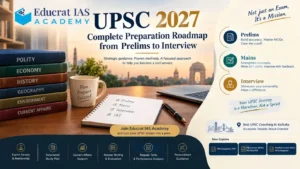
- Step-by-step strategy for beginners
- Ideal Daily Routine for UPSC Preparation After Graduation
- What mistakes should UPSC Aspirants avoid?
- Why Mentorship Matters in UPSC Preparation
- Why Educrat IAS Academy is the Best UPSC Coaching in Kolkata
- What Educrat IAS Provides for UPSC Aspirants
Why Start UPSC Preparation After Graduation?
Graduation is considered one of the most suitable phases to begin UPSC preparation because aspirants possess greater academic maturity, improved analytical ability, and better understanding skills. Unlike school-level studies, UPSC preparation demands conceptual clarity, disciplined revision, and analytical thinking; qualities that students usually develop during graduation.
Another major advantage is time flexibility. Many graduates can dedicate 1–2 years exclusively toward UPSC preparation without balancing college examinations or academic pressure. This allows aspirants to build strong foundations and maintain consistency.
Starting preparation immediately after graduation also provides psychological momentum. Aspirants remain connected to academics, writing practice, and regular study habits, making it easier to transition into serious preparation.
At Educrat IAS Academy, the best UPSC coaching in Kolkata, we guide graduates through every stage of their preparation with structured mentorship and strategic planning.
Advantages of Starting UPSC Preparation After Graduation
- Better Academic Maturity: After graduation, students usually develop stronger comprehension, analytical thinking, and answer writing ability; all of which are essential for UPSC Mains.
- Dedicated Preparation Time: Graduates often get the opportunity to prepare full-time, allowing deeper syllabus coverage and multiple revisions.
- Optional Subject Familiarity: Many aspirants choose their graduation subject as Optional because they already possess conceptual understanding.
- More Attempts and Flexibility: Starting early provides aspirants multiple attempts and enough time for improvement.
- Easier to Build Long-Term Consistency: Without college distractions, aspirants can follow disciplined routines more effectively.
Looking for expert guidance after graduation?
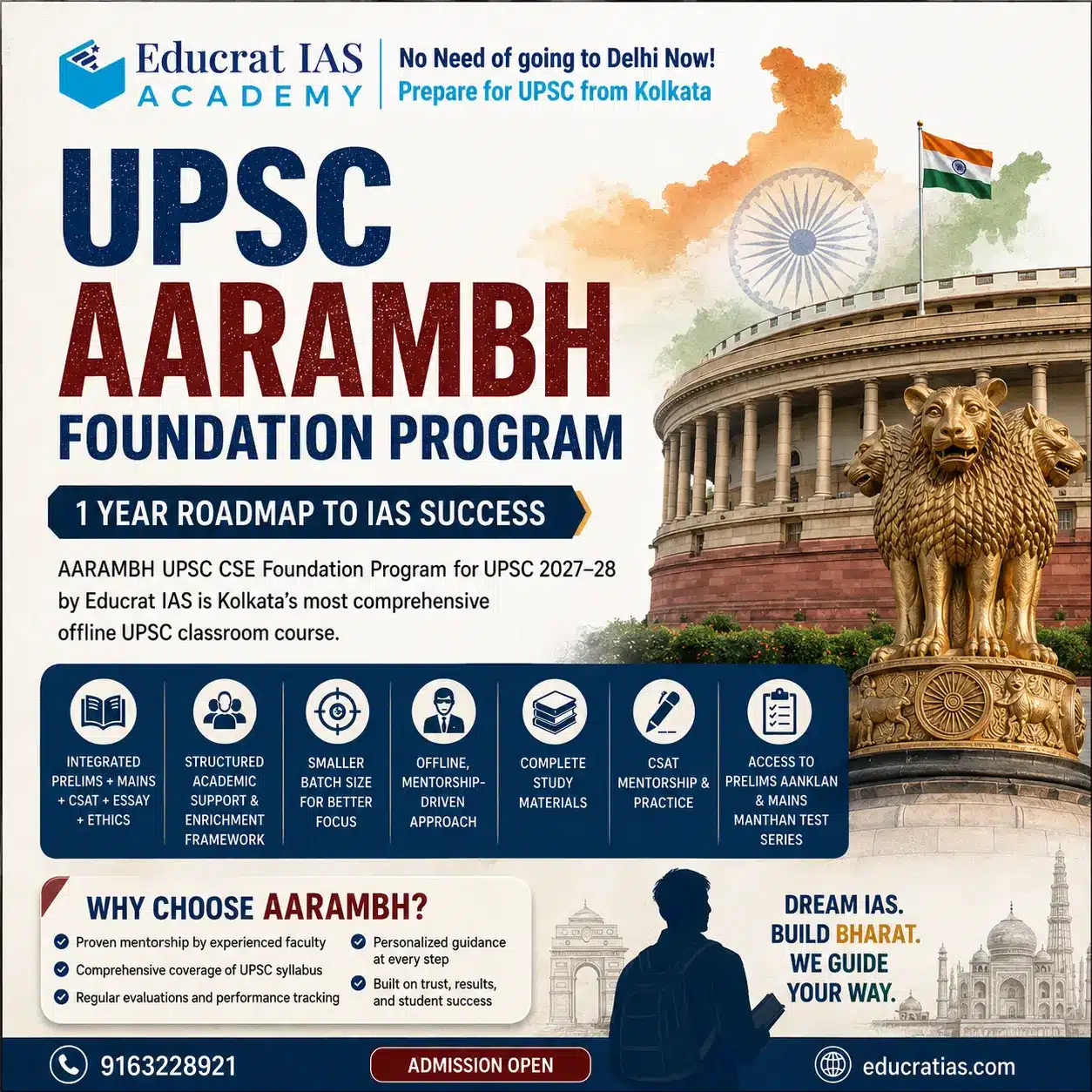
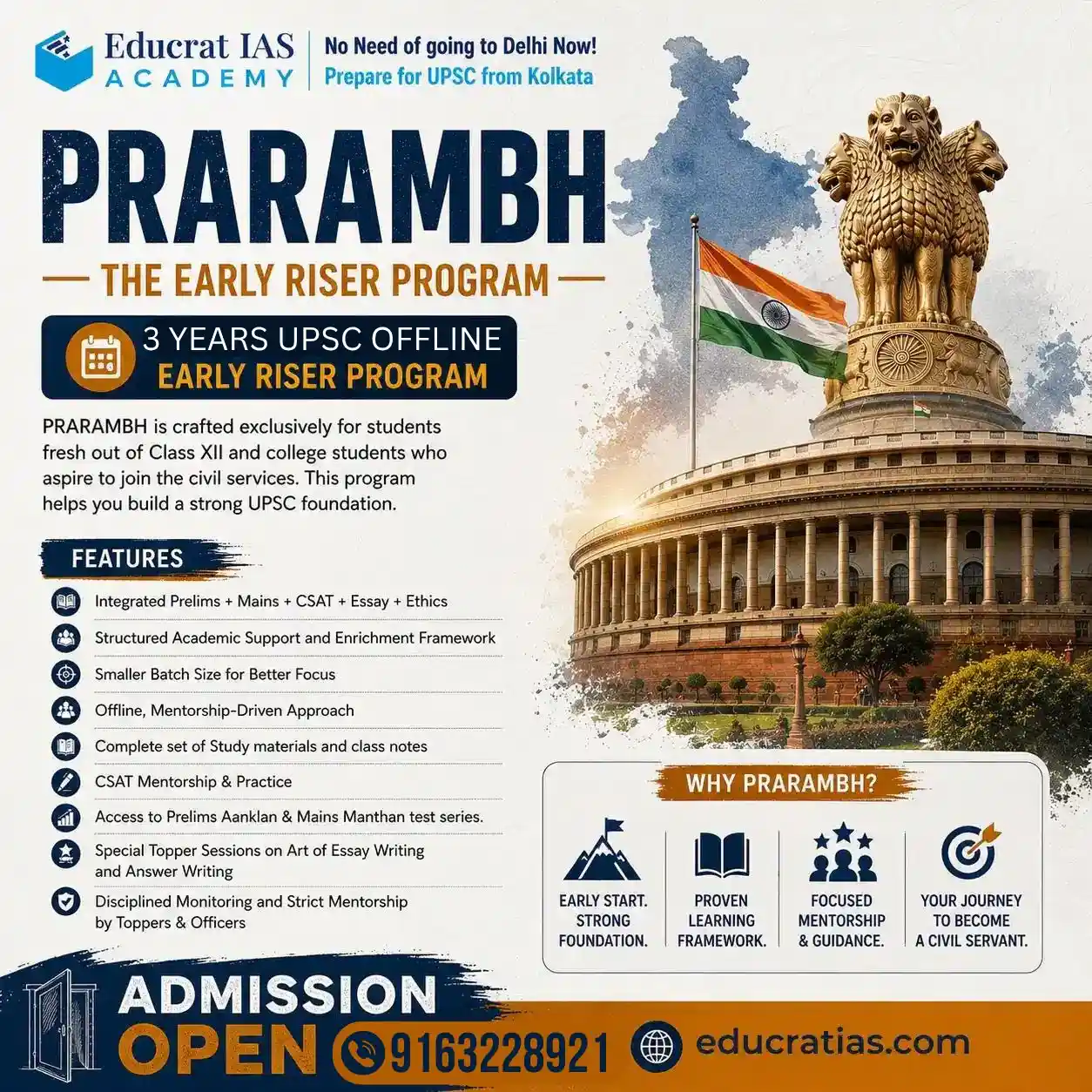
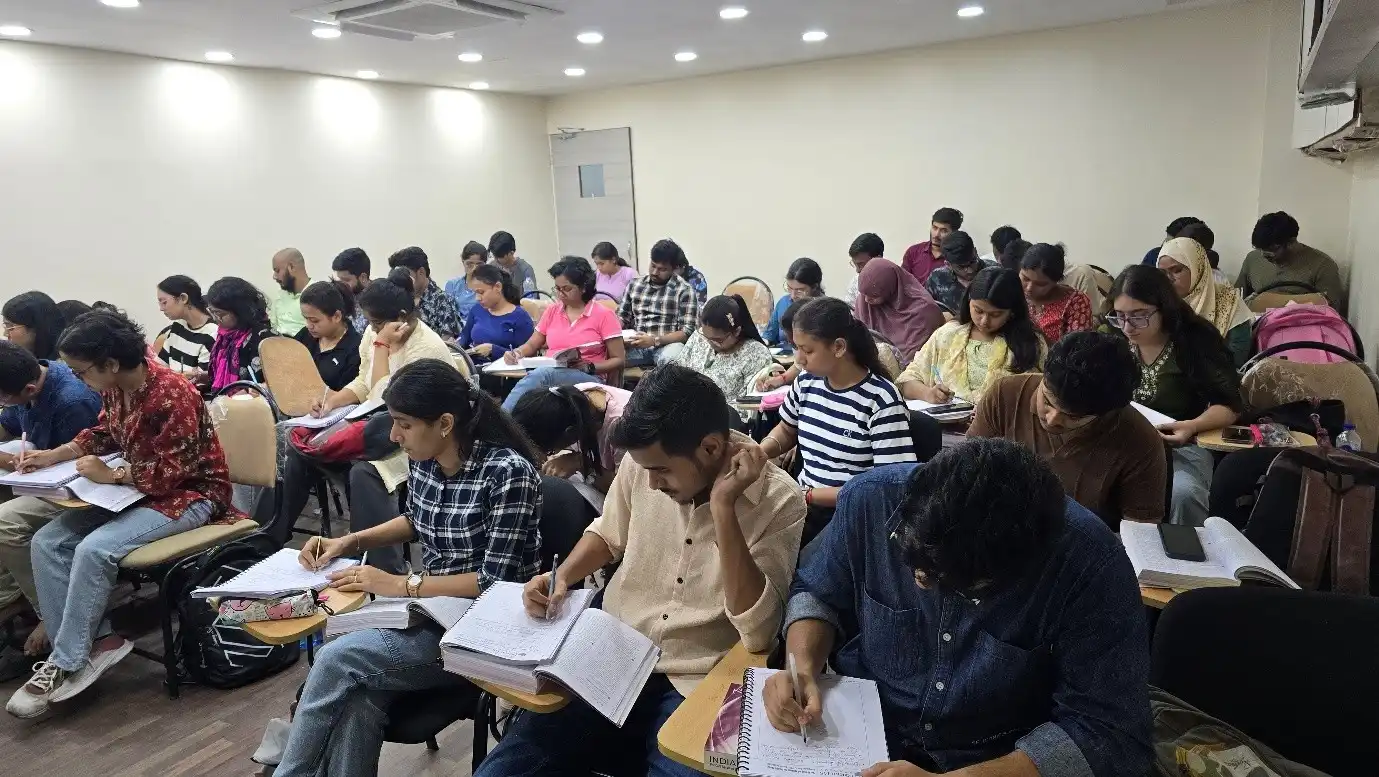
Join Educrat IAS Academy’s Foundation Program and begin your UPSC preparation with a structured roadmap, mentorship support, and integrated Prelims + Mains preparation.
Understanding the UPSC Civil Services Examination
Before beginning preparation, aspirants must understand the structure and nature of the UPSC Civil Services Examination. Many beginners start reading books immediately without understanding what UPSC actually demands. The examination is designed not merely to test memory, but to evaluate administrative aptitude, analytical ability, decision-making skills, communication, and awareness of national and international issues.
UPSC preparation becomes easier when aspirants clearly understand the purpose of each stage of the examination. This prevents random preparation and helps build a focused strategy.
The UPSC Civil Services Examination consists of three stages:
Stage 1: UPSC Preliminary Examination
The Preliminary Examination acts as the screening stage for UPSC CSE. It consists of objective-type questions designed to test conceptual clarity, current affairs awareness, and analytical aptitude.
Although Prelims marks are not included in the final merit list, clearing this stage is essential to qualify for the Mains examination. Every year, lakhs of aspirants appear for Prelims, but only a small percentage qualify. Therefore, aspirants must focus on conceptual clarity, regular MCQ practice, revision, and current affairs integration from the beginning itself.
General Studies Paper I
This paper includes:
- History
- Geography
- Polity
- Economy
- Environment
- Science & Technology
- Current Affairs
CSAT (General Studies Paper II)
This paper tests:
- Logical reasoning
- Mathematics
- Reading comprehension
- Analytical ability
- Decision making
CSAT is qualifying in nature, but aspirants must score at least 33% marks.
Stage 2: UPSC Mains Examination
The Mains examination is the most important stage because it determines the majority of the final merit ranking. Unlike Prelims, Mains is descriptive in nature and tests a candidate’s depth of understanding, analytical thinking, and answer presentation skills.
Many aspirants possess knowledge but fail to express their thoughts effectively within time limits. Therefore, answer writing practice becomes one of the most important components of UPSC preparation. The Mains examination evaluates whether an aspirant possesses the maturity, clarity, and balanced perspective expected from a future civil servant.
It includes:
- Essay Paper
- GS Paper I
- GS Paper II
- GS Paper III
- GS Paper IV (Ethics)
- Optional Subject Paper I
- Optional Subject Paper II
Stage 3: UPSC Personality Test (Interview)
The Interview stage is not merely a test of factual knowledge. It is a personality assessment conducted to evaluate whether a candidate possesses the temperament and administrative qualities required for public service.
The panel evaluates communication skills, confidence, honesty, emotional balance, awareness, and decision-making ability. Aspirants are expected to present balanced opinions and mature perspectives.
Consistent preparation throughout the UPSC journey naturally builds the personality required for the Interview stage.
The Interview evaluates:
- Personality
- Confidence
- Communication skills
- Administrative aptitude
- Awareness about social and national issues
- Decision-making ability
Step-by-step strategy for beginners
Step 1: Understand the UPSC Syllabus and Exam Pattern
The first and most important step in UPSC preparation is understanding the syllabus thoroughly. Many beginners make the mistake of purchasing multiple books and joining classes without first understanding what UPSC actually asks. The UPSC syllabus acts as the blueprint of preparation. Every topic, every current affair, and every answer in the examination ultimately revolves around the syllabus.
Reading the syllabus repeatedly helps aspirants develop clarity regarding important subjects, overlapping topics, and areas requiring deeper focus. Understanding the syllabus also helps eliminate unnecessary resources and prevents information overload.
What Should You Do?
- Read the whole UPSC syllabus
- Read previous year questions carefully
- Understand the pattern of questions
- Identify important recurring themes
- Observe overlap between Prelims and Mains
Confused about where to begin?
Our expert mentors at Educrat IAS Academy help beginners decode the UPSC syllabus, understand PYQs, and create a realistic preparation roadmap.
Step 2: Build Strong Foundations Through NCERTs
NCERT books form the backbone of UPSC preparation. Almost every topper emphasizes the importance of NCERTs because they simplify complex concepts and help aspirants develop conceptual clarity. Many aspirants underestimate NCERTs and directly jump toward advanced books. This creates weak fundamentals and confusion later during revision.
Aspirants should treat NCERTs as the foundation upon which the entire preparation structure is built. Without conceptual clarity, advanced preparation becomes ineffective. The goal during this phase should not be memorization. The goal should be understanding.
Important NCERT Subjects
- History
- Geography
- Economics
- Polity
- Environment
Effective NCERT Strategy
- Read slowly and understand concepts
- Highlight important points
- Make short notes
- Revise multiple times
- Link concepts with current affairs
Common Mistake to Avoid
Do not rush through NCERTs just to complete them quickly. Strong fundamentals save enormous time later during advanced preparation.
At Educrat IAS Academy, our Foundation Courses guide aspirants on exactly which NCERTs to study and how to integrate them with advanced preparation.
Step 3: Develop the Habit of Reading Newspapers Daily
Current Affairs are among the most important components of UPSC preparation. Almost every stage of the examination; Prelims, Mains, and Interview; depends heavily on current events and issue-based understanding. However, newspaper reading for UPSC is very different from casual reading. Aspirants must learn how to identify relevant information and connect it with static subjects.
The objective is not to memorize news. The objective is to understand issues analytically from administrative and societal perspectives. Consistent newspaper reading gradually improves awareness, analytical thinking, vocabulary, and answer writing quality.
Recommended Newspapers
- The Hindu
- The Indian Express
Smart Newspaper Strategy
- Spend 1–1.5 hours daily
- Make concise notes
- Link news with syllabus topics
- Revise current affairs regularly
At Educrat IAS Academy, we simplify current affairs preparation through:
- Daily Current Affairs
- Daily Current Affairs MCQ
- Monthly Current Affairs Magazine
- Monthly Current Affair MCQ
- Issue-based discussions
Struggling with Current Affairs preparation? Let the Experts help you.
Join Educrat IAS Academy and access curated daily current affairs, editorials, MCQs, and monthly magazines specially designed for UPSC aspirants.
Step 4: Create a Smart Study Plan
A structured study plan aligned with your daily routine ensures discipline and consistency. Without proper planning, preparation becomes scattered and ineffective. Many aspirants benefit from guidance provided by Educrat IAS Academy, the Best UPSC coaching centre in Kolkata, where structured schedules are provided.
- Set daily study targets
- Do weekly revision
- Attempt monthly mock tests
- Maintain balanced subject coverage
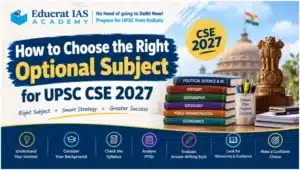
Stage 5: Choose Optional Subject Wisely
The optional subject is a crucial component of UPSC Mains and can significantly impact your final score. Choosing the right optional requires careful thought and expert guidance from Educrat IAS Academy, best IAS coaching in Kolkata.
How to Choose Optional Subject in UPSC?
- Interest
- Overlap with General Studies
- Availability of Guidance & Resources
- Optional Subject Based on Graduation
- Answer Writing Nature
- Past Performance & Scoring Trend
Understand how UPSC Toppers Choose Optional Subject:
Optional Subject: Sociology
Reason for Choice: Graduation subject, B.A (Hons) in Sociology, St. Xavier’s College, Kolkata
Optional Subject: Medical Science
Reason for Choice: Graduation subject, MBBS, R.G. Kar Medical College, Kolkata (WBUHS)
Optional Subject: Anthropology
Reason for Choice: Interest in society, culture, and human development, giving her preparation a multidimensional depth.
Optional Subject: Political Science and International Relations (PSIR)
Reason for Choice: Overlap with General Studies.
Optional Subject: Bengali Literature
Reason for Choice: Interest in Bengali Literature.
Optional Subject: Law
Reason for Choice: Graduation subject, B.A. LLB, Banaras Hindu University (BHU), 2019
Optional Subject: Political Science and International Relations (PSIR)
Reason for Choice: Interest and Overlap with General Studies.
Do not choose Optional solely because someone else scored highly in it. Every aspirant has different strengths and interests. At Educrat IAS Academy, our expert counselling sessions help aspirants choose Optional subjects strategically.
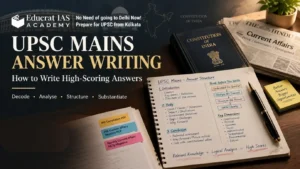
Stage 6: Practice Answer Writing (Game Changer for Mains)
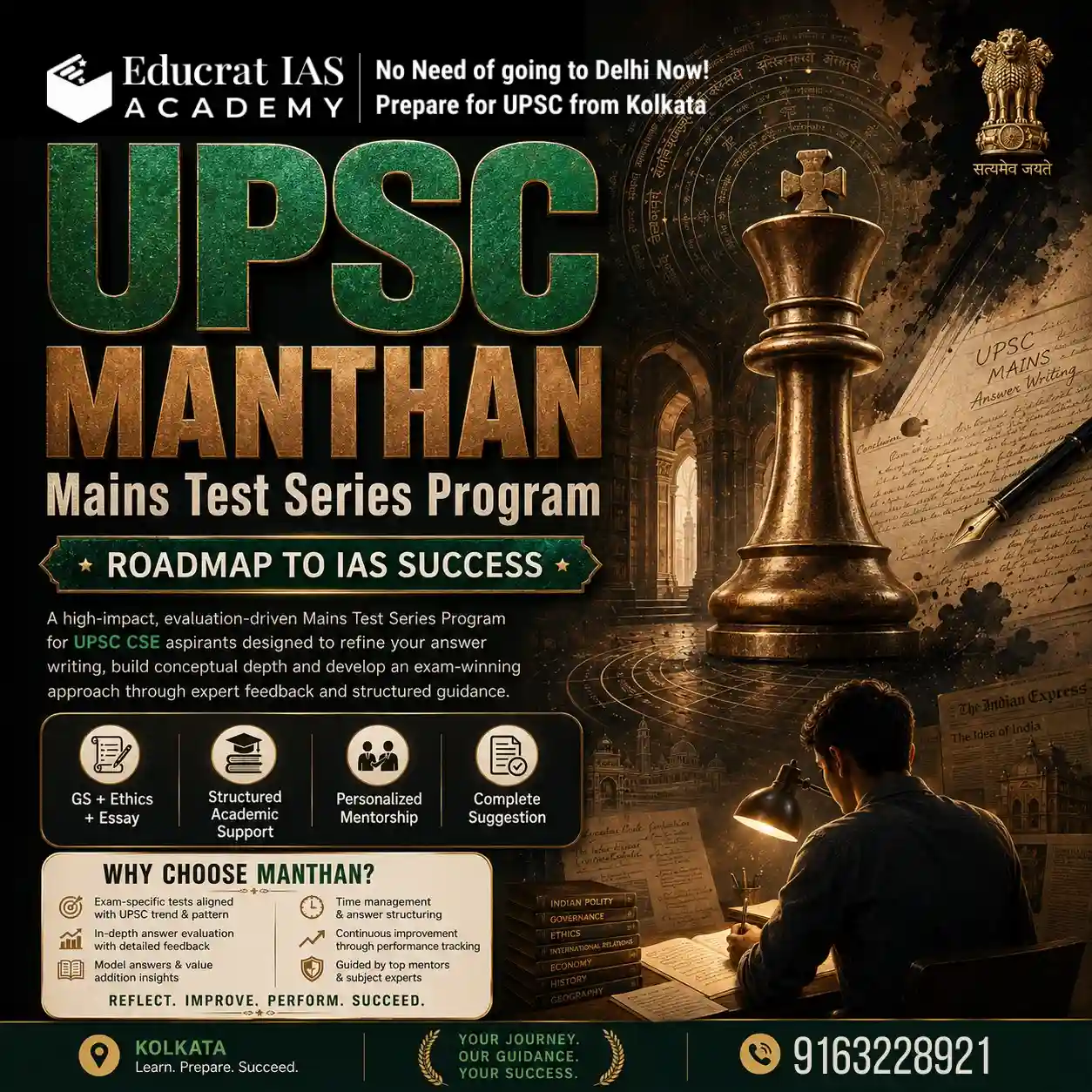
UPSC Mains is all about how effectively you present your knowledge. Regular answer writing practice is essential to improve structure, clarity, and speed. Many institutes offer a dedicated mains answer writing program to help aspirants master this skill. At Educrat IAS Academy, we provide integrated Prelims + Mains preparation from Day 1 along with a dedicated Mains Test series.
- Improves clarity of thought
- Enhances writing speed
- Develops analytical ability
The Mains exam is a test of writing stamina and analytical speed, not just memory. At Educrat IAS Academy, the Top UPSC Coaching institute in Kolkata, our UPSC courses are specially curated to fit answer writing in every class throughout the course. Integrated preparation in UPSC CSE is what UPSC Toppers utilize to not fail in UPSC CSE.
What Makes a Good UPSC Answer?
- Clear introduction
- Structured body
- Balanced arguments
- Use of examples
- Effective conclusion
UPSC CSE 2025 Topper Talk: Game-Changer for AIR 649, Juhi Das
AIR 649, Juhi Das believes in Answer Writing as a Game-Changer. She practiced structured, point-wise answers aligned with the UPSC demand for clarity and depth. Through disciplined study and answer writing practice, she successfully cleared as AIR 649 in UPSC CSE 2025 Topper.
Step 7: Prepare CSAT Consistently
CSAT is qualifying in nature, but it should never be ignored. Every year, many aspirants fail despite scoring well in General Studies because they underestimate CSAT preparation. The difficulty level of CSAT has increased significantly in recent years, especially in comprehension and reasoning sections.
Aspirants from non-technical backgrounds often struggle because they delay practice. Consistent preparation from the beginning ensures comfort and confidence during the examination.
Important Areas in CSAT
- Reading comprehension
- Mathematics
- Logical reasoning
- Data interpretation
- Decision making
Effective CSAT Strategy
- Practice daily for 1–2 hours
- Solve previous year papers
- Focus on weak areas
- Improve reading speed
- Practice timed mock tests
Important Reminder
Never assume CSAT is easy simply because it is qualifying.
At Educrat IAS Academy, we integrate regular CSAT practice sessions into our classroom programs.
Step 8: Follow an Integrated Prelims + Mains Strategy
One of the biggest mistakes aspirants make is preparing separately for Prelims and Mains from the beginning. This creates unnecessary workload and confusion. A large portion of the syllabus overlaps between both stages. Therefore, preparation should remain integrated for most of the journey.
Integrated preparation helps aspirants build conceptual depth while simultaneously improving objective-solving ability. This approach saves time, improves retention, and ensures smoother transition between examination stages.
Benefits of Integrated Preparation
- Reduces duplication of effort
- Improves conceptual clarity
- Saves preparation time
- Strengthens current affairs integration
- Improves long-term retention
At Educrat IAS Academy, our integrated classroom model ensures simultaneous preparation for both Prelims and Mains.
Stage 9: Solve Previous Year Question Papers (PYQs)
Previous year question papers are one of the most valuable resources for UPSC preparation. They help you understand the exam pattern and identify important topics.
- Understand exam pattern
- Identify important topics
- Analyse question trends
Stage 10: Join Test Series for Evaluation
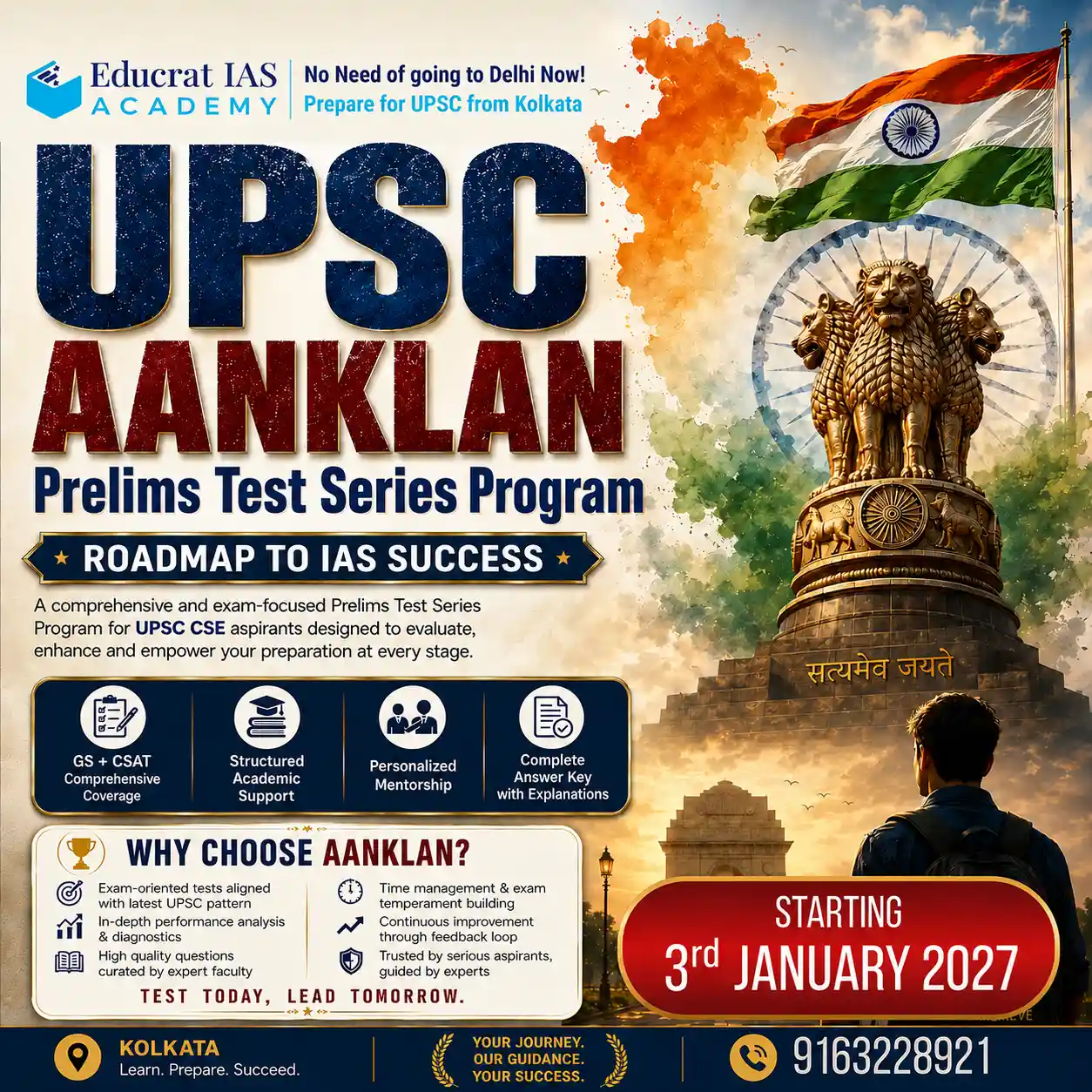
Test series play a crucial role in assessing your preparation level. They simulate real exam conditions and help you improve accuracy and time management. Many aspirants enroll in a UPSC test series in Kolkata to regularly evaluate their performance.
- Helps in self-assessment
- Improves time management
- Provides real exam experience
UPSC CSE 2025 Topper Talk: AIR 153, SAHARS KUMAR, UPSC CSE 2024
Listen to what UPSC Topper has to say:
EDUCRAT IAS UPSC Test Series:
Aanklan (आकलन) Prelims Test Series
Manthan (मंथन) Mains Test Series
Comprehensive test series to evaluate your preparation
Prepare. Perform. Succeed.
Step 11: Revision is the Real Key to Success
Most aspirants fail not because they lack intelligence, but because they fail to revise consistently. UPSC preparation involves enormous information retention, which becomes impossible without multiple revision cycles.
Revision strengthens conceptual clarity, improves recall speed, and reduces examination anxiety.
Aspirants often keep reading new materials while neglecting revision. This creates information overload and weak retention.
The smartest aspirants prioritize revision over excessive resource collection.
Important Rule: Minimum Resources + Multiple Revisions = UPSC Success
At Educrat IAS Academy, revision planning forms an integral part of our classroom programs and mentorship structure.
Ideal Daily Routine for UPSC Preparation After Graduation
A disciplined daily routine is the backbone of consistency especially when you are just starting. Here is a suggested schedule for a serious aspirant:
- 06:00 AM – 07:30 AM: Wake up and light exercise/meditation to build mental stamina.
- 07:30 AM – 09:30 AM: Slot 1: The Newspaper. Read The Hindu or Indian Express, focusing on issues of national and international importance. Read Currrent Affair analysis and solve MCQ based on those.
- 10:00 AM – 01:00 PM: Slot 2: Core Subject. Focus on heavy subjects like History, Geography, or Polity.
- 01:00 PM – 02:00 PM: Lunch and a short power nap.
- 02:00 PM – 04:00 PM: Slot 3: CSAT
- 05:00 PM – 07:00 PM: Slot 4: Optional Subject. Dedicate these hours to your chosen optional.
- 07:30 PM – 08:00 PM: Slot 5: Answer Writing/CSAT. Spend an hour on the mains answer writing program and 30 minutes on CSAT practice.
- 8:00 PM – 9:00 PM: Revision of the day.
- 09:00 PM – 10:00 PM: Dinner and some comfort hobby.
- 10:00 PM – 10:30 PM: Plan the next day’s targets to hit the ground running.
Keep each day realistic and sustainable: small targets but consistent targets.
What mistakes should UPSC Aspirants avoid?
Most UPSC aspirants fail not because of lack of capability, but because of strategic mistakes during preparation. Avoiding these mistakes can save months of confusion and frustration. Aspirants should remember that UPSC preparation is a marathon requiring patience, discipline, and strategic planning.
Consistency and clarity are more important than short bursts of motivation. Understanding common mistakes early helps aspirants prepare more effectively.
Major Mistakes to Avoid
- Collecting Too Many Books: Stick to limited resources.
- Ignoring CSAT: CSAT failures are increasing every year.
- Delaying Answer Writing: Start writing practice early.
- Avoiding Revision: Revision is essential for retention.
- Lack of Consistency: UPSC demands long-term discipline.
- Excessive Social Media Consumption: Avoid unnecessary distractions.
- Constant Comparison: Every aspirant has a unique preparation journey.
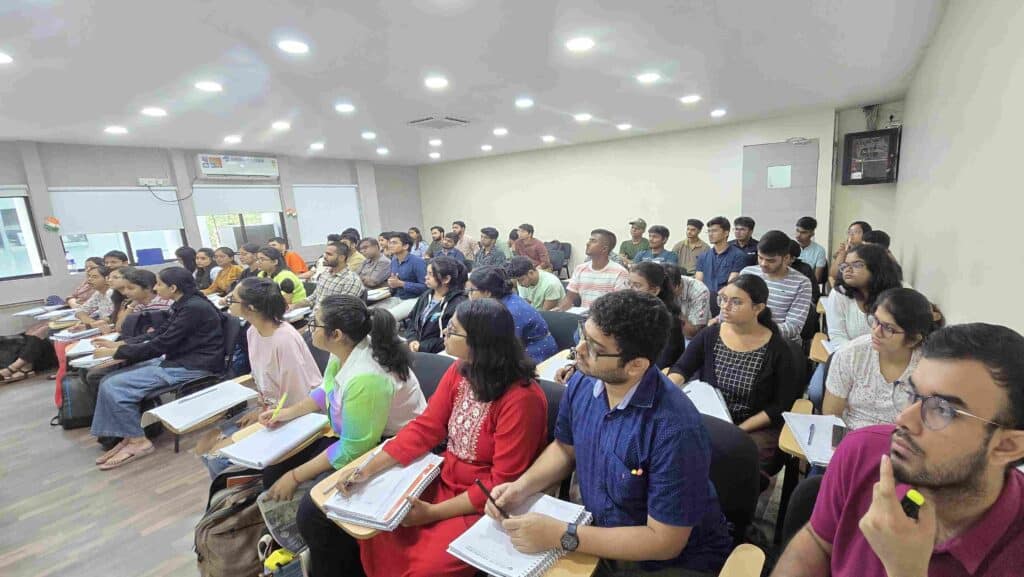
Why Mentorship Matters in UPSC Preparation
UPSC preparation often feels lonely, confusing, and overwhelming. Many aspirants lose direction because they lack proper guidance and realistic performance assessment. A mentor helps aspirants remain disciplined, motivated, and strategically aligned with the examination demand.
Mentorship also prevents aspirants from repeating common preparation mistakes. The right guidance often becomes the difference between random preparation and smart preparation.
Benefits of Mentorship
- Strategic preparation planning
- Personalized guidance
- Performance analysis
- Motivation during difficult phases
- Resource management
- Better answer writing direction
- Consistency tracking
At Educrat IAS Academy, our mentorship program UPSC focuses on personalized attention, performance evaluation, and continuous strategic guidance.
Why Educrat IAS Academy is the Best UPSC Coaching in Kolkata
Choosing the right guidance ecosystem plays a major role in UPSC preparation. A good coaching institute not only provides classes but also builds discipline, structure, mentorship, and competitive exposure. Educrat IAS Academy has emerged as one of the leading UPSC coaching institutes Kolkata because of its student-focused and result-oriented approach.
Our preparation model emphasizes conceptual clarity, integrated preparation, personalized mentorship, and regular evaluation. Whether you are a beginner after graduation or a serious repeat aspirant, our programs are designed to support every stage of your UPSC journey.
What Educrat IAS Provides for UPSC Aspirants
- Comprehensive Foundation Courses: Structured weekend classroom programs for beginners.
- Library Facility: Calm study environment on weekdays for in-house students.
- Personalized Mentorship: Individual guidance from experienced faculty.
- UPSC Test Series Kolkata: UPSC-like mock examinations with rankings.
- Mains Answer Writing Program: Daily classroom answer writing practice.
- Current Affairs Support: Daily and monthly current affairs resources.
- Interview Guidance: Mock interviews and personality development sessions.
- Integrated Preparation Model: Prelims + Mains preparation together.
Ready to begin your UPSC journey after graduation?
Join Educrat IAS Academy; the best IAS coaching in Kolkata ; and prepare with expert mentorship, integrated classroom programs, answer writing guidance, and UPSC-like test series.
Final Thoughts
Preparing for UPSC after graduation is one of the smartest and most strategic decisions an aspirant can make. With proper planning, disciplined execution, consistent revision, and regular answer writing practice, success in the Civil Services Examination becomes achievable. UPSC is not merely a test of intelligence. It is a test of consistency, patience, discipline, emotional resilience, and strategic preparation.
The preparation journey may initially appear difficult, but every successful civil servant once started from the same stage of confusion and uncertainty. With the right roadmap, proper mentorship, and sustained hard work, every aspirant can move closer toward the dream of serving the nation.
At Educrat IAS Academy, the best UPSC coaching institute Kolkata, we are committed to guiding aspirants through every stage of the UPSC journey. From Foundation Courses and UPSC Classes Kolkata to Mentorship Programs, Current Affairs Support, Mains Answer Writing Programs, and Test Series, every resource is designed to simplify your preparation and maximize your success.